

Bipolar Junction Transistor: The Tiny Switch That Powers Our World!
Images

2SC867

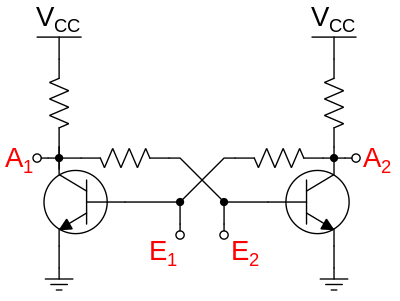




The Dual Nature of Conduction
The bipolar junction transistor (BJT) is a semiconductor device distinguished by its use of both electrons and holes as charge carriers. This 'bipolar' nature is fundamental to its operation, differentiating it from unipolar devices like Field-Effect Transistors (FETs). A BJT consists of three semiconductor layers, forming two p-n junctions.
These layers can be arranged as NPN or PNP configurations. In an NPN transistor, a small current injected into the base terminal (a p-type region) controls a much larger current flowing from the collector (an n-type region) to the emitter (another n-type region). Conversely, in a PNP transistor, a small current into the base (an n-type region) controls a larger current from emitter to collector.
This control mechanism allows BJTs to function as amplifiers, boosting weak electrical signals, or as high-speed switches, turning circuits on and off with remarkable rapidity. The precise behavior is governed by the physics of semiconductor junctions and carrier diffusion and drift.
Pioneering the Electronic Age
The invention of the transistor in 1947 at Bell Labs, initially the point-contact transistor, was a monumental achievement. However, the bipolar junction transistor, which emerged shortly after, offered superior predictability, reliability, and performance. Early BJTs were discrete components, but the real revolution came with the development of manufacturing techniques like diffusion and epitaxy.
These methods allowed for the precise creation of multiple p-n junctions within a single crystal of semiconductor material, paving the way for integrated circuits (ICs). The ability to fabricate hundreds or thousands of BJTs on a single silicon wafer at a low cost democratized complex electronics. For decades, BJT-based ICs were the dominant active devices in mainframe and minicomputers, driving the digital revolution.
While complementary metal–oxide–semiconductor (CMOS) technology, based on FETs, has largely replaced BJTs in general-purpose computing due to its lower power consumption, the BJT's legacy is undeniable.
Amplification and Switching
The primary utility of BJTs stems from their capacity for signal amplification and electronic switching. As amplifiers, BJTs leverage the current gain (beta, β), where a small base current (I_B) results in a much larger collector current (I_C = β * I_B). This property is essential in audio systems, radio frequency circuits, and sensor interfaces, where weak signals need to be strengthened to be useful.
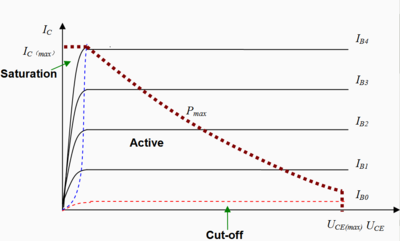
In switching applications, BJTs operate in either the 'cut-off' region (effectively off, blocking current) or the 'saturation' region (effectively on, allowing maximum current flow). Their fast switching speeds, often in the nanosecond range, make them suitable for digital logic gates and high-frequency applications. Although CMOS technology excels in low-power digital logic, BJTs often provide higher current drive capabilities and better performance in certain analog and high-frequency scenarios, making them indispensable in mixed-signal ICs (BiCMOS technology) and specialized power electronics.
Enduring Applications
Despite the dominance of FETs in many modern applications, bipolar junction transistors remain critical components in various specialized fields. They are still widely used in analog circuits for amplification, particularly in audio preamplifiers and RF amplifiers where their linearity and gain characteristics are advantageous. In mixed-signal integrated circuits, which blend analog and digital functionalities, BJTs are often combined with FETs (in BiCMOS technology) to leverage the strengths of both.
Furthermore, specialized BJTs are engineered for high-power and high-voltage applications, serving as robust switches in power supplies, motor controllers, and inverters. Their ability to handle significant current and voltage surges makes them ideal for demanding industrial and automotive electronics. The continued development and niche applications of BJTs highlight their enduring importance in the landscape of electronic engineering.
See also
Frequently Asked Questions
What is a bipolar junction transistor (BJT)?+
How does a BJT control electricity in a circuit?+
Why are BJTs called "tiny switches"?+
When were BJTs invented and why were they important?+
Where are BJTs still used today?+
Based on content from Wikipedia · Licensed under CC BY-SA 4.0