

Bibliothèque nationale de France
Images

BibliothèQue Mitterrand Mai 2022


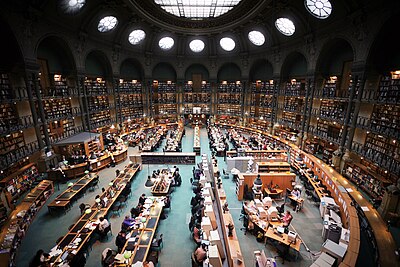


The Architectural and Curatorial Grandeur of the BnF
The Bibliothèque nationale de France (BnF) is a monumental institution, embodying France's commitment to its cultural and intellectual heritage. Its presence is marked by two significant sites in Paris: the historically rich Richelieu site and the architecturally striking François-Mitterrand site. The Richelieu site, a former royal palace, houses the BnF Museum, formerly known as the Cabinet des Médailles.
This museum is a repository of unparalleled historical depth, featuring collections that span millennia, including ancient coinage, rare manuscripts, and exquisite objets d'art. The François-Mitterrand site, a more contemporary structure, is designed for the vast storage and accessibility of the library's immense holdings, symbolizing the library's forward-looking approach to knowledge preservation. Together, these sites represent a fusion of historical grandeur and modern functionality, dedicated to safeguarding and disseminating France's collective memory and creative output.
The Mandate of Legal Deposit and Public Access
At the heart of the BnF's operation is the principle of 'dépôt légal' or legal deposit. This long-standing French law mandates that publishers submit copies of all their publications to the library. This ensures the BnF functions as a comprehensive national archive, capturing the entirety of France's published output, from scholarly journals and novels to music and digital media.
The library's mission extends beyond mere collection; it is a crucial public establishment under the Ministry of Culture, tasked with conserving these materials for posterity and making them accessible to the public. This dual role of preservation and dissemination is vital for education, research, and cultural continuity. The BnF actively engages in conservation science, employing advanced techniques to protect fragile documents and digital assets, while also developing sophisticated cataloging systems and digital platforms to facilitate public access to its vast resources.
A Crucible of French History and Artistic Expression
The collections within the Bibliothèque nationale de France are not merely books; they are the threads that weave the tapestry of French history and artistic achievement. The library holds items of immense historical and cultural value, including illuminated manuscripts that showcase medieval artistry, early printed books that mark the dawn of mass communication, and a vast array of graphic arts, maps, and musical scores. The BnF Museum's collection of coins and medals, for instance, offers a numismatic history of France and beyond, while its holdings of prints and drawings provide visual chronicles of different eras.
These artifacts serve as primary sources for scholars and offer the public a tangible connection to the past, illustrating the evolution of French thought, creativity, and societal development across centuries. The library actively supports research into these collections, fostering new interpretations and understandings of France's rich heritage.
Governance, Research, and International Collaboration
As a public establishment, the BnF operates within a framework designed to serve the national interest, overseen by the Ministry of Culture. Its governance structure ensures that its operations align with national cultural policies and priorities. The library is a significant center for research, employing a dedicated staff of librarians, archivists, conservators, and subject-matter experts who not only manage the collections but also conduct and facilitate scholarly inquiry.
They contribute to the intellectual life of France through publications, conferences, and exhibitions. Furthermore, the BnF is deeply integrated into the international library and archival community. It actively participates in cooperative projects, shares expertise, and collaborates with institutions worldwide on initiatives ranging from digital preservation standards to joint research programs, reinforcing its role as a global custodian of knowledge and culture.
The BnF in the Digital Age
In the 21st century, the Bibliothèque nationale de France is actively navigating the challenges and opportunities presented by the digital revolution. While its physical collections remain paramount, the library is increasingly focused on digitizing its holdings to expand access and ensure long-term preservation. Projects like Gallica, the BnF's digital library, provide online access to millions of digitized documents, including books, manuscripts, images, and sound recordings, making French cultural heritage available to a global audience.
This digital transformation involves complex technical challenges, from developing robust digital preservation strategies to ensuring equitable access for all users. The BnF's engagement with digital technologies underscores its commitment to remaining a relevant and dynamic institution, adapting its methods to serve contemporary needs while upholding its foundational mission of safeguarding and sharing France's intellectual and artistic legacy.
See also
Based on content from Wikipedia · Licensed under CC BY-SA 4.0