

Battle of Passchendaele
Images

The gothic Cloth Hall of Ieper (Ypres), Belgium




Strategic Imperatives and Entente Planning
The Battle of Passchendaele, officially the Third Battle of Ypres, was conceived as a crucial component of the Entente's broader strategy for 1917. Following conferences in late 1916 and May 1917, Allied leaders sought to break the stalemate on the Western Front. The capture of Passchendaele Ridge was deemed vital due to its position overlooking key German railway lines, particularly the junction at Roulers, which served as a primary supply route for the German 4th Army.
The objective extended beyond the ridge itself, with plans for a subsequent advance towards Thourout and Couckelaere, and ultimately, operations along the Belgian coast aimed at reaching Bruges and the Dutch frontier. This ambitious plan, however, was predicated on achieving a breakthrough that the terrain and German defenses would ultimately resist.
The Tyranny of Terrain and Weather
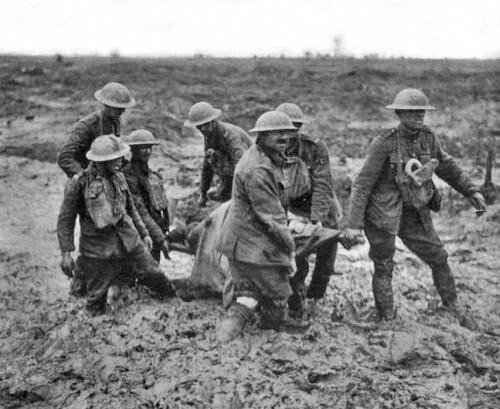
The campaign's most defining characteristic, and its most devastating aspect, was the relentless and destructive impact of the weather and terrain. The Flanders region, already prone to waterlogging, was subjected to exceptionally heavy rainfall throughout August 1917, followed by the early onset of autumn rains. The extensive artillery bombardments preceding the Allied advances had destroyed the drainage systems, turning the battlefield into a vast, deep morass of mud. Shell holes filled with water, becoming deadly traps for infantry and rendering armored vehicles largely ineffective. Movement was agonizingly slow, supply lines were precarious, and the psychological toll on soldiers fighting in these conditions was immense.
The mud became synonymous with the battle's futility and horror.
Command Disagreements and Strategic Doubts
Passchendaele was plagued by strategic controversy from its inception. British Prime Minister David Lloyd George and French Army Chief of Staff Ferdinand Foch expressed strong reservations, advocating for a more defensive posture or waiting for the arrival of American forces. They questioned the wisdom of a major offensive in Flanders, given the attritional nature of the Western Front and the potential for immense casualties.
Field Marshal Sir Douglas Haig, commander of the British Expeditionary Force, championed the Flanders offensive, believing it essential to relieve pressure on the French and achieve a decisive victory. The timing of the offensive, the choice of General Hubert Gough and the Fifth Army to spearhead the initial attacks, and the objectives set all became subjects of intense debate among historians and participants alike.
The Human Cost and Enduring Legacy
The battle concluded in November 1917, with the Canadian Corps finally capturing the devastated village of Passchendaele after a series of costly assaults. While the immediate objectives were technically met, the strategic gains were limited and came at an astronomical price. Estimates of casualties vary, but hundreds of thousands of soldiers on both sides were killed, wounded, or went missing.
The battle became a potent symbol of the futility and brutality of trench warfare, characterized by immense suffering for minimal territorial gain. Its legacy continues to be debated, serving as a stark reminder of the devastating human cost of military campaigns driven by attrition and often hampered by unfavorable conditions and strategic disagreements.
See also
Frequently Asked Questions
What was the Battle of Passchendaele?+
Why was the hill at Passchendaele so important?+
How did the mud affect the soldiers?+
Who decided to start the battle and why?+
What happened to the soldiers during the battle?+
Based on content from Wikipedia · Licensed under CC BY-SA 4.0