

Basque Country (autonomous community)
Images

Basque Country (autonomous community)



Geographical Tapestry
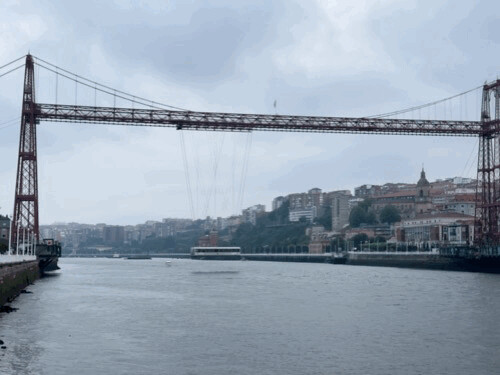
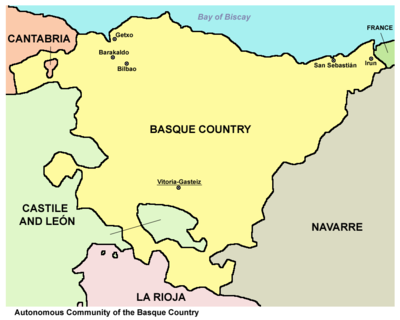
The Basque Country, officially known as Euskadi, is situated in northern Spain, forming a crucial part of the Iberian Peninsula's northern edge. Its geography is characterized by the Cantabrian Mountains, which provide a dramatic backdrop of lush, green peaks that are a testament to the region's significant rainfall and mild climate. These mountains slope down to a rugged coastline along the Bay of Biscay, offering stunning vistas and a rich maritime heritage.
The region is composed of three historical provinces: Araba (Álava), Bizkaia (Biscay), and Gipuzkoa (Guipúzcoa). Intriguingly, the Basque Country also encompasses two exclaves, Treviño and Valle de Villaverde, which are geographically within other Spanish provinces but politically part of the Basque autonomous community, adding a unique layer to its territorial definition. Vitoria-Gasteiz, the largest municipality by area, covers 277 km², while Bilbao, the most populous city with 347,342 inhabitants, anchors a vast metropolitan area of over 875,000 people, showcasing significant urban concentration within the region.
A Legacy of Self-Determination
The Basque Country's political identity is deeply rooted in its historical pursuit of autonomy. The Spanish Constitution of 1978 formally recognized the Basque Country as a 'nationality,' a designation that acknowledges its distinct historical and cultural character. This recognition paved the way for the Statute of Autonomy of the Basque Country, a foundational legal document that establishes the framework for its self-governance.
This statute grants the region significant powers, allowing it to manage its own affairs, including education, healthcare, and taxation, within the broader Spanish state. The region's history is marked by a strong desire to preserve its unique identity, a sentiment that has shaped its political trajectory and relationship with the central Spanish government. The parallel development of Navarre's separate chartered statute in 1982 further highlights the complex and diverse regional governance structures within Spain.
Euskara
The most striking element of Basque culture is its language, Euskara. This Paleolithic language is a true linguistic isolate, meaning it has no known relatives among any other living or extinct languages. Its origins are shrouded in mystery, making it a subject of intense linguistic study and a powerful symbol of Basque distinctiveness.
The continued use and promotion of Euskara, alongside Spanish, is central to the region's cultural vitality. Beyond language, Basque culture is expressed through vibrant traditions, unique sports like 'pelota vasca' (Basque pelota) and 'harrijasotzea' (stone lifting), and a rich culinary heritage. The Basque people are often characterized by their strong sense of community, resilience, and deep connection to their ancestral lands.
While Vitoria-Gasteiz serves as the de facto capital, housing the Basque Parliament and Government, Bilbao stands as the region's economic and cultural powerhouse.
Economic Dynamism and Educational Pillars
The Basque Country possesses a highly developed and diversified economy, historically anchored in heavy industry and manufacturing. Today, it has successfully transitioned towards a knowledge-based economy, excelling in sectors such as advanced manufacturing, renewable energy, biotechnology, and information technology. Bilbao, in particular, has undergone a remarkable urban regeneration, transforming from an industrial port city into a hub for culture and innovation, exemplified by the Guggenheim Museum.
The region boasts a robust educational system that prioritizes bilingualism in Spanish and Euskara from an early age. Universities like the University of the Basque Country (UPV/EHU) are crucial for research and development, fostering innovation and preparing students for a competitive global market. This commitment to education and economic diversification ensures the Basque Country remains a prosperous and forward-looking region.
See also
Frequently Asked Questions
What is the Basque Country and where is it located?+
Why does the Basque Country have its own language?+
How many provinces make up the Basque Country?+
What are some famous Basque sports?+
Where is the capital of the Basque Country?+
Based on content from Wikipedia · Licensed under CC BY-SA 4.0