

Basilica Cistern
Images
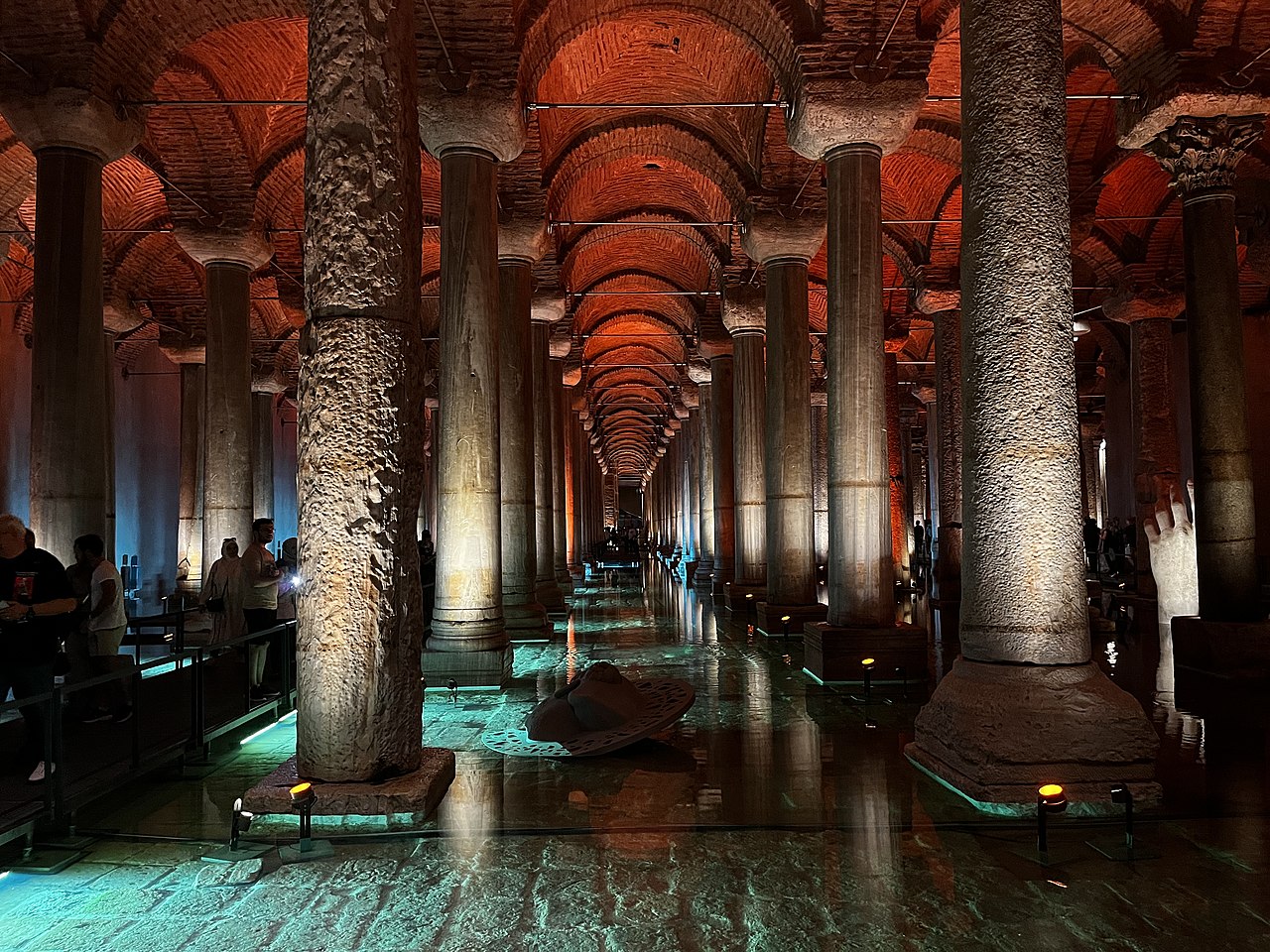
Basilica Cistern after restoration 2022 (11)


The Grandeur of Justinian's Subterranean Waterworks
The Basilica Cistern, known in Greek as Kinsterna Basilica and in Turkish as Yerebatan Sarnıcı, stands as the largest of Istanbul's numerous ancient underground water reservoirs. Commissioned by Emperor Justinian I and constructed in the 6th century AD, likely around 532 AD, it was a critical component of the Byzantine capital's infrastructure. Its immense scale, measuring approximately 140 by 70 meters, was designed to store up to one million liters of water, primarily sourced from aqueducts originating miles away.
This vast capacity was essential for supplying the needs of the nearby Great Palace and other significant structures, ensuring the city's resilience against potential water shortages, especially during periods of conflict or drought. The cistern's construction involved an intricate system of waterproofing and a forest of columns, demonstrating a sophisticated understanding of hydraulics and structural engineering that was characteristic of the Byzantine era. Its location on the historical peninsula, southwest of the iconic Hagia Sophia, places it at the heart of ancient Constantinople.
Architectural Ingenuity and Material Reuse
The architectural brilliance of the Basilica Cistern is evident in its design and the materials employed. The ceiling, spanning an impressive area, is supported by 336 Doric and Ionic columns, each standing approximately 9 meters tall. These columns are arranged in 12 rows of 28 columns each, creating a mesmerizing, almost cathedral-like atmosphere.
A significant aspect of its construction is the extensive use of spolia, the repurposing of architectural elements from older Roman and Greek structures. This practice not only reflects an economical approach to building but also a symbolic connection to the classical past. The columns themselves vary, with some featuring intricate carvings and capitals, while others are more utilitarian.
The floor and walls are coated with a thick layer of waterproof mortar, a testament to the advanced knowledge of materials science possessed by the Byzantine builders. The sheer volume of stone and labor involved underscores the immense resources and strategic importance the empire placed on its water management systems.
The Enigmatic Medusa Bases
Among the most intriguing features of the Basilica Cistern are the two enigmatic column bases found at the northwestern end, adorned with carved Medusa heads. The precise reason for their inclusion remains a subject of scholarly debate. One head is positioned upside down, while the other is turned sideways.
Several theories attempt to explain this unusual placement. One popular hypothesis suggests that the heads were deliberately oriented to neutralize Medusa's mythical power, a common practice in ancient cultures when using such imagery. Another theory posits that the carvers simply used the available column bases without regard for the orientation of the carved figures, prioritizing the structural integrity and availability of materials over mythological symbolism.
Regardless of the intent, these Medusa heads add a layer of mystique and artistic intrigue, transforming a functional water reservoir into a site imbued with ancient folklore and artistic expression, inviting contemplation on the intersection of utility, art, and belief in the Byzantine world.
A Rediscovered Treasure and Enduring Legacy
After its active use, the Basilica Cistern faded from prominence and was largely forgotten for centuries, becoming a hidden subterranean space. It was rediscovered in the 16th century by the French traveler Petrus Gyllius, who stumbled upon it while investigating the ruins of Constantinople. Its survival through the ages, enduring earthquakes and the transformation of the city, speaks to the robustness of its construction.
Today, the Basilica Cistern is meticulously preserved and open to the public, serving as a significant historical monument and a popular tourist destination. It offers a tangible connection to the Byzantine past, allowing visitors to experience the scale, engineering prowess, and artistic sensibilities of an ancient civilization. Its continued presence and accessibility make it a vital resource for understanding the history of Istanbul and the broader legacy of Byzantine architecture and urban planning.
See also
Frequently Asked Questions
What is the Basilica Cistern and why was it built?+
How big is the Basilica Cistern and how much water could it hold?+
Why are there so many columns inside the cistern?+
What are the Medusa heads and why are they upside down?+
Where is the Basilica Cistern located in Istanbul?+
Based on content from Wikipedia · Licensed under CC BY-SA 4.0