

Bar-headed Goose
Images

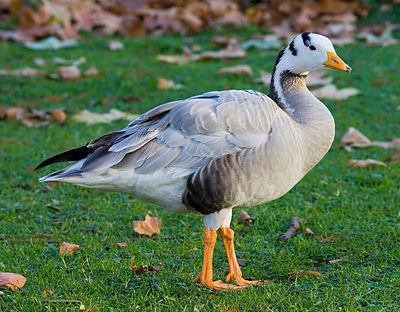
Bar Headed Goose AMSM5825 BHGE


Geographical Distribution and Habitat Niches
The Bar-headed Goose (Anser indicus) occupies a distinct geographical niche, primarily breeding in the high-altitude lakes and river valleys of Central Asia, including the Tibetan Plateau, Ladakh, and parts of Mongolia. These breeding grounds are characterized by extreme elevations, typically ranging from 4,000 to 5,000 meters (13,000 to 16,400 feet), where they construct ground nests using local vegetation.
The environment is harsh, with low temperatures, intense ultraviolet radiation, and critically, hypoxic conditions due to the thin atmosphere. Following the breeding season, these geese undertake remarkable migratory journeys, often flying over the formidable Himalayan mountain range to winter in lower-altitude regions of the Indian subcontinent, Southeast Asia, and even parts of China. Their wintering habitats include wetlands, agricultural fields, and lakes, where food resources are more abundant and the atmospheric conditions are less extreme.
The Physiology of Extreme Flight
The most astonishing aspect of the Bar-headed Goose is its capacity for high-altitude flight, routinely exceeding 8,000 meters (26,000 feet) and occasionally reaching altitudes of 9,000 meters (29,500 feet) during their Himalayan crossings. This physiological feat is a subject of intense scientific study. Their respiratory system is exceptionally efficient, featuring a unidirectional airflow through their lungs, similar to other birds, but with enhanced gas exchange capabilities.
Their blood possesses a high concentration of hemoglobin with a remarkable affinity for oxygen, allowing them to bind and transport oxygen more effectively in hypoxic conditions. Furthermore, their metabolic rate can adjust to conserve energy, and their bodies are adapted to withstand extreme cold. Research continues to unravel the precise genetic and physiological mechanisms that enable them to thrive in an environment that would be lethal to most other vertebrates.
Dietary Adaptations and Foraging Strategies
The diet of the Bar-headed Goose is crucial for sustaining its energetic demands, particularly during migration and breeding. As herbivores, they primarily consume grasses, sedges, roots, and other low-lying vegetation found in their breeding and wintering grounds. During the breeding season at high altitudes, they forage on alpine meadows and around lakes, consuming nutrient-rich plants.
In their wintering areas, they adapt to agricultural landscapes, feeding on grains, stubble, and aquatic vegetation. Their foraging behavior involves grazing and dabbling. The ability to efficiently digest fibrous plant matter and extract maximum nutritional value is vital.
Their diet composition can shift seasonally based on availability, demonstrating a degree of dietary flexibility that aids their survival across diverse environments.
Social Structure, Reproduction, and Conservation
Bar-headed Geese exhibit a complex social structure, typically forming monogamous pair bonds that can last for many years. They are colonial nesters, often gathering in significant numbers in suitable breeding areas. Both parents participate actively in nest building, incubation (which lasts about 26-30 days), and the rearing of their precocial young.
Goslings are capable of walking and feeding themselves shortly after hatching but remain dependent on parental care for protection and guidance. Their migratory behavior is a key aspect of their life cycle, linking disparate ecosystems. While their population is currently estimated to be between 50,000 and 100,000 individuals, they face threats such as habitat degradation, pollution, and hunting in certain regions. Conservation efforts focus on protecting their breeding and wintering grounds and understanding the impacts of climate change on their unique migratory patterns.
See also
Based on content from Wikipedia · Licensed under CC BY-SA 4.0