

Ballon au poing
Images

Ballon au poing


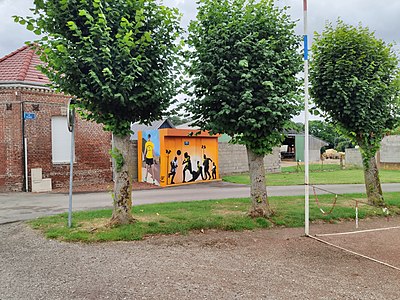


The Art of the Fist
Ballon au poing is a compelling team sport that demands a unique blend of physical prowess and tactical acumen. Played by two teams of five players, the objective is to score points by striking a ball with the fist over a net, ensuring it lands within the opponent's court or that the opponent commits a fault. The restriction to using only the fist is the sport's defining characteristic, necessitating a different approach to ball control and power generation compared to sports involving hands or feet.
Players must develop a strong, accurate fist strike, capable of imparting both speed and spin on the ball. The game is characterized by rapid exchanges, often involving multiple quick passes between teammates before an offensive strike. A key strategic element is anticipating the opponent's defensive positioning and exploiting any perceived weaknesses in their formation.
The three-hit rule per side adds a layer of complexity, forcing teams to coordinate their attacks efficiently and avoid wasting valuable touches. This dynamic interplay of offensive power and defensive strategy makes Ballon au poing a captivating spectacle of athletic skill and mental agility.
From Folk Game to Formal Sport
The origins of Ballon au poing are rooted in the informal sporting landscape of 19th-century France. While precise documentation is scarce, it is understood to have evolved from various folk games involving hitting a ball, with the fist being the designated implement. This period saw a surge in the formalization of sports across Europe, and Ballon au poing gradually transitioned from casual village pastimes to more organized competitions.
Its development reflects a broader trend of codifying rules and establishing leagues to govern athletic pursuits. The sport gained a significant following in specific regions of France, becoming a staple in local sporting events and clubs. Although it has not achieved widespread international recognition on the scale of sports like tennis or basketball, its enduring presence in French culture speaks to its unique appeal and the dedication of its participants.
The sport’s history is a testament to the organic growth of athletic traditions and their adaptation to structured competition.
Strategic Formations and Tactical Nuances in Ballon au poing
The strategic depth of Ballon au poing lies in its team-based nature and the unique constraints of fist-striking. Teams must develop effective formations that balance offensive pressure with defensive solidity. Common strategies involve players positioning themselves to cover different zones of the court, anticipating the trajectory of the ball, and communicating effectively to execute quick passes.
The serve itself is a critical offensive weapon, with players aiming for aces or setting up their teammates for powerful attacks. Offensive plays often involve a series of rapid fist passes to disorient the defense before a decisive strike towards an open area of the court. Defensively, teams focus on blocking or intercepting the ball, often employing a 'wall' formation near the net.
The ability to adapt tactics based on the opponent's strengths and weaknesses is crucial. For instance, if an opponent has a particularly strong server, a team might adopt a more conservative defensive posture. Conversely, against a weaker defense, a team might employ more aggressive, high-risk offensive plays.
The sport rewards teams that demonstrate superior coordination, quick decision-making, and precise execution of their chosen strategies.
Equipment and Player Development
The equipment for Ballon au poing is intentionally minimalist, placing the emphasis on player skill rather than technological advantage. The ball is central, typically a spherical object with a diameter around 6-7 cm and a weight of approximately 100-120 grams, designed to be struck effectively with a fist. Its surface is usually made of leather or a synthetic material that provides a good grip.
The net, a standard feature in net sports, is set at a height of 2.43 meters for men and 2.24 meters for women, creating a significant barrier that requires powerful and accurate strikes to overcome. Players wear standard athletic apparel, prioritizing comfort and freedom of movement. While protective gear like wristbands or light padding might be used, especially at higher levels of play, the core of the sport relies on the player's natural ability and conditioning.
Player development in Ballon au poing focuses on building fist strength, improving hand-eye coordination, enhancing agility and reflexes, and developing strategic understanding of court positioning and ball trajectory. This holistic approach ensures players are well-rounded athletes capable of excelling in this demanding sport.
See also
Frequently Asked Questions
What is Ballon au poing?+
How many players are on each team?+
Why can only fists be used to hit the ball?+
What is the three‑hit rule?+
Where did Ballon au poing start?+
Based on content from Wikipedia · Licensed under CC BY-SA 4.0