

B cells: Your Body's Tiny Defenders!
Images

Adenocarcinoma and small cell, B-cell lymphoma - Case 276




The B Cell Nexus
B cells, or B lymphocytes, are pivotal players in the adaptive immune system, specifically orchestrating humoral immunity. Their defining characteristic is the capacity to synthesize and secrete antibodies, proteins that are instrumental in neutralizing extracellular pathogens and toxins. These antibodies can be released into the bloodstream or embedded in the B cell's plasma membrane, functioning as B cell receptors (BCRs).
The BCR is a highly specific immunoglobulin molecule that allows the B cell to recognize a particular epitope on an antigen. Upon encountering its cognate antigen, a naive B cell undergoes activation, a process often requiring co-stimulation from T helper cells. This activation triggers clonal expansion, where the B cell proliferates extensively, and subsequent differentiation into antibody-secreting effector cells, known as plasma cells (or plasmablasts), and long-lived memory B cells.
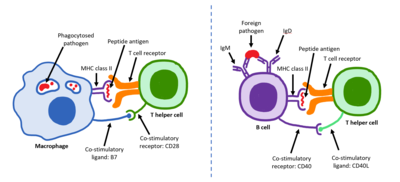
Beyond antibody production, B cells are also professional antigen-presenting cells (APCs), capable of processing and presenting antigens to T cells, thereby bridging innate and adaptive immunity and facilitating robust immune responses. They also secrete cytokines, signaling molecules that modulate the immune environment and influence the behavior of other immune cells.
The Molecular Dialogue
The specificity of the adaptive immune response is largely dictated by the exquisite recognition capabilities of B cell receptors (BCRs). Each B cell expresses thousands of identical BCRs on its surface, all designed to bind to a single, specific epitope – a unique molecular feature on an antigen. This high degree of specificity ensures that the immune system mounts a targeted response against invading pathogens.
When an antigen binds to the BCR, it initiates a cascade of intracellular signaling events. For most antigens, particularly protein antigens, this binding is not sufficient for full activation; it requires help from T helper cells. T helper cells recognize processed antigen fragments presented by the B cell on MHC class II molecules.
This T cell help provides crucial co-stimulatory signals that drive B cell proliferation, antibody class switching (changing the type of antibody produced), affinity maturation (improving the antibody's binding strength), and differentiation into plasma cells and memory cells. This intricate molecular dialogue is fundamental to generating effective and lasting immunity.
The Indispensable Role of B Cells in Health and Disease
B cells are indispensable for maintaining health, providing defense against a vast spectrum of microbial threats. Their role is particularly evident in combating bacterial infections and neutralizing viral particles before they can infect host cells. Furthermore, B cells are the cornerstone of vaccine efficacy.
Vaccines introduce antigens in a safe form, allowing B cells to develop immunological memory without causing disease. This memory ensures a rapid and potent secondary response upon subsequent exposure to the actual pathogen. Dysregulation of B cell function, however, can lead to significant health problems.
Autoimmune diseases, such as lupus and rheumatoid arthritis, often involve B cells producing autoantibodies that mistakenly target the body's own tissues. Conversely, deficiencies in B cell function or antibody production can result in severe immunodeficiency, making individuals highly susceptible to recurrent infections. Research into B cell biology continues to unlock new therapeutic strategies for a range of conditions, from cancer immunotherapy to the treatment of autoimmune disorders.
Evolutionary Origins and Diversification of B Cell Maturation
The discovery and naming of B cells offer a fascinating glimpse into the history of immunology. While B cells mature in the bone marrow in mammals, their nomenclature stems from their initial identification in the bursa of Fabricius, a lymphoid organ unique to birds. Discovered by Chang and Glick, the bursa proved to be the site where B cells develop their antibody-producing capabilities.
This historical context explains why the 'B' in B cell is often attributed to the bursa, rather than the bone marrow, which serves the same function in mammals. This discovery was a monumental step in understanding the cellular basis of adaptive immunity, differentiating lymphocytes into distinct lineages with specialized functions. The evolution of B cell maturation sites reflects divergent evolutionary paths, yet the fundamental role of B cells in adaptive immunity remains conserved across vertebrate species, underscoring their critical importance in host defense.
See also
Frequently Asked Questions
What is a B cell and why is it important?+
How do B cells know which germs to fight?+
What happens when a B cell meets a germ?+
How do B cells help us remember germs for future fights?+
Why can B cells sometimes cause problems like lupus?+
Based on content from Wikipedia · Licensed under CC BY-SA 4.0