

Auguste Escoffier
Images

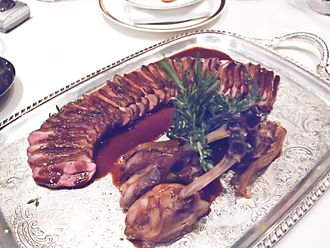
Rôtissoire Musée Escoffier




From Culinary Tradition to Modernization
Auguste Escoffier (1846-1935) stands as a pivotal figure in the evolution of French cuisine, often hailed as the father of modern gastronomy. He inherited the rich but often cumbersome tradition of French haute cuisine, a style characterized by elaborate preparations and ornate presentations, as codified by predecessors like Marie-Antoine Carême. Escoffier’s genius lay in his ability to distill this complexity into a more refined, accessible, and efficient form.
He meticulously simplified recipes, emphasizing the natural flavors of high-quality ingredients and streamlining cooking processes. His most significant contribution to culinary technique was the codification of the five French 'mother sauces' (Béchamel, Velouté, Espagnole, Hollandaise, and Tomate), which provided a standardized foundation for countless other sauces. This systematic approach not only elevated the quality and consistency of dishes but also made French culinary principles more teachable and replicable globally.
His influence was so profound that he earned the moniker 'roi des cuisiniers et cuisinier des rois' (king of chefs and chef of kings).
The Brigade System
Beyond his culinary innovations, Escoffier fundamentally reshaped the professional kitchen environment. Prior to his influence, kitchens were often characterized by disarray, loud commands, and a lack of formal structure, sometimes exacerbated by alcohol consumption among staff. Escoffier, leveraging his discipline from military service, introduced the 'brigade de cuisine' system.
This hierarchical organization assigns specific roles and responsibilities to each member of the kitchen staff, from the executive chef (chef de cuisine) down to the commis chefs (junior cooks). This structured approach created a more efficient, disciplined, and sanitary working environment. It fostered a sense of teamwork and accountability, drastically improving the speed and quality of service in large establishments.
The brigade system’s principles remain the bedrock of professional kitchen management in restaurants worldwide, a testament to Escoffier's foresight in professionalizing the culinary arts.
'Le Guide Culinaire'
The publication of 'Le Guide Culinaire' in 1903 marked a watershed moment in culinary literature. This comprehensive tome served as both a cookbook and a textbook, encapsulating Escoffier's philosophy, techniques, and recipes. It documented thousands of dishes, providing clear instructions and principles that chefs could follow and adapt.
Unlike earlier, more personal recipe collections, 'Le Guide Culinaire' presented a systematic and authoritative guide to French cooking, intended for widespread adoption. Its influence extended far beyond France, becoming an essential reference for aspiring chefs and established professionals alike. The book’s enduring relevance underscores Escoffier's role in standardizing culinary education and preserving the integrity of French cuisine for future generations.
Elevating the Status of the Chef and the Dining Experience
Escoffier's impact transcended the kitchen itself; he played a crucial role in elevating the status of chefs from mere laborers to respected artists and professionals. His collaboration with César Ritz, a pioneering hotelier, was instrumental in this transformation. Together, they redefined luxury hospitality at iconic venues like the Savoy in London, the Ritz Hotel in Paris, and the Carlton Hotel in London.
Escoffier’s meticulous attention to detail in the kitchen, combined with Ritz’s vision for elegant service and luxurious accommodations, created unparalleled dining experiences for the era's elite. This partnership demonstrated that exceptional cuisine was an integral component of a world-class hotel, thereby enhancing the prestige of both the chef and the establishment. Escoffier’s legacy is thus intertwined with the very concept of modern fine dining and luxury hospitality.
Go deeper
Frequently Asked Questions
Who was Auguste Escoffier?+
What are the five mother sauces?+
What is the brigade de cuisine?+
What is Le Guide Culinaire?+
How did Escoffier help chefs become respected?+
Based on content from Wikipedia · Licensed under CC BY-SA 4.0