

Atlantic Puffin
Images

Atlantic Puffins and razorbills on Seal Island


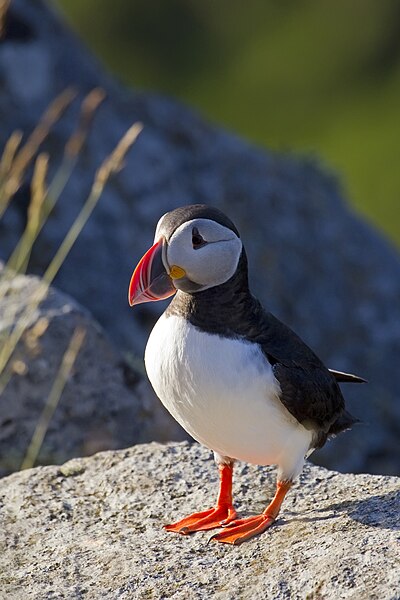


The Iconic Seabird
The Atlantic puffin (Fratercula arctica), also known as the common puffin, is the sole puffin species native to the Atlantic Ocean, belonging to the Alcidae family, commonly referred to as auks. This family is characterized by their excellent diving capabilities and adaptations for marine life. The puffin's distinctive appearance, particularly its brightly colored tricolored beak during the breeding season, serves a dual purpose: attracting mates and efficiently transporting multiple small fish.
Its black crown and back contrast with a white belly and grey cheeks, providing countershading camouflage in the water. While adult males and females are morphologically similar, males tend to be slightly larger. Juveniles exhibit duller plumage, a narrower dark beak, and darker cheek patches, reflecting their less developed state and different ecological niche before reaching sexual maturity.
Habitat, Range, and Breeding Ecology
The breeding range of the Atlantic puffin spans across the North Atlantic, from Arctic regions down to coastal areas of France and Maine. Key breeding colonies are found in Iceland, Norway, Greenland, the Faroe Islands, Ireland, the United Kingdom, and parts of eastern Canada. These birds exhibit a fascinating migratory pattern, spending the non-breeding season in the open ocean, often far from shore.
During the spring, they return to established colonies, typically on islands or remote coastlines with suitable substrate for burrowing. Puffins are colonial nesters, digging extensive burrows in grassy slopes or cliffs, which offer protection from harsh weather and terrestrial predators. A single white egg is laid and incubated by both parents, who then share the responsibility of feeding the rapidly growing chick a diet of whole fish.
Foraging Strategies and Diet Adaptations
Atlantic puffins are highly specialized marine predators. Their foraging behavior involves impressive dives, where they use their wings for underwater propulsion, achieving remarkable agility and speed. They can descend to considerable depths to capture their primary food source: small pelagic fish such as sandeels, herring, and capelin.
Their unique beak morphology allows them to carry multiple fish crosswise, maximizing the efficiency of food delivery to their chicks. This ability is crucial for provisioning the high metabolic demands of a growing puffin chick. The availability and abundance of these small fish are directly linked to oceanographic conditions, making puffins sensitive indicators of marine ecosystem health.
Changes in prey availability due to climate change or overfishing can have severe impacts on puffin populations.
Conservation Challenges and Future Outlook
Despite their wide distribution and large population numbers historically, Atlantic puffins are currently classified as Vulnerable by the IUCN. Several factors contribute to this concerning status. Climate change is altering ocean temperatures and currents, affecting the distribution and abundance of their preferred prey species.
Overfishing of small forage fish also directly competes with puffins for food resources. Furthermore, increased predation pressure from gulls and skuas, particularly on chicks, and habitat degradation at breeding sites pose additional threats. The long-term survival of the Atlantic puffin is intrinsically linked to the health of the North Atlantic marine environment, making their conservation a critical aspect of broader ecological stewardship.
See also
Frequently Asked Questions
What does an Atlantic puffin look like?+
How do puffins catch fish?+
Where do Atlantic puffins live and breed?+
Why are Atlantic puffins considered vulnerable?+
How do puffins care for their chicks?+
Based on content from Wikipedia · Licensed under CC BY-SA 4.0