

Atacama Cosmology Telescope
Images

Atacama Cosmology Telescope Patches


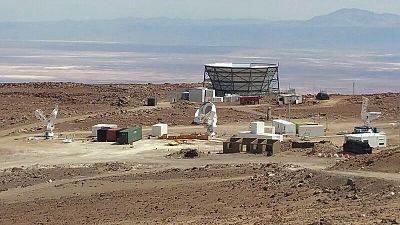


A Pinnacle of Observational Cosmology in the Atacama
The Atacama Cosmology Telescope (ACT) stands as a testament to humanity's quest to understand the universe's origins. Situated at an imposing altitude of 5,190 meters (17,030 ft) on Cerro Toco in the hyper-arid Atacama Desert of Chile, ACT was strategically positioned to minimize atmospheric interference. This location, renowned for its exceptional atmospheric transparency and stability, provided an unparalleled vantage point for millimeter-wave astronomy.
The desert's extreme dryness is crucial, as water vapor is a significant absorber of millimeter and submillimeter radiation, making high-altitude, arid sites like the Atacama essential for sensitive observations of the Cosmic Microwave Background (CMB). ACT's design, a 6-meter diameter telescope, was optimized for high-sensitivity, arcminute-resolution surveys of the sky, enabling it to detect faint signals from the early universe with unprecedented precision.
Its construction and operation represent a significant international scientific endeavor, funded by the US National Science Foundation.
Deciphering the CMB
The primary scientific objective of ACT was to conduct detailed surveys of the CMB, the relic radiation from the Big Bang. This faint glow, permeating the entire universe, carries invaluable information about the universe's infancy, including its age, geometry, and composition. ACT's high sensitivity and resolution allowed it to map the temperature and polarization anisotropies of the CMB with remarkable accuracy.
It was instrumental in detecting the first seven acoustic peaks in the CMB power spectrum, a crucial observation that provided strong support for the standard Lambda-CDM model of cosmology. These peaks represent the imprint of sound waves that propagated through the early universe plasma. By precisely measuring these fluctuations, ACT helped scientists constrain cosmological parameters, such as the density of baryonic matter, dark matter, and dark energy, and the expansion rate of the universe.
Pioneering Discoveries Beyond the CMB
While its focus on the CMB was paramount, ACT's scientific reach extended to other critical areas of astrophysical research. The telescope played a pivotal role in identifying and characterizing galaxy clusters, the largest gravitationally bound structures in the universe. ACT discovered the most extreme galaxy cluster known at the time, providing insights into the formation and evolution of massive structures.
Furthermore, ACT made the first statistical detection of the motions of galaxy clusters through the pairwise kinematic Sunyaev–Zeldovich (kSZ) effect. This effect occurs when CMB photons scatter off the hot gas within moving galaxy clusters, causing a slight Doppler shift in the CMB radiation. Detecting this subtle effect allowed scientists to statistically measure the peculiar velocities of these massive structures, offering a new probe of large-scale structure formation and cosmic expansion.
Technological Evolution and Legacy
The Atacama Cosmology Telescope underwent significant technological evolution throughout its operational lifespan, enhancing its scientific capabilities. It was initially equipped with the Millimeter Bolometer Array Camera (MBAC), which provided broad-field imaging. A major upgrade in 2013 introduced ACTPol, a polarization-sensitive receiver that enabled the measurement of CMB polarization.
This was a critical advancement, as CMB polarization contains even more information about the early universe, including potential evidence for primordial gravitational waves from inflation. A subsequent upgrade, Advanced ACT (A2017-2022), further improved sensitivity and introduced new frequency bands. Although ACT concluded its observations in mid-2022, its legacy endures.
The vast dataset it collected continues to be analyzed, contributing to our ongoing understanding of cosmology and the fundamental nature of the universe. Its success paved the way for future millimeter-wave observatories.
See also
Based on content from Wikipedia · Licensed under CC BY-SA 4.0