

Arapaima: The Amazon's Giant Fish!
Images

Arapaima

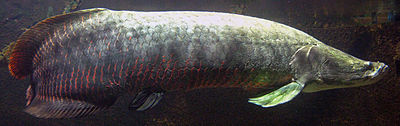


Morphological Marvels and Ecological Niche
The Arapaima (Arapaima gigas) stands as one of the largest freshwater fish globally, a true icon of the Amazonian ecosystem. Reaching lengths of up to 10 feet (3 meters) and weights exceeding 400 pounds (180 kg), its sheer size is awe-inspiring. Its body is covered in large, ganoid scales, which are thick and bony, offering substantial protection.
These scales are often iridescent, displaying hues of red, green, and blue, particularly noticeable in younger fish. The Arapaima occupies the niche of an apex predator within its habitat, which includes slow-moving rivers, oxbow lakes, and seasonally flooded forests. Its presence significantly influences the structure and dynamics of fish communities.
The species exhibits sexual dimorphism, with males generally being larger than females, a characteristic often observed in predatory species where males may compete for territory or mates.
Obligate Air-Breathing
Perhaps the most striking adaptation of the Arapaima is its obligate air-breathing. Its swim bladder is highly vascularized and functions as a primitive lung, allowing it to extract oxygen directly from the atmosphere. This physiological trait is essential for survival in the often hypoxic (low oxygen) conditions prevalent in tropical freshwater environments, especially during the dry season when water bodies become smaller and temperatures rise.
Arapaimas typically ascend to the surface to inhale air every 10 to 20 minutes, though they can extend this interval significantly if necessary. This adaptation allows them to exploit resources and habitats that might be inaccessible to purely water-breathing fish, granting them a competitive advantage and contributing to their success as large predators in these challenging aquatic systems.
Predatory Strategies and Dietary Breadth
As a highly efficient carnivore, the Arapaima employs a variety of predatory strategies. Its diet is diverse, primarily consisting of fish, which it ambushes with remarkable speed and power. However, its predatory range extends beyond piscine prey.
Arapaimas are known to consume birds, reptiles, and even small mammals that come within reach of the water's surface. Their feeding mechanism involves a large mouth and a rough, bony tongue, which aids in manipulating and crushing prey. This broad dietary spectrum allows them to capitalize on available food sources, further solidifying their position at the top of the food chain.
Their hunting behavior often involves stealth and a sudden, explosive burst of speed to capture unsuspecting prey, demonstrating their mastery of the aquatic environment.
Conservation Status and Anthropogenic Pressures
Despite its formidable adaptations and ecological importance, the Arapaima faces severe threats, primarily driven by human activities. Overfishing is the most significant pressure, as the species is highly valued for its meat and is relatively easy to catch due to its need to surface for air. In many regions, populations have been drastically reduced or extirpated. Its classification as Data Deficient by the IUCN highlights a critical need for more comprehensive population assessments and ecological studies.
However, anecdotal evidence and local reports strongly suggest that many populations are vulnerable or endangered. Effective conservation strategies must involve robust fisheries management, the establishment of protected areas, community-based resource management programs, and potentially aquaculture initiatives to reduce pressure on wild stocks and ensure the persistence of this magnificent species.
See also
Frequently Asked Questions
What is an Arapaima and how big can it get?+
How does the Arapaima breathe air?+
What does the Arapaima eat?+
Why are Arapaimas important in the Amazon?+
Why are Arapaimas in danger?+
Based on content from Wikipedia · Licensed under CC BY-SA 4.0