

Arab–Israeli Conflict
Images

Arab Israeli conflict 2025


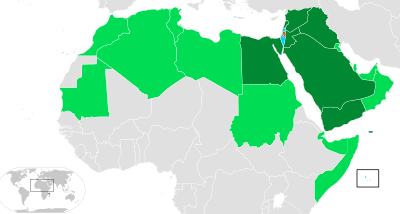


Genesis of Conflict
The Arab-Israeli conflict is a multifaceted geopolitical phenomenon rooted in the late 19th and early 20th centuries, primarily driven by the concurrent rise of Zionism and Arab nationalism. Zionism, spurred by increasing antisemitism in Europe and a desire for self-determination, sought to establish a Jewish national home in Palestine, a land with deep historical and religious significance for Jewish people. Concurrently, Arab nationalism, fueled by the decline of the Ottoman Empire and a growing sense of distinct Arab identity, viewed Palestine as an integral part of the Arab homeland.
The British Mandate for Palestine (1920-1948) inadvertently became the crucible where these competing national aspirations clashed. British policies, including the Balfour Declaration of 1917 which supported a Jewish national home, were often perceived as contradictory and exacerbated tensions between the growing Jewish population and the established Arab majority, laying the groundwork for sustained conflict.
Escalation and Regional Wars
The post-World War II era witnessed a dramatic escalation of the conflict. The United Nations' 1947 Partition Plan for Palestine, proposing the division of the territory into separate Arab and Jewish states, was accepted by Zionist leadership but rejected by Arab states and Palestinian leadership. This rejection, coupled with the impending end of the British Mandate, led to the 1947-1948 Palestinian civil war.
The declaration of Israeli independence in May 1948 triggered the invasion by neighboring Arab states, initiating the First Arab-Israeli War. This war resulted in significant territorial gains for Israel and the displacement of a large Palestinian population, an event known as the Nakba. Subsequent major regional wars, including the 1967 Six-Day War (which resulted in Israel's occupation of the West Bank, Gaza Strip, East Jerusalem, and Golan Heights) and the 1973 Yom Kippur War, further solidified regional animosities and reshaped geopolitical dynamics, leading to a series of ceasefire agreements but failing to resolve the underlying issues.
Transformation of Conflict
Following the major regional wars, the character of the Arab-Israeli conflict began to transform. While large-scale interstate hostilities diminished, the focus increasingly shifted towards the Israeli-Palestinian conflict and the complexities of occupation. The 1982 Lebanon War, where Israel intervened in the Lebanese Civil War to expel the Palestine Liberation Organization (PLO), highlighted the regional spillover effects.
The late 20th century saw the rise of Palestinian uprisings, the First Intifada (1987-1993), which brought the plight of Palestinians to global attention and led to the Oslo Accords. These accords, signed in 1993 and 1995, established the Palestinian National Authority and aimed for a two-state solution, though implementation proved fraught with difficulties.
Simultaneously, peace treaties were signed with Egypt (1979) and Jordan (1994), signaling a potential for broader regional reconciliation, yet the core issues remained intractable.
Contemporary Challenges
In the 21st century, the conflict continues to evolve. The Arab Peace Initiative, first proposed in 2002 and reconfirmed since, offers a framework for regional normalization in exchange for Israeli withdrawal and a just resolution for Palestinian refugees. However, its implementation has been stalled by ongoing Israeli-Palestinian tensions and regional instability.
The rise of Iran as a significant regional power has introduced new dynamics, with the Iran-Israel proxy conflict becoming a dominant feature, particularly in Syria and Lebanon, involving groups like Hezbollah. While some Arab states have pursued normalization agreements with Israel (e.g., the Abraham Accords in 2020), these developments have not resolved the fundamental Israeli-Palestinian dispute. The ongoing cycle of violence, exemplified by events such as the October 7, 2023 attacks and the subsequent Gaza war, underscores the persistent challenges to achieving a lasting and comprehensive peace.
See also
Frequently Asked Questions
What is the Arab–Israeli conflict?+
Why did the conflict begin?+
What happened in 1948?+
What were some of the big wars after 1948?+
What are the Oslo Accords?+
Based on content from Wikipedia · Licensed under CC BY-SA 4.0