

Arabic Alphabet
Images

File:Eric Gill's arabic alphabets sketch at St Bride Library (4626543410).jpg




Anatomy of the Arabic Script
The Arabic alphabet, or abjad, is a sophisticated writing system comprising 28 letters, fundamentally designed to represent consonant sounds. Its unicameral nature means there is no distinction between uppercase and lowercase letters, a feature common in many Latin-based scripts. The script is written cursively from right to left, a characteristic shared with other Semitic languages.
A key feature is the contextual variation of letter forms; most letters possess at least three distinct shapes depending on their position within a word: initial, medial, and final. Letters that stand alone also have a unique form. This fluidity allows for a visually cohesive and aesthetically pleasing script.
The absence of explicit short vowels in the base script classifies it as an 'impure' abjad, though long vowels are represented by specific letters (alif, waw, ya), and optional diacritics, known as harakat, can be employed to denote short vowels, gemination (shadda), and other phonetic nuances, thereby enhancing clarity when required.
Tracing the Lineage
The Arabic alphabet's origins are deeply rooted in the ancient Semitic writing traditions, particularly evolving from the Nabataean script, which itself derived from Aramaic. This lineage connects it to a broader family of scripts used across the Middle East for millennia. The standardization of the Arabic script occurred during the early Islamic period, largely driven by the need to accurately record the Quran.
Scholars meticulously analyzed and codified the script, refining its forms and developing systems for vocalization and punctuation. This process involved adapting existing symbols and creating new ones where necessary, ensuring the script could faithfully represent the nuances of the Arabic language. The script's journey reflects a dynamic interplay of linguistic needs, cultural exchange, and scholarly endeavor, transforming from ancient inscriptions to the refined calligraphy seen today.
The Arabic Alphabet's Enduring Significance and Reach
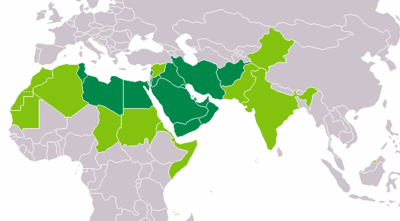
The Arabic alphabet holds immense cultural, religious, and historical significance. As the script for the Quran, it is central to the religious practice and identity of over 1.8 billion Muslims globally. Beyond its religious role, Arabic has historically been a lingua franca for scholarship, science, philosophy, and literature across vast regions, from the Iberian Peninsula to Central Asia.
This rich intellectual heritage has been preserved and transmitted through texts written in Arabic script. Furthermore, the aesthetic qualities of Arabic calligraphy have elevated the script to an art form, celebrated for its beauty and complexity. The script's influence extends to numerous other languages, including Persian, Urdu, and Swahili, which adopted and adapted it to write their own tongues, demonstrating its adaptability and widespread impact on global literacy and culture.
Linguistic Functionality
The abjad nature of the Arabic alphabet offers distinct linguistic advantages. By focusing on consonants, it allows for a more concise representation of words, relying on the reader's knowledge of the language to infer vowel sounds. This conciseness is particularly useful in contexts where space is limited or rapid writing is desired.
The inclusion of dedicated letters for long vowels (alif, waw, ya) provides a crucial layer of phonetic information, distinguishing words that might otherwise sound identical. The optional use of diacritics (harakat) provides a mechanism for disambiguation, essential for pedagogical purposes, religious texts, and situations demanding precise pronunciation. This flexible system allows the script to function effectively across a wide range of applications, from everyday communication to specialized scholarly and religious texts, showcasing an elegant balance between brevity and precision.
See also
Frequently Asked Questions
What is the Arabic alphabet?+
Why does Arabic have different shapes for each letter?+
How are vowels written in Arabic?+
Where did the Arabic alphabet come from?+
Why is Arabic calligraphy considered art?+
Based on content from Wikipedia · Licensed under CC BY-SA 4.0