

Apparent magnitude: How Bright Are Stars?
Images
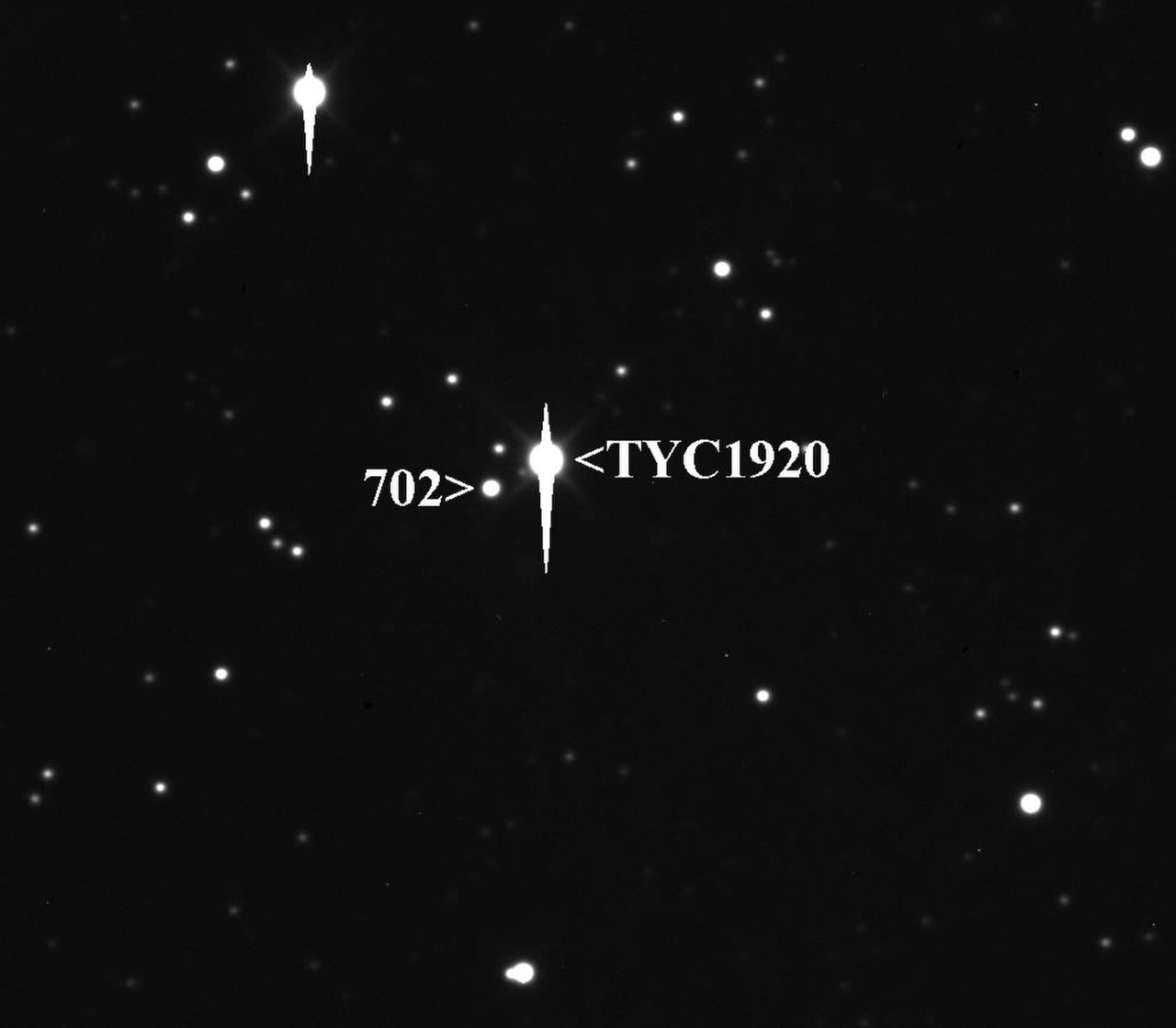
702Ala-mag13-occult


The Inverse Logarithmic Scale of Apparent Brightness
Apparent magnitude (m) is a fundamental concept in astronomy, quantifying the brightness of a celestial object as observed from Earth. It is crucial to understand that this scale is inverse and logarithmic. This means that brighter objects are assigned lower magnitude numbers, and a difference of one magnitude unit represents a specific ratio of brightness.
Specifically, a difference of 1.0 in magnitude corresponds to a brightness ratio of approximately 2.512, which is the fifth root of 100 (100^(1/5)). Consequently, a magnitude 2.0 star is about 2.512 times brighter than a magnitude 3.0 star, and a staggering 100 times brighter than a magnitude 7.0 star. This logarithmic nature allows astronomers to encompass an enormous range of observed brightnesses, from the blinding glare of the Sun to the faintest glimmers detected by advanced telescopes, within a manageable numerical system.
Historical Evolution of Magnitude Classification
The roots of the magnitude scale can be traced back to antiquity, with early astronomers like Claudius Ptolemy popularizing a system of classifying stars into six magnitudes. Ptolemy's catalog, which listed stars from first magnitude (brightest) to sixth magnitude (dimmest), served as the foundation for subsequent astronomical observations. This historical system, though qualitative, provided a crucial framework for understanding stellar brightness. The modern, mathematically precise definition of apparent magnitude was established by Norman Pogson in 1856.
Pogson's work formalized the relationship between magnitude and brightness ratio, ensuring consistency and enabling more accurate scientific measurements. This evolution from ancient observation to precise mathematical definition highlights the continuous refinement of astronomical tools and understanding.
The Spectrum of Observed Brightness
The apparent magnitude scale extends across a vast range, accommodating the diverse brightness of celestial objects. The brightest objects possess negative apparent magnitudes. For instance, Venus can reach an apparent magnitude of -4.2, and Sirius, the brightest star in the night sky, has an apparent magnitude of -1.46.
The Sun, our closest star, is overwhelmingly bright with an apparent magnitude of approximately -26.74. Conversely, the faintest stars visible to the unaided eye under ideal dark-sky conditions typically have an apparent magnitude of around +6.5. Pushing the boundaries of observation, deep-field images from the Hubble Space Telescope have revealed objects with apparent magnitudes as high as +31.5, showcasing the incredible sensitivity of modern astronomical instruments and the sheer depth of the observable universe.
Factors Influencing Apparent Magnitude
A celestial object's apparent magnitude is not solely determined by its intrinsic luminosity (how much light it actually emits). It is a complex interplay of three primary factors. Firstly, the object's intrinsic luminosity is fundamental; a more luminous object will generally appear brighter.
Secondly, distance plays a critical role; the inverse square law dictates that brightness decreases with the square of the distance. Therefore, a very luminous star far away might appear dimmer than a less luminous star that is closer. Thirdly, interstellar extinction, caused by dust and gas clouds along the line of sight, absorbs and scatters starlight, making distant objects appear fainter than they would otherwise.
Measuring apparent magnitude, a process known as photometry, often involves specific wavelength bands and filters to account for these variables.
Significance in Astronomy and Observational Practice
Apparent magnitude is a cornerstone of observational astronomy and stargazing. It provides a standardized metric for comparing the brightness of diverse celestial objects, facilitating the creation of star charts, catalogs, and surveys. For amateur astronomers, the 'limiting magnitude' – the faintest apparent magnitude they can detect with the naked eye – serves as a practical indicator of sky darkness and the impact of light pollution.
Furthermore, apparent magnitude is the basis for calculating absolute magnitude, which is the apparent magnitude an object would have if observed from a standard distance of 10 parsecs (32.6 light-years). Absolute magnitude is a more direct measure of an object's intrinsic luminosity, crucial for understanding stellar evolution and astrophysics. Thus, apparent magnitude bridges the gap between what we observe and what we can scientifically deduce about the universe.
Go deeper
Frequently Asked Questions
What is apparent magnitude?+
Why does a smaller magnitude number mean a brighter star?+
How many times brighter is a magnitude 2 star compared to a magnitude 3 star?+
What is the brightest star we can see and what is its magnitude?+
What makes a star look dimmer even if it is very bright?+
Based on content from Wikipedia · Licensed under CC BY-SA 4.0