

Antonio Gramsci
Images
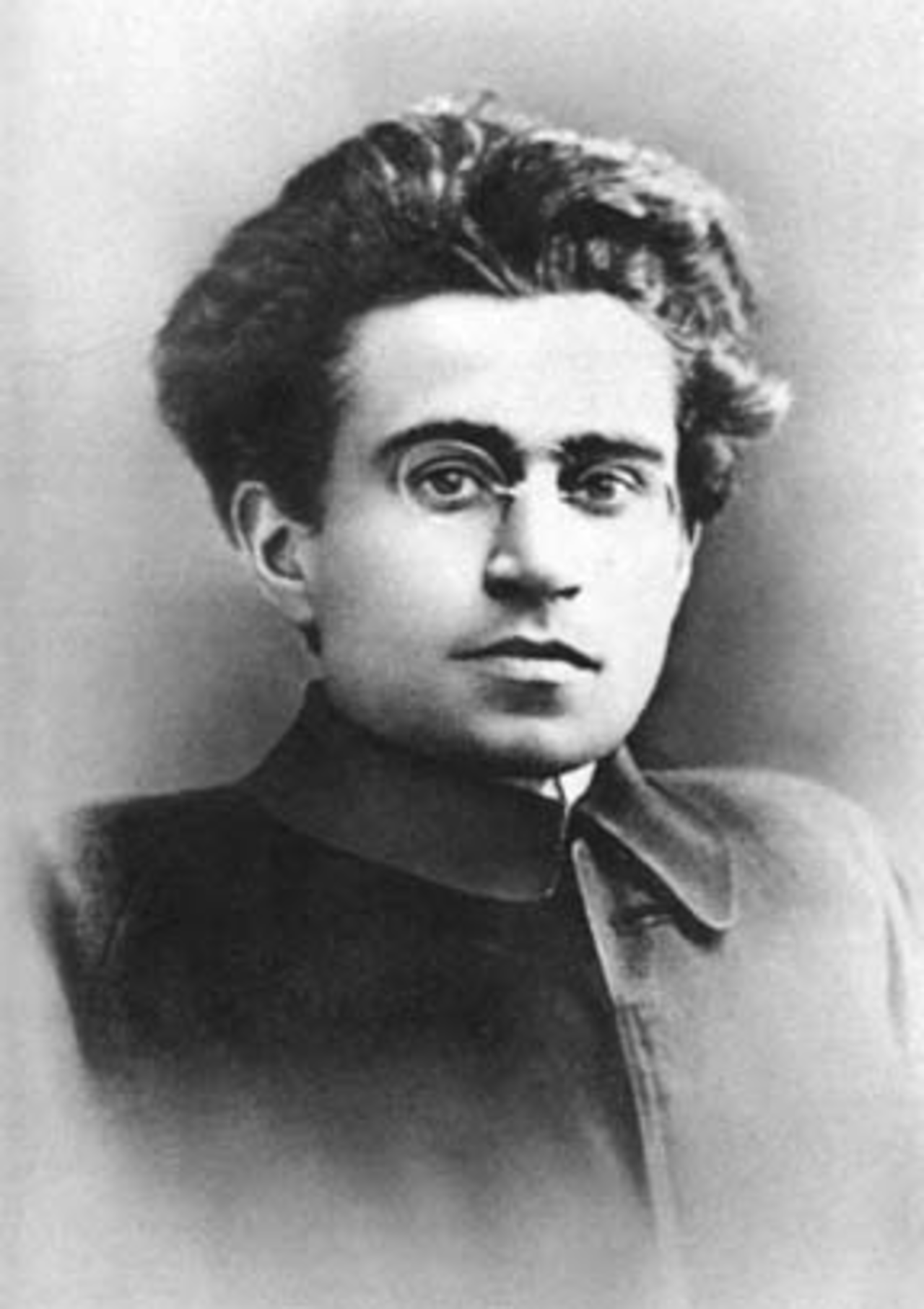
Antonio Gramsci
The Genesis of Gramsci's Thought
Antonio Gramsci's intellectual journey began amidst the socio-economic disparities of Sardinia, where he witnessed the struggles of peasants and miners against perceived mainland exploitation. This formative experience fueled his early Sardinian autonomist sentiments before he moved to Turin in 1911. Turin, undergoing rapid industrialization, exposed him to burgeoning labor movements and socialist circles.
His studies in linguistics and philosophy, coupled with his engagement with thinkers like Benedetto Croce, laid the groundwork for his unique Marxist interpretation. Joining the Italian Socialist Party, Gramsci honed his journalistic skills, advocating for workers' councils as instruments of revolutionary change. His early writings and activism reveal a deep concern for the subaltern classes and a critical perspective on existing power structures, setting the stage for his later theoretical innovations.
Deconstructing Power
Gramsci's most enduring contribution is the concept of cultural hegemony. Moving beyond traditional Marxist economic determinism, he argued that the ruling class maintains power not solely through coercion (political society) but crucially through consent, manufactured via civil society's institutions-education, media, religion, and popular culture. This 'hegemonic culture' integrates subordinate classes by making the dominant ideology appear as natural, universal common sense.
Gramsci posited that a successful revolution requires a 'war of position,' a protracted struggle to build a counter-hegemony. This involves developing alternative values, fostering critical consciousness, and creating 'organic intellectuals' from within the working class to articulate and disseminate these new ideas, thereby challenging the intellectual and moral leadership of the bourgeoisie.
The Prison Notebooks
Imprisoned by Mussolini's Fascist regime in 1926, Gramsci spent over a decade in harsh conditions, during which he produced his seminal 'Prison Notebooks.' These extensive writings, totaling over 3,000 pages, represent a profound intellectual effort to analyze the failures of Marxist revolutions in Western Europe and to theorize a new path forward. He meticulously examined Italian history, nationalism, and the nature of the modern state, distinguishing between 'political society' (the apparatus of state coercion) and 'civil society' (the realm of consent and cultural production).
Gramsci's analysis of 'passive revolution' explained how dominant classes adapt to maintain hegemony, incorporating reforms to preempt radical change. His critique of economic determinism and his emphasis on human agency ('praxis') marked a significant departure from orthodox Marxism.
Intellectuals, Civil Society, and the Path to Emancipation
Gramsci placed immense importance on the role of intellectuals in shaping societal consciousness. He distinguished between 'traditional intellectuals' (like clergy or academics who often serve the status quo) and 'organic intellectuals,' who emerge from and represent the interests of specific social classes. For Gramsci, the working class needed to cultivate its own organic intellectuals to challenge bourgeois hegemony and build a 'historic bloc'-an alliance of social forces capable of establishing a new order.
He envisioned the state evolving towards a 'regulated society' where civil society's capacity for self-regulation diminishes the need for coercive political structures. His ideas on popular education and critical pedagogy have had a lasting impact, influencing movements for social justice and adult learning worldwide, underscoring his relevance in contemporary struggles for emancipation.
Legacy and Critiques
Antonio Gramsci remains one of the most cited and influential Marxist thinkers of the 20th century. His concepts of hegemony, civil society, and organic intellectuals have permeated fields beyond Marxism, including cultural studies, political science, and sociology. Neo-Gramscianism, for instance, applies his framework to international relations.
However, his work has also faced criticism. Some argue that his focus on cultural struggle risks downplaying economic factors or leading to an ideological elitism that could conflict with liberal notions of individual liberty. Critics also point to his complex relationship with violence and his perceived underestimation of Fascist brutality.
Despite these debates, Gramsci's profound insights into the mechanisms of power and the importance of cultural struggle continue to resonate, making his work essential for understanding contemporary social and political dynamics.
Go deeper
Based on content from Wikipedia · Licensed under CC BY-SA 4.0