

Antimatter
Images
Antimatter


The Genesis of Antimatter
The concept of antimatter emerged not from observation, but from theoretical necessity. In 1928, Paul Dirac formulated a relativistic wave equation for the electron that elegantly unified quantum mechanics with Einstein's special relativity. This equation, however, yielded solutions that implied the existence of particles with the same mass as the electron but with opposite charge and other quantum properties.
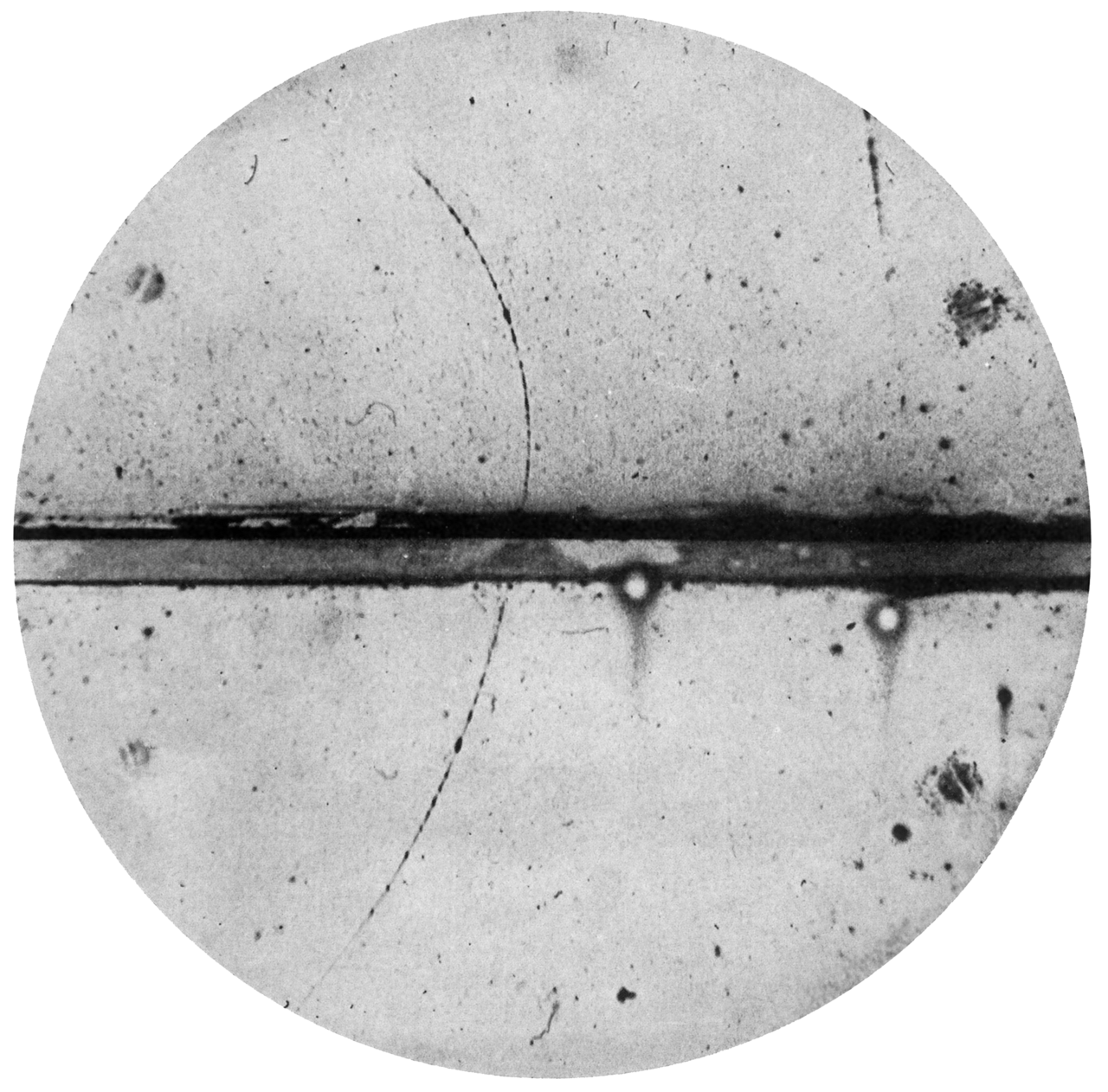
Initially, Dirac interpreted these as protons, but this didn't align with experimental observations. The true nature of these antiparticles became clearer with the discovery of the positron by Carl D. Anderson in 1932, observed as a particle with the mass of an electron but a positive charge.
This discovery validated Dirac's prediction and opened the door to the concept of a whole antimatter sector. The Standard Model of particle physics now incorporates antiparticles for all known fundamental particles, including quarks (antiquarks) and neutrinos (antineutrinos).
The Asymmetry Problem
One of the most profound mysteries in cosmology is the observed dominance of matter over antimatter in the observable universe. According to the Big Bang model, the early universe should have produced equal amounts of matter and antimatter. If this were precisely true, all matter and antimatter would have annihilated each other shortly after the Big Bang, leaving a universe composed solely of photons and neutrinos.
The fact that galaxies, stars, and life exist implies a slight asymmetry, a tiny excess of matter over antimatter, known as baryogenesis. Several theories attempt to explain this asymmetry, including CP violation (a difference in the behavior of matter and antimatter), the existence of sterile neutrinos, or processes occurring during the electroweak phase transition. Understanding this imbalance is crucial for a complete picture of cosmic evolution and the fundamental laws governing the universe.
Antimatter Production, Storage, and Technological Frontiers
Producing antimatter is an energy-intensive and complex process, primarily achieved in high-energy particle accelerators like CERN's Large Hadron Collider. Collisions between high-energy particles can generate antiparticles, which are then meticulously separated and stored. Due to their tendency to annihilate upon contact with ordinary matter, antiparticles must be contained within sophisticated magnetic or electric fields, often in ultra-high vacuum environments.
Current antimatter production yields are minuscule, measured in nanograms or less. Despite these challenges, antimatter has found critical applications. Positron Emission Tomography (PET) scans are a vital diagnostic tool in medicine, utilizing the annihilation of positrons to map metabolic activity. Looking forward, antimatter's immense energy density makes it a theoretical candidate for highly efficient rocket propulsion, potentially enabling interstellar travel.
However, the practical challenges of producing, storing, and safely handling sufficient quantities for such applications remain formidable.
Probing Fundamental Physics
Antimatter serves as an invaluable tool for probing the fundamental laws of physics. By comparing the properties of matter and antimatter particles with extreme precision, scientists can test the validity of fundamental symmetries, such as charge-parity (CP) symmetry. Experiments like ALPHA and AEgIS at CERN are studying antihydrogen atoms to see if they behave identically to hydrogen atoms under gravity and electromagnetism.
Any observed difference could point to new physics beyond the Standard Model. Furthermore, the search for antimatter in cosmic rays and the study of astrophysical phenomena involving antimatter, such as those near black holes or neutron stars, provide insights into extreme environments and the universe's history. The ongoing quest to understand antimatter's role in the cosmos continues to drive innovation in experimental techniques and theoretical frameworks.
Go deeper
Frequently Asked Questions
What is antimatter?+
How did scientists discover antimatter?+
Why is there more matter than antimatter in the universe?+
How do we make antimatter today?+
What can antimatter be used for?+
Based on content from Wikipedia · Licensed under CC BY-SA 4.0