

Antibiotic Resistance: When Germs Get Super Strong!
Images
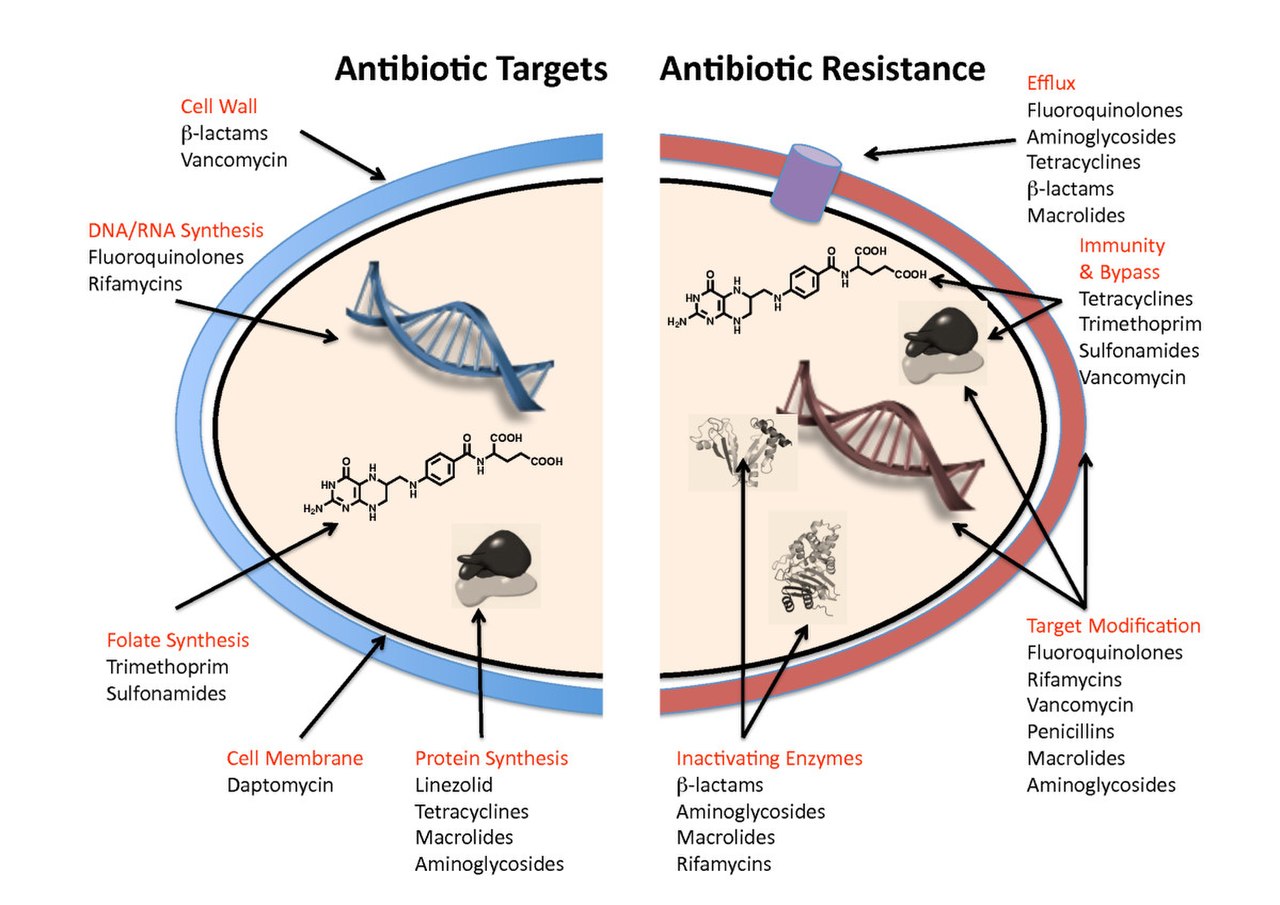
Antibiotic Resistance Mechanisms


The Molecular Battleground
Antibiotic resistance is a sophisticated evolutionary process where bacteria develop mechanisms to survive exposure to antimicrobial drugs. These mechanisms are diverse and can be intrinsic or acquired. Acquired resistance is particularly concerning and can occur through several pathways.
Bacteria can acquire new genes encoding resistance through horizontal gene transfer, a rapid process involving plasmids (small, circular DNA molecules), transposons ('jumping genes'), and bacteriophages (viruses that infect bacteria). These mobile genetic elements can transfer resistance genes between different bacterial species, even across genera. Alternatively, resistance can arise from spontaneous mutations in the bacterial chromosome, altering existing genes to confer resistance.
Common resistance mechanisms include enzymatic inactivation or modification of the antibiotic (e.g., beta-lactamases breaking down penicillin), alteration of the antibiotic's target site (e.g., changes in ribosomal RNA preventing protein synthesis inhibition), reduced intracellular accumulation of the antibiotic through decreased permeability or increased efflux (pumping the drug out), and development of alternative metabolic pathways that bypass the inhibited step. Understanding these molecular strategies is crucial for developing new therapeutic approaches.
The Evolutionary Pressures
The widespread emergence and dissemination of antibiotic resistance are driven by a complex interplay of biological and anthropogenic factors. The primary driver is the selective pressure exerted by the extensive use and misuse of antibiotics. In human medicine, this includes prescribing antibiotics for viral infections (where they are ineffective), incomplete patient adherence to prescribed regimens, and the use of broad-spectrum antibiotics when narrow-spectrum ones would suffice.
In agriculture, antibiotics are often used for growth promotion and disease prevention in livestock, creating a large reservoir of resistant bacteria that can transfer to humans through food consumption or environmental contact. The globalization of travel and trade also facilitates the rapid spread of resistant strains across geographical boundaries. Furthermore, inadequate infection control measures in healthcare settings and communities allow resistant pathogens to proliferate and transmit efficiently, exacerbating the problem.
This multifaceted pressure accelerates the natural evolutionary process of resistance.
The Clinical and Societal Fallout
The implications of antibiotic resistance are profound and far-reaching, threatening to undermine decades of medical progress. Infections that were once easily managed with a course of antibiotics are becoming increasingly difficult, and sometimes impossible, to treat. This leads to prolonged illness, increased mortality rates, and higher healthcare costs due to extended hospital stays and the need for more expensive, often more toxic, alternative treatments.
Critically, antibiotic resistance jeopardizes the safety and efficacy of many essential medical procedures that rely on effective antibiotics for prophylaxis and treatment. These include surgeries (from routine appendectomies to complex organ transplants), cancer chemotherapy, and the care of premature infants. A post-antibiotic era, where common infections could once again become deadly, is a realistic and alarming prospect.
This crisis necessitates a global, coordinated response involving public health, research, and policy.
Strategies for Mitigation
Combating antibiotic resistance requires a multi-pronged strategy, often referred to as antimicrobial stewardship. This involves optimizing the use of existing antibiotics to preserve their effectiveness and developing new strategies to combat resistant pathogens. Key interventions include promoting judicious antibiotic prescribing in human and animal health, ensuring patients complete their full course of treatment, and enhancing infection prevention and control measures in healthcare facilities and communities.
Public education campaigns are vital to raise awareness about the risks of resistance and the importance of responsible antibiotic use. Simultaneously, significant investment is needed in research and development for novel antibiotics, alternative therapies (such as phage therapy or immunotherapy), and rapid diagnostic tools that can quickly identify the causative pathogen and its susceptibility profile, enabling targeted treatment. International collaboration and surveillance are essential to monitor the spread of resistance and coordinate global efforts.
Go deeper
Frequently Asked Questions
What is antibiotic resistance?+
How do germs become super strong against antibiotics?+
Why do doctors sometimes give antibiotics when they don't help?+
How does farming make germs stronger?+
What could happen if germs become too strong?+
Based on content from Wikipedia · Licensed under CC BY-SA 4.0