

The King Who Wasn't!
Images

Henrietta Street (first session using the Sony NEX-7)
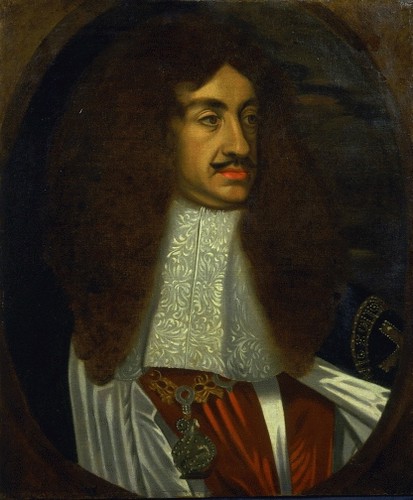


Defining the Anti-king
An anti-king, or Gegenkönig in German, represents a fascinating facet of medieval political instability. It denotes a figure who claims the royal title in direct opposition to a reigning monarch, typically arising from contested successions or profound political schisms. While hereditary monarchies often dealt with 'pretenders' or 'claimants,' the term 'anti-king' is more specifically applied to elective systems.
In these monarchies, the selection of a ruler was a formal process, but one susceptible to factionalism and external influence. The emergence of an anti-king was not merely a personal ambition; it signified a breakdown in consensus among the electors or a deliberate attempt by opposing powers, such as the Papacy or rival states, to destabilize a kingdom. This dual sovereignty created periods of intense conflict, legal ambiguity, and shifting allegiances, fundamentally challenging the very concept of legitimate rule within a realm.
The Crucible of Elective Monarchies
The phenomenon of anti-kings is most prominently documented within the Holy Roman Empire, particularly in the centuries preceding the Golden Bull of 1356. This imperial decree, issued by Charles IV, sought to codify and clarify the process of electing the Holy Roman Emperor, thereby reducing the potential for rival claims. Before this, the election of the King of the Romans (who would often become Emperor) was a volatile affair.
Powerful prince-electors could be divided, leading to multiple candidates being put forth. Bohemia and Hungary also experienced similar situations due to their elective traditions. The dynamic was often exacerbated by the complex relationship between secular rulers and the Papacy. Emperors might support an antipope to undermine a hostile Pope, and conversely, Popes might back an anti-king to weaken an Emperor with whom they were in conflict.
This interplay of religious and political power created fertile ground for the rise of competing royal figures.
From Rivalry to Reign
The narrative of an anti-king is not solely one of failure. Several individuals who initially held the status of anti-king ultimately succeeded in consolidating power and achieving undisputed royal or imperial authority. Notable examples include Conrad III, Frederick II, and Charles IV himself, all of whom navigated periods of intense opposition before reigning supreme.
Their ascensions demonstrate that the designation of 'anti-king' often reflected the initial power dynamics rather than an inherent lack of legitimacy. The success of these figures underscores the fluid nature of medieval power and the importance of political acumen, military strength, and strategic alliances in securing a throne. Conversely, the historical standing of figures like Henry II of Bavaria or Egbert II of Meissen remains a subject of scholarly debate, highlighting the enduring ambiguity surrounding contested successions and the difficulty in definitively labeling historical figures.
The Golden Bull and the Fading of the Anti-king
The promulgation of the Golden Bull in 1356 marked a significant turning point in the frequency and impact of anti-kings, particularly within the Holy Roman Empire. By establishing a clear, seven-member electoral college and defining the procedures for election, the Bull aimed to prevent the kind of divisive disputes that had previously spawned rival claimants. While it did not eliminate all forms of political opposition or succession challenges, it greatly reduced the systemic opportunities for an 'anti-king' to emerge from a contested election.
The decree brought a degree of formal stability to the imperial succession, shifting the focus of power struggles towards other arenas. Although the concept of a pretender or claimant persisted, the specific historical role of the anti-king, as a direct rival king arising from a fractured electoral process, became considerably less common in subsequent centuries.
See also
Frequently Asked Questions
What is an anti-king?+
Why did anti-kings appear in the Holy Roman Empire?+
How did the Golden Bull of 1356 help stop anti-kings?+
Can an anti-king become a real king?+
Who could support an anti-king?+
Based on content from Wikipedia · Licensed under CC BY-SA 4.0