

Antenna
Images

Streetlight Surveillance Camera & Antenna, Jefferson Drive SW & 7th Street SW (Washington, DC)




The Physics of Radiating and Receiving Energy
At its core, an antenna is a transducer – a device that converts electrical energy into electromagnetic waves and vice versa. This conversion relies on fundamental principles of electromagnetism. When an alternating current flows through a conductor (the antenna element), it creates oscillating electric and magnetic fields that propagate outwards as electromagnetic waves.
The efficiency of this radiation is highly dependent on the antenna's physical characteristics, such as its length, shape, and orientation, relative to the wavelength of the signal. Conversely, when an electromagnetic wave encounters an antenna, it induces an oscillating voltage and current within the conductor. This induced electrical signal can then be processed by a receiver.
Antenna theory, a complex field of study, involves understanding wave propagation, impedance matching, radiation patterns, and polarization to optimize performance for specific applications, from broadcasting to satellite communication and radar systems. The design of an antenna is a careful balance of physics and engineering to achieve desired signal strength, directionality, and bandwidth.
A Tale of Two Antennas
The term 'antenna' elegantly encapsulates two distinct yet vital sensory mechanisms. In technology, antennas are engineered structures designed to interact with the electromagnetic spectrum. They are the critical interface for wireless communication, enabling the transmission and reception of information encoded in radio waves, microwaves, and other frequencies.
This allows for everything from cellular networks and Wi-Fi to deep-space probes and radio astronomy. In zoology, 'antennae' (plural) refer to the paired, segmented appendages found on the heads of arthropods. These biological marvels are multi-functional sensory organs, equipped with chemoreceptors for smell and taste, mechanoreceptors for touch and vibration, and sometimes even for hearing or detecting humidity.
They are crucial for an arthropod's survival, guiding it through its environment, facilitating social interactions, and aiding in foraging and reproduction. The shared name highlights a conceptual similarity: both serve as extensions that gather information from the external world.
Evolution of Antenna Design
The journey of the technological antenna began with the theoretical work of James Clerk Maxwell and the experimental validation by Heinrich Hertz in the late 19th century. Hertz used simple dipole antennas – essentially straight conductors – to demonstrate the existence of electromagnetic waves. Guglielmo Marconi's pioneering work in wireless telegraphy in the early 20th century saw the development of more practical antennas, often tall vertical wires, to achieve long-distance communication.
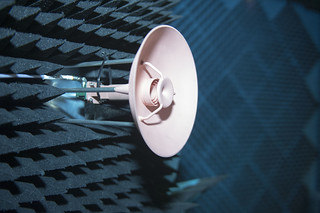
As radio broadcasting, radar, and television emerged, antenna design diversified dramatically. Innovations led to Yagi-Uda antennas for directional reception, parabolic dishes for focused transmission and reception (like satellite dishes), and phased arrays capable of electronically steering beams. The mid-20th century saw significant advancements driven by military needs, particularly for radar and electronic warfare, leading to complex antenna systems.
Today, research continues into metamaterial antennas, reconfigurable antennas, and miniaturized antennas for ubiquitous computing and advanced communication systems, pushing the boundaries of efficiency and functionality across the electromagnetic spectrum.
The Indispensable Role in Modern Society and Science
Antennas are foundational to the interconnectedness and technological advancement of modern society. They are the silent enablers of global communication, facilitating everything from international business transactions and remote work to social media and emergency response systems. The proliferation of mobile devices, the Internet of Things (IoT), and the ongoing rollout of 5G and future wireless technologies are all critically dependent on sophisticated antenna designs.
Beyond communication, antennas are indispensable tools in scientific exploration. Radio telescopes, some spanning hundreds of meters, are massive antennas that capture faint signals from the cosmos, providing insights into the origins of the universe, black holes, and exoplanets. Radar antennas are vital for weather forecasting, air traffic control, and geological surveying.
In medicine, specialized antennas are used in MRI machines and other diagnostic equipment. The continuous innovation in antenna technology is therefore directly linked to our ability to communicate, understand our planet, and explore the universe.
Future Frontiers and Challenges
The future of antenna technology is dynamic, driven by the ever-increasing demand for higher data rates, lower latency, and greater spectral efficiency. Emerging fields like 6G wireless communication, satellite constellations for global internet access, and advanced sensing technologies will require novel antenna solutions. Researchers are exploring metamaterials to create antennas with unprecedented control over electromagnetic waves, enabling functionalities like beamforming and cloaking.
Reconfigurable antennas, which can change their properties in real-time, are crucial for adapting to changing communication environments. Miniaturization remains a key challenge, especially for integration into small devices and wearable technology. Furthermore, the increasing density of wireless devices raises concerns about electromagnetic interference and spectrum congestion, necessitating smarter antenna systems that can efficiently share the limited radio spectrum.
The biological antenna also continues to inspire, with ongoing research into bio-inspired sensors and communication methods.
Go deeper
Frequently Asked Questions
What is an antenna and how does it work?+
How do antennas help us talk to space?+
Why do antennas have different shapes and sizes?+
Are there antennas in animals?+
What are some cool types of antennas people use today?+
Based on content from Wikipedia · Licensed under CC BY-SA 4.0