

Annapurna: The Giant Mountain!
Images
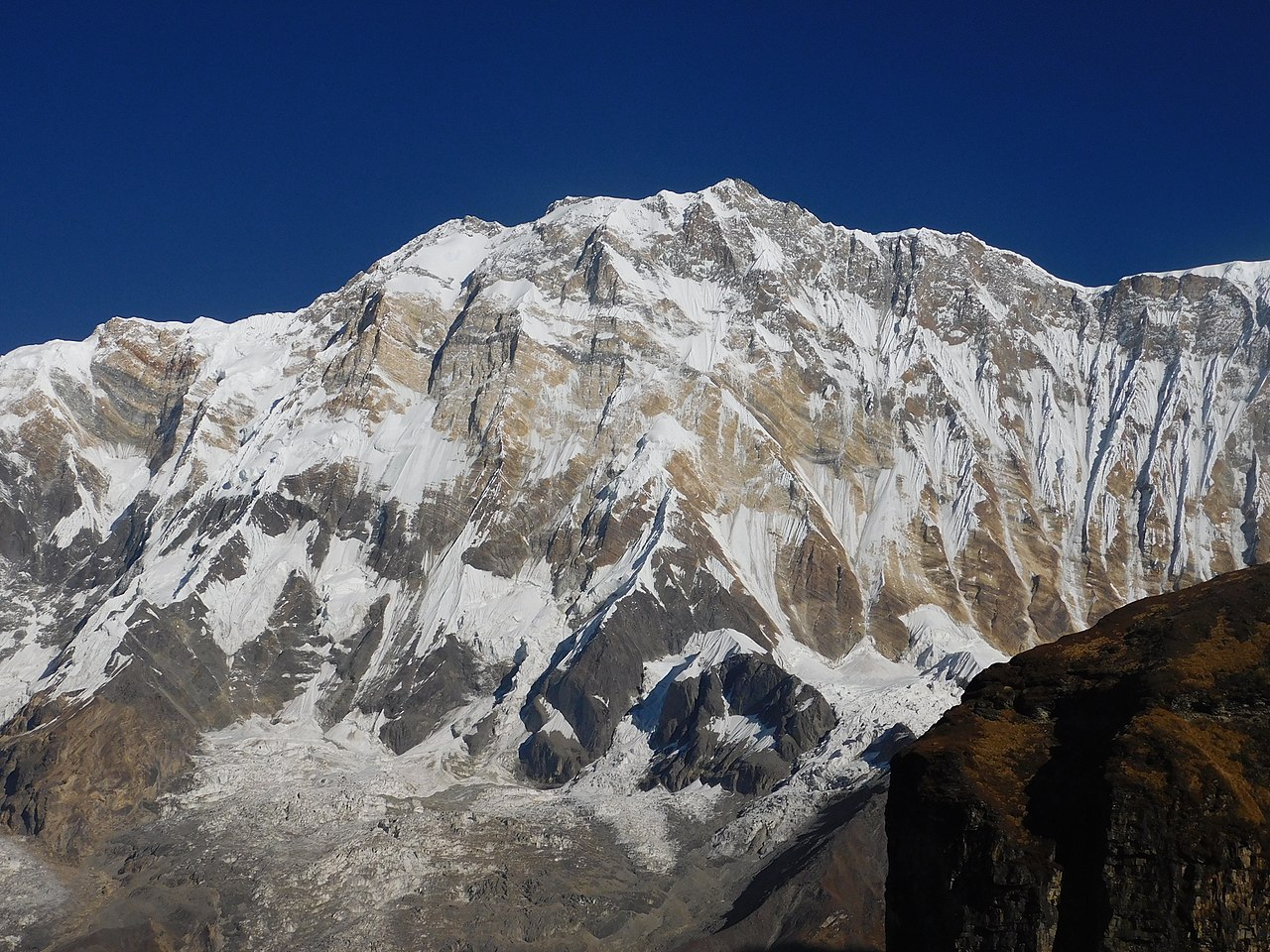
South Face Of Annapurna I (Main)


![Village in Annapurna Range [Pokhara]](https://live.staticflickr.com/3192/2638987625_9fc063062f_n.jpg)


Geographical Marvel and Climatic Extremes
Annapurna I, situated in the Gandaki Province of north-central Nepal, is a formidable massif within the Himalayas, standing at an imposing 8,091 meters (26,545 feet). Its sheer scale and dramatic topography present a unique geographical challenge. The mountain's location subjects it to extreme climatic conditions, characterized by thin, frigid air at high altitudes and unpredictable weather patterns.
Permanent snow and ice fields dominate its upper reaches, feeding glaciers that sculpt the surrounding landscape. The massif is integral to the Annapurna Conservation Area, a vast ecological zone established to protect its biodiversity and geological significance. This area, spanning 7,629 square kilometers (2,946 sq mi), is a testament to Nepal's commitment to preserving its natural heritage, encompassing diverse ecosystems from subtropical forests to alpine deserts.
Pioneering Ascents and the Evolution of High-Altitude Exploration
The history of Annapurna is intrinsically linked to the golden age of high-altitude mountaineering. The 1950 French expedition, led by Maurice Herzog, etched its name in history by achieving the first ascent of Annapurna I via its north face. This groundbreaking achievement was not merely a personal triumph but a paradigm shift in mountaineering, proving that the world's highest peaks were indeed conquerable.
Prior to this, the 'death zone' above 8,000 meters was considered an insurmountable barrier. Annapurna's successful ascent served as a crucial stepping stone, inspiring subsequent expeditions to tackle other eight-thousanders and pushing the boundaries of human endurance and exploration. It marked a pivotal moment, demonstrating the potential for human achievement in the most extreme environments.
The Dual Nature of Annapurna
Annapurna is renowned for its extreme difficulty and danger, a reputation earned through decades of climbing history. For a long time, it held the highest fatality-to-summit ratio among the principal eight-thousanders, a stark indicator of its perilous nature. Climbers face constant threats from avalanches, particularly on its steep faces, and the notoriously unpredictable Himalayan weather.
The 3,000-meter (9,800 ft) south face, in particular, is considered one of the most technically demanding and dangerous climbs globally. Despite these risks, recent years have seen a decrease in the fatality rate, falling from 32% to under 20% between 2012 and 2022, though it remains higher than many other major peaks. The mountain's danger extends beyond elite climbers; a tragic 2014 snowstorm near Annapurna and Dhaulagiri claimed at least 43 lives, underscoring the region's inherent risks for all visitors.
As of 2022, 365 individuals had summited Annapurna I, while 72 had perished in the attempt.
Conservation Efforts and Economic Significance
The Annapurna Conservation Area is a cornerstone of Nepal's ecotourism strategy and a vital component of its national identity. Established as the first and largest conservation area in Nepal, it plays a critical role in safeguarding the region's rich biodiversity, including rare species of flora and fauna, and preserving its unique cultural heritage. The area is a global magnet for trekkers, drawing hundreds of thousands of visitors annually to famous routes like the Annapurna Sanctuary and Annapurna Circuit.
This influx of tourism is a significant economic driver for local communities, providing employment and income through guiding, lodging, and the sale of local crafts. The success of these conservation and tourism initiatives is crucial for the sustainable development of the region, balancing economic benefits with the imperative of environmental protection.
See also
Frequently Asked Questions
What is Annapurna and how tall is it?+
Why is Annapurna important for nature and wildlife?+
How did people first climb Annapurna?+
Why can Annapurna be dangerous for climbers?+
What can visitors do around Annapurna?+
Based on content from Wikipedia · Licensed under CC BY-SA 4.0