

Androgen: Your Body's Secret Builders!
Images

Androgen backdoor schematic


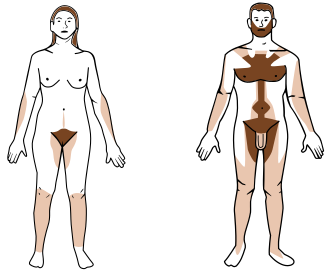
The Genesis and Definition of Androgens
Androgens, derived from the Greek 'andr-' meaning 'man,' constitute a class of endogenous steroid hormones primarily responsible for the development and maintenance of male secondary sex characteristics in vertebrates. Their influence extends beyond mere physical traits, encompassing the embryological differentiation of primary male reproductive organs and the profound physiological shifts experienced during puberty. Synthesized predominantly in the testes of males and ovaries of females, androgens also find a production source in the adrenal cortex, underscoring their systemic importance.
While historically associated with masculinity, their presence and function in females, albeit at lower concentrations, are critical for libido and sexual arousal, demonstrating a more nuanced biological role. They also serve as crucial biosynthetic precursors for estrogens in both sexes, highlighting an intricate hormonal interplay.
The Endocrine Symphony
The production of androgens is a tightly regulated process orchestrated by the hypothalamic-pituitary-gonadal (HPG) axis. In males, the testes, specifically the Leydig cells, are the principal sites of testosterone synthesis, stimulated by luteinizing hormone (LH) from the pituitary gland. A significant portion of circulating testosterone is converted peripherally to the more potent dihydrotestosterone (DHT) by the enzyme 5-alpha-reductase.
Androstenedione, another key androgen, is produced in both the gonads and adrenal glands. In females, the ovaries produce androgens, but their levels are significantly lower than in males, and their primary role is to serve as precursors for estrogen synthesis. The adrenal glands contribute a smaller but consistent amount of androgens to both sexes, independent of gonadal function.
This complex network ensures appropriate androgen levels are maintained for diverse physiological functions.
Androgens' Multifaceted Impact on Physiology
The influence of androgens permeates numerous bodily systems. During fetal development, androgens, particularly DHT, are indispensable for the masculinization of the external genitalia, including the formation of the penis, scrotum, and prostate. Postnatally, testosterone drives the development of secondary male characteristics at puberty: spermarche, deepening of the voice, increased muscle mass and strength, bone growth and maturation, and the growth of facial and pubic hair.
Beyond sexual development, androgens play roles in erythropoiesis (red blood cell production), mood regulation, cognitive functions, and metabolic processes. In adulthood, they contribute to maintaining bone density, muscle mass, and libido. Even in females, where androgen levels are low, they are vital for maintaining sexual desire and overall well-being, and their imbalance can lead to conditions like hirsutism or polycystic ovary syndrome (PCOS).
Beyond Biology
The understanding of androgens has led to significant clinical applications. Androgen replacement therapy (ART) is used to treat conditions characterized by androgen deficiency, such as hypogonadism in men, helping to restore muscle mass, bone density, libido, and mood. Conversely, the anti-androgenic effects of certain medications are employed in treating androgen-dependent conditions like prostate cancer and acne.
The anabolic properties of androgens have also led to their misuse as performance-enhancing drugs (anabolic steroids), a practice associated with serious health risks. Ongoing research continues to explore the intricate mechanisms of androgen action, their role in aging, and their potential therapeutic applications in a wider range of conditions, highlighting their enduring significance in human health.
Go deeper
Frequently Asked Questions
What are androgens and what do they do?+
Where do androgens come from in our bodies?+
Why do boys' voices get deeper during puberty?+
How do androgens help girls too?+
Can doctors give extra androgens if someone needs them?+
Based on content from Wikipedia · Licensed under CC BY-SA 4.0