

Ancient Egyptian Agriculture
Images
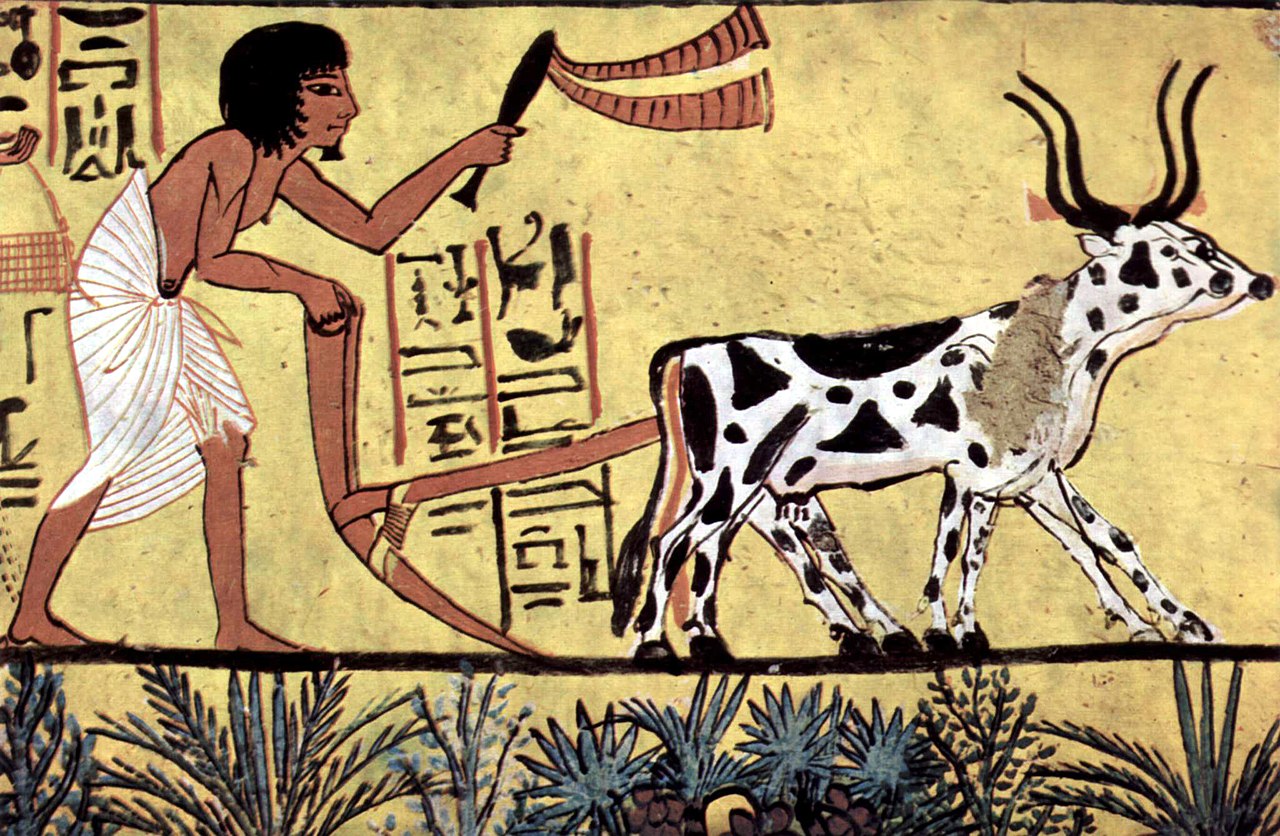
Maler Der Grabkammer Des Sennudem 001


The Nile as a Geographical Determinant
The geography of ancient Egypt was overwhelmingly defined by the Nile River. Its predictable annual inundation, or flood, was not merely an environmental factor but a fundamental determinant of the civilization's existence and development. Unlike the erratic floods of other river systems, the Nile's floodwaters rose and fell with remarkable regularity, typically between June and September.
This predictability allowed the Egyptians to develop sophisticated agricultural strategies. The floodwaters deposited a rich layer of alluvial silt, a highly fertile soil that required minimal amendment, creating a narrow but intensely productive agricultural zone along the riverbanks. This 'black land' (Kemet) contrasted sharply with the arid 'red land' (Deshret) of the surrounding desert.
The reliance on the Nile's cycle shaped not only their farming calendar but also their religious beliefs, their concept of time, and their entire societal structure, making the river the central axis of Egyptian life and power.
Ingenuity in Irrigation
While the Nile provided fertile soil, its effective utilization required significant human ingenuity, particularly in water management. The ancient Egyptians developed and refined basin irrigation, a system that transformed the landscape into a series of controlled fields. They constructed extensive networks of earthen dikes and canals to divide the floodplain into basins.
During the inundation, these basins were flooded, and the water was retained for several weeks. As the floodwaters receded, the silt settled, and the retained water slowly seeped into the soil, providing sustained moisture for crops. This system allowed for multiple harvests and the cultivation of land further from the river's immediate edge.
This mastery of water management was a critical factor in generating the agricultural surplus that supported Egypt's population and its complex civilization. Later periods saw the development of more advanced techniques like the shaduf, a lever-based device for lifting water.
Crop Diversity and Economic Significance
Ancient Egyptian agriculture was characterized by a focus on staple crops that ensured food security, alongside specialized crops that fueled economic activity and cultural practices. Grains, particularly emmer wheat and barley, formed the cornerstone of the Egyptian diet, serving as the primary ingredients for bread and beer, respectively. These were cultivated extensively across the fertile Nile valley.
Beyond sustenance, crops like flax were vital for the textile industry. Flax fibers were processed into linen, a highly valued commodity used for clothing, household textiles, and even mummy wrappings. The production of linen was a significant economic activity.
Furthermore, the cultivation of papyrus, a marsh plant, was crucial for the development of a sophisticated writing system and record-keeping. The processed pith of the papyrus reed provided a lightweight, portable, and durable writing surface, facilitating administration, literature, and religious texts, and becoming a key export commodity.
The Agricultural Surplus
The consistent agricultural surplus generated by the Nile's fertility and the Egyptians' advanced farming techniques was the indispensable foundation for the development of a complex, centralized state. This surplus meant that a significant portion of the population could be freed from direct food production, enabling specialization in crafts, administration, priesthood, and military service. This division of labor was essential for the construction of monumental architecture, the administration of a large territory, and the maintenance of a standing army.
The ability to store and redistribute grain also provided a mechanism for state control and social hierarchy. Rulers could provision workers, reward loyalty, and manage resources, thereby consolidating power. The economic prosperity derived from agriculture allowed for extensive trade networks, both internal and external, further enriching the civilization and contributing to its enduring legacy.
The very structure of Egyptian society, from its pharaohs to its laborers, was underpinned by the success of its agricultural system.
See also
Frequently Asked Questions
What made the Nile River special for Egyptian farming?+
How did the Nile's floods help grow crops?+
What are some of the main foods the Egyptians grew?+
How did the Egyptians use water to grow more food?+
Why was linen important to ancient Egyptians?+
Based on content from Wikipedia · Licensed under CC BY-SA 4.0