

Amino acid
Images

Amino acid


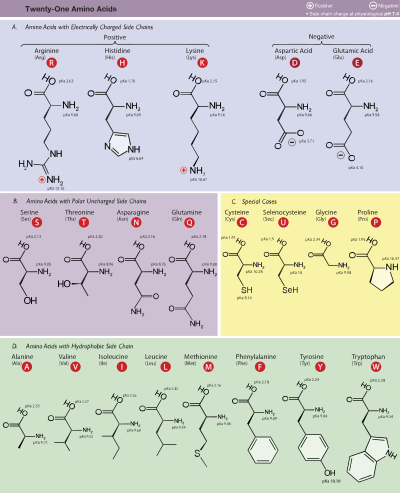




The Twenty Standard Amino Acids
Amino acids are organic compounds characterized by a central carbon atom (the alpha-carbon) bonded to an amino group (-NH2), a carboxyl group (-COOH), a hydrogen atom, and a variable side chain (R-group). It is this R-group that distinguishes the 20 standard amino acids, imparting unique chemical properties such as polarity, charge, size, and hydrophobicity. For instance, glycine has a simple hydrogen atom as its R-group, making it the smallest and achiral, while tryptophan, with its bulky indole ring, is hydrophobic.
All amino acids, except glycine, are chiral, existing as L-isomers and D-isomers. In biological systems, L-amino acids are overwhelmingly predominant, forming the basis of all proteins synthesized by ribosomes. The specific arrangement and properties of these R-groups dictate the three-dimensional structure and ultimately, the function of the resulting protein.
Nutritional Essentiality and Dietary Sources
Human physiology necessitates a constant supply of amino acids for protein synthesis, repair, and various metabolic functions. While the human body can synthesize 11 of the 20 standard amino acids (non-essential amino acids), the remaining 9-histidine, isoleucine, leucine, lysine, methionine, phenylalanine, threonine, tryptophan, and valine-are classified as essential amino acids. These must be acquired through dietary intake.
A deficiency in even one essential amino acid can impair protein synthesis and lead to a catabolic state, where the body breaks down its own tissues for amino acids. Complete protein sources, found in animal products like meat, eggs, and dairy, contain all essential amino acids in adequate proportions. Plant-based diets can also provide all essential amino acids, but often require careful combination of different foods (e.g., rice and beans) to achieve a balanced profile.
The Central Role in Protein Synthesis and Folding
The process of protein synthesis, or translation, is a cornerstone of molecular biology. It begins with the transcription of DNA into messenger RNA (mRNA), which then travels to the ribosome. Here, transfer RNA (tRNA) molecules, each carrying a specific amino acid and an anticodon complementary to an mRNA codon, align along the mRNA strand.
The ribosome catalyzes the formation of peptide bonds between successive amino acids, elongating a polypeptide chain. As the chain grows, it begins to fold spontaneously into a specific three-dimensional conformation, driven by interactions between the R-groups. This precise folding is critical for the protein's biological activity, determining its ability to bind to other molecules, catalyze reactions, or provide structural support.
Beyond Building Blocks
Amino acids are not merely passive building materials; they are active participants in a vast network of metabolic pathways. Many amino acids serve as precursors for the synthesis of vital biomolecules, including neurotransmitters (e.g., tryptophan to serotonin, tyrosine to dopamine), hormones, and nucleotides. They are also involved in energy metabolism; deaminated amino acids can enter the citric acid cycle or be converted into glucose or ketone bodies.
Furthermore, specific amino acids and their derivatives act as signaling molecules, influencing cellular processes and organismal responses. For example, glutamine plays a crucial role in nitrogen transport and immune cell function, while arginine is a precursor to nitric oxide, a key signaling molecule in the cardiovascular system.
Therapeutic and Industrial Applications
The unique properties of amino acids have led to their widespread application in medicine, nutrition, and industry. Pharmaceutical companies utilize specific amino acids or their derivatives in drug development, for instance, in the synthesis of peptides with therapeutic effects or as components of parenteral nutrition solutions for patients unable to consume food orally. In the food industry, amino acids like monosodium glutamate (MSG) are used as flavor enhancers, while others are added to supplements to improve nutritional value.
The biotechnology sector employs amino acids in the production of enzymes and other recombinant proteins for various industrial processes, from detergent manufacturing to biofuel production. Research continues to uncover new roles and applications for these fundamental molecules.
See also
Frequently Asked Questions
What are amino acids and why are they important?+
Why do we need essential amino acids and where can we get them?+
How do amino acids help make proteins in our cells?+
What happens if we don't get enough essential amino acids?+
Can amino acids do more than just build proteins?+
Based on content from Wikipedia · Licensed under CC BY-SA 4.0