

American Samoa
Images

American Samoa




Opens Google Maps in new tab
Geographic Isolation and Volcanic Archipelago
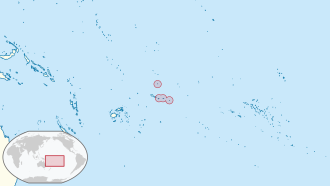
American Samoa is an unincorporated and unorganized territory of the United States, strategically located in the Polynesia region of the South Pacific Ocean. Its geography is defined by a chain of volcanic islands, including Tutuila, Aunuʻu, Ofu, Olosega, and Taʻū, alongside the coral atoll of Rose Atoll and Swains Island. This archipelago is situated approximately 14.3°S 170.7°W, placing it southeast of the independent nation of Samoa and east of the International Date Line.
The total land area is a modest 77 square miles, comparable in size to Washington, D.C., but its territorial waters extend over 117,500 square miles, a vast expanse of ocean. This isolation contributes to a tropical climate characterized by high humidity and temperatures, with approximately 90 percent of the land covered by dense rainforests. The territory's southernmost position makes it the southernmost U.S. territory, and one of only two south of the Equator.
A Legacy of Polynesian Settlement and U.S. Strategic Interest
Inhabited by Polynesians since prehistoric times, American Samoa's recorded history began with European contact in the 18th century. The islands, particularly the well-protected harbor of Pago Pago, quickly attracted missionaries, explorers, and mariners. The United States established a significant presence in the late 19th century, developing the territory into a vital naval outpost.
Its strategic importance was amplified during World War II and the subsequent Cold War. A pivotal moment in its political development occurred in 1967 with the adoption of a constitution, establishing a self-governing republic with distinct executive, legislative, and judicial branches. Despite this, it remains officially 'unorganized,' meaning it is directly administered by the U.S. federal government.
American Samoa participates in various intergovernmental organizations, underscoring its distinct international standing.
Cultural Preservation vs. U.S. Integration
The cultural identity of American Samoa is deeply rooted in its indigenous Samoan heritage. The vast majority of its approximately 47,400 residents are ethnic Samoans, with Samoan and English as official languages. A defining aspect of their relationship with the United States is the deliberate avoidance of full integration.
Following the Deeds of Cession in 1900 and 1904, Samoan leaders, known as 'matai,' actively resisted attempts at incorporation, fearing it would erode their traditional culture and land ownership systems. This led to the establishment of the Samoan Fono, a government based on indigenous governance structures. This commitment to cultural preservation is evident in their unique political status: American Samoans are considered 'non-citizen nationals,' not granted birthright citizenship.
This decision, supported by the Samoan Fono, stems from concerns that birthright citizenship could undermine indigenous governance, collective land ownership, and the Samoan language.
Economic Realities and Geopolitical Significance
The economy of American Samoa is significantly influenced by its geopolitical position and resource base. Tuna processing is the primary industry, with the territory being a major exporter of tuna products, predominantly to the United States, its largest trading partner. The U.S. military maintains a notable presence, contributing to the economy and society. Notably, American Samoa exhibits the highest rate of military enlistment among all U.S. states and territories. Tourism is a developing sector, though its growth is somewhat hindered by the islands' geographic isolation.
This isolation, coupled with economic challenges, contributes to a higher incidence of poverty and emigration, as residents often seek greater economic opportunities abroad. The territory's unique political status and its strategic location continue to shape its economic and social landscape.
Self-Governance and Political Representation
American Samoa operates under a republican form of government with separate executive, legislative, and judicial branches, established by its own constitution in 1967. However, it remains an 'unorganized territory,' indicating direct federal administration by the U.S. government. A significant aspect of its political reality is the lack of voting representation in the U.S. Congress, leading many to view its residents as politically disenfranchised, despite the territory's internal democratic system.
The Samoan Fono, based on indigenous governance, plays a crucial role. The decision to forgo birthright citizenship is a powerful statement of prioritizing indigenous governance and cultural integrity over full U.S. citizenship. This stance highlights a complex political dynamic where self-governance and cultural preservation are paramount, even at the cost of certain rights afforded to citizens of U.S. states.
Go deeper
Frequently Asked Questions
What is American Samoa?+
Where are the islands located?+
Why do most people in American Samoa speak Samoan?+
How does American Samoa keep its culture while being part of the U.S.?+
What is the main job people do in American Samoa?+
Based on content from Wikipedia · Licensed under CC BY-SA 4.0