

Alsace-Lorraine: A Land of Two Countries!
Images

File:Avenue Alsace-Lorraine - Bourg-en-Bresse - 2004.jpg
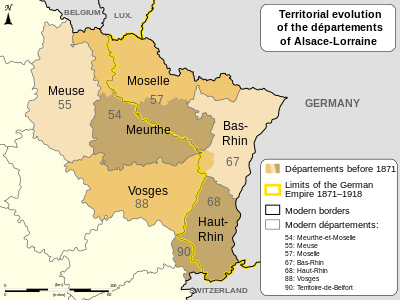
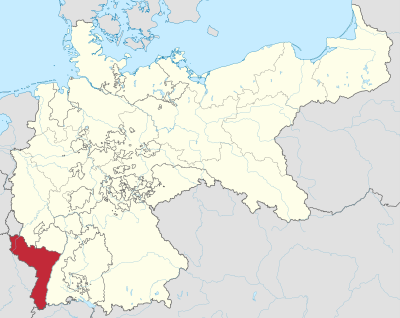


The Shifting Sands of Sovereignty
Alsace-Lorraine occupies a historically strategic position in Europe, situated at the crossroads of French and Germanic cultures and languages. Its geopolitical significance has made it a frequent prize in conflicts between France and various German states, culminating in its annexation by the German Empire in 1871 following the Franco-Prussian War. This period of German rule, lasting until the end of World War I, was marked by significant industrial development and attempts at cultural assimilation, though it also fostered a strong sense of Alsatian identity distinct from both French and Prussian norms.
The subsequent return to France in 1918, formalized by the Treaty of Versailles, was a pivotal moment, yet the region's complex allegiances were further tested during World War II when it was again occupied and incorporated into Nazi Germany. Its final re-establishment as part of France after 1945 solidified its current status, but the historical memory of these transitions continues to inform its unique character. This constant flux has made Alsace-Lorraine a compelling case study in national identity formation and the impact of shifting borders on regional populations.
The Crucible of Culture
The enduring fascination with Alsace-Lorraine lies in its profound cultural synthesis. Centuries of interaction, conflict, and coexistence between French and German influences have created a distinct regional identity that defies simple categorization. Linguistically, the Alsatian dialect, a Germanic language with significant French influence, is a prime example of this blend.
While standard French is the official language, Alsatian remains a vital part of the cultural heritage for many. This duality is reflected in its vibrant traditions, from folklore and music to religious practices. Architecturally, the region showcases a captivating mix of styles: the iconic half-timbered houses, often associated with German vernacular architecture, stand alongside more classical French châteaux and urban designs.
Gastronomically, Alsatian cuisine is a celebrated fusion. Dishes like choucroute garnie and tarte flambée highlight Germanic culinary traditions, while the region's renowned vineyards produce crisp white wines that rival any in France. This rich tapestry of cultural elements makes Alsace-Lorraine a living testament to the complex interplay of neighboring civilizations.
From Contested Territory to Symbol of European Unity
Alsace-Lorraine's historical trajectory offers profound insights into the evolution of European identity and the ongoing process of integration. Its past as a contested frontier, a region where national loyalties were frequently tested and redefined, makes it a powerful symbol of reconciliation. The very act of its return to France after World War I, and its subsequent integration into the European Union, represents a triumph over historical animosities.
Today, the region is not only a vital part of France but also a key player in European cooperation. Strasbourg, its capital, hosts several major European institutions, including the European Parliament, the Council of Europe, and the European Court of Human Rights. This placement underscores Alsace-Lorraine's transformation from a site of conflict to a beacon of peace and collaboration. Its story demonstrates how regions can transcend historical divisions to become central to building a shared future, embodying the ideals of unity and mutual respect that define modern Europe.
Economic Landscape and Industrial Heritage
The economic development of Alsace-Lorraine has been intrinsically linked to its historical position and the shifts in its sovereignty. During the period of German annexation (1871-1918), significant investment was made in industrial infrastructure, particularly in mining (coal and iron ore) and heavy manufacturing, leveraging the region's natural resources. This industrial base continued to be a cornerstone of its economy even after its return to France.
While traditional industries like mining have declined, Alsace-Lorraine has successfully transitioned and diversified. It remains a major player in sectors such as automotive manufacturing, aerospace, chemicals, and pharmaceuticals. Furthermore, its rich agricultural heritage, especially viticulture along the Alsace Wine Route, is a significant economic driver, attracting considerable tourism.
The region's strategic location also facilitates strong trade links within Europe. The blend of historical industrial prowess and modern innovation characterizes its current economic vitality, making it a resilient and dynamic part of the French and European economies.
The Enduring Legacy
The legacy of Alsace-Lorraine is one of resilience and adaptation. The region's inhabitants have navigated centuries of shifting national allegiances, forging a unique identity that embraces both French and Germanic influences without being wholly defined by either. This complex heritage fosters a distinct sense of regional pride and a nuanced understanding of European identity.
The ongoing efforts to preserve the Alsatian language and cultural traditions, alongside its integration into broader French and European frameworks, highlight a dynamic approach to identity in the 21st century. As a region that has experienced firsthand the consequences of nationalistic conflict and the benefits of cross-border cooperation, Alsace-Lorraine offers valuable lessons for contemporary Europe. Its future prospects are tied to its ability to continue leveraging its unique cultural capital, its strategic location, and its robust economic base, serving as a model for how diverse historical experiences can contribute to a cohesive and prosperous European future.
The region stands as a powerful reminder that identity is fluid and can be enriched by multiple influences.
See also
Based on content from Wikipedia · Licensed under CC BY-SA 4.0