

Albertopolis
Images
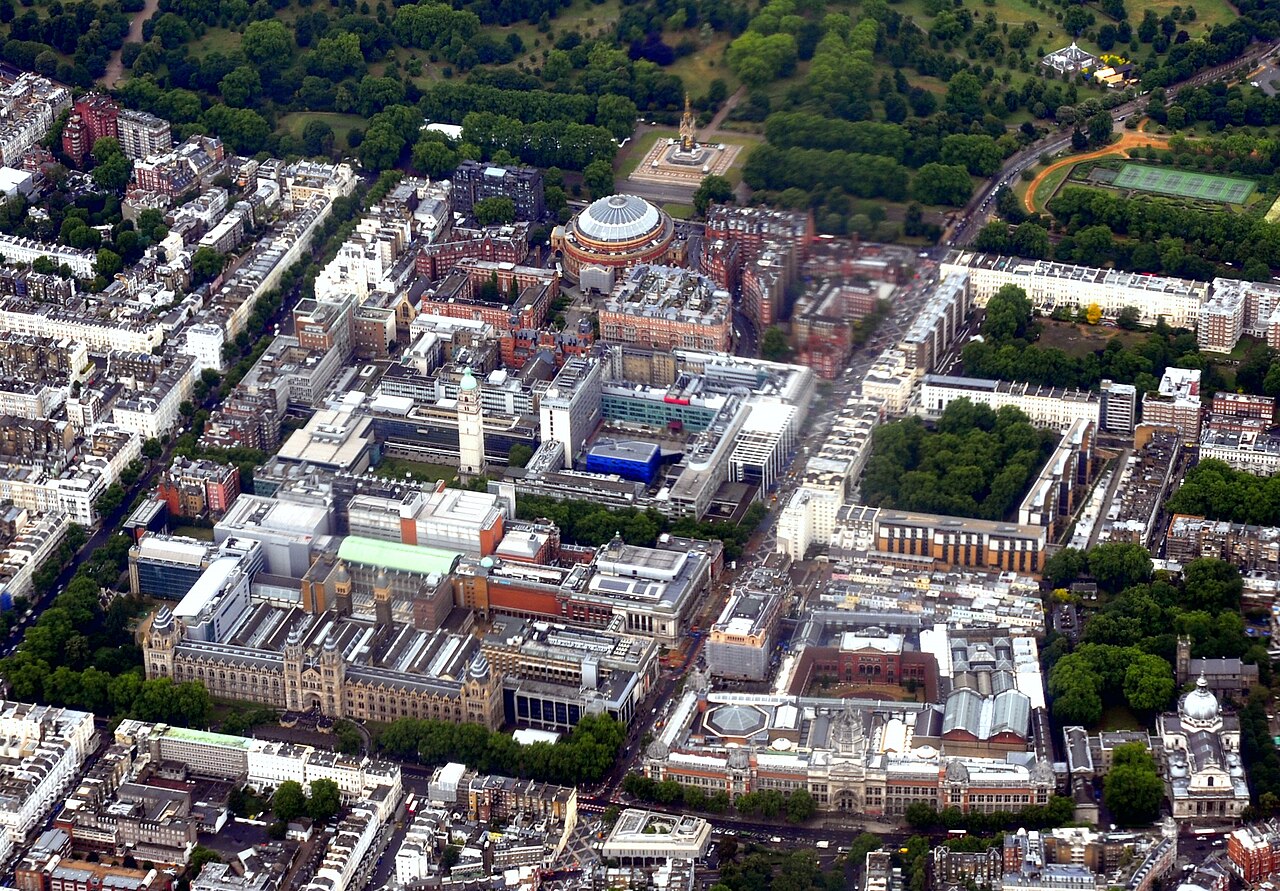
Kensington Museums Aerial 2011 B


The Genesis of a Cultural Epicenter
Albertopolis, a moniker affectionately bestowed upon the area surrounding Exhibition Road, is a testament to the forward-thinking ambitions of Prince Albert. His vision, deeply rooted in the Enlightenment ideals of progress and public enlightenment, sought to create a concentrated nexus of learning and cultural exhibition. This ambitious project aimed to showcase the triumphs of British industry, science, and art, fostering a sense of national pride and intellectual advancement.
The chosen location, formerly part of the village of Brompton, was strategically selected for its potential to house grand institutions. The development of Albertopolis was not merely about constructing buildings; it was about curating an environment conducive to discovery, innovation, and the dissemination of knowledge, a legacy that continues to define the area today.
Geographical and Administrative Tapestry of Albertopolis
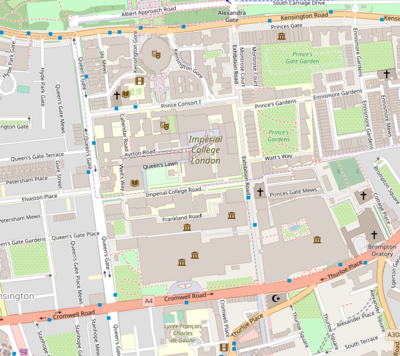
The geographical footprint of Albertopolis is precisely defined within the affluent South Kensington district of London. It spans across two distinct administrative boroughs: the Royal Borough of Kensington and Chelsea, and the City of Westminster, with Imperial College Road serving as a notable internal boundary marker. The area is further delineated by major thoroughfares: Cromwell Road to the south and Kensington Road to the north.
This strategic positioning within central London ensures its accessibility and prominence. The architectural character of Albertopolis is predominantly Victorian, characterized by imposing stone facades and grand public buildings that reflect the era of its conception. The climate is temperate maritime, typical of London, with mild summers and cool winters, contributing to its year-round appeal for visitors and residents.
A Confluence of World-Class Educational and Cultural Institutions
The defining characteristic of Albertopolis is its unparalleled density of world-leading educational and cultural institutions. This concentration is not accidental but a deliberate outcome of Prince Albert's vision. Visitors can seamlessly transition from the Natural History Museum, with its vast collections of specimens and paleontological exhibits, to the Science Museum, which explores technological advancements and scientific principles. Adjacent is the Victoria and Albert Museum, a global leader in art and design.
Furthermore, the presence of Imperial College London, a powerhouse in scientific research and higher education, anchors the area as a vital hub for academic pursuit. This synergistic proximity fosters interdisciplinary collaboration and provides an extraordinary resource for research, education, and public engagement with a vast spectrum of human knowledge and creativity.
Socio-Economic Dynamics and Governance of Albertopolis
The socio-economic fabric of Albertopolis is woven from its primary function as a center for knowledge and culture. Its 'economy' is driven by education, research, tourism, and the cultural industries. The institutions within Albertopolis are major employers, attracting a highly skilled workforce of academics, researchers, curators, and support staff.
The area's governance is a shared responsibility between the Royal Borough of Kensington and Chelsea and the City of Westminster, each overseeing their respective portions of this significant district. While there isn't a singular 'government' for Albertopolis itself, the collective efforts of these boroughs and the institutions within ensure its continued development and preservation as a premier global destination for learning and cultural enrichment. The area's reputation attracts significant international investment and tourism, contributing substantially to London's economy.
The Enduring Educational Mission of Albertopolis
The educational mission of Albertopolis is its raison d'être. It serves as a living laboratory and an unparalleled resource for learners of all ages. Imperial College London, a constituent college of the University of London, stands as a beacon of scientific and technological education, offering degrees in fields ranging from engineering and medicine to business and the natural sciences.
Beyond formal higher education, the museums within Albertopolis provide extensive educational programs, workshops, and exhibitions designed to engage school groups, families, and the general public. These institutions are not merely repositories of artifacts or knowledge; they are active centers of learning, research, and public outreach, continuously adapting to new pedagogical approaches and scientific discoveries. The legacy of Prince Albert's vision is thus perpetuated through the ongoing pursuit and sharing of knowledge.
See also
Frequently Asked Questions
What is Albertopolis?+
Where is Albertopolis located?+
Who started Albertopolis?+
What museums can you visit in Albertopolis?+
Why is Albertopolis important?+
Based on content from Wikipedia · Licensed under CC BY-SA 4.0