

Air China
Images

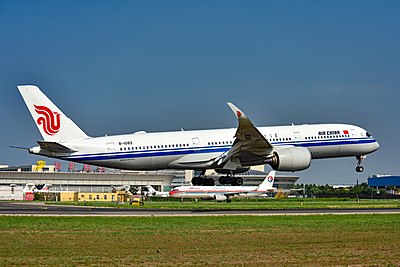
Air China Boeing 747 89L On Finals Into Beijing



Geopolitical Significance and Operational Hubs
Air China Limited serves as the official flag carrier of the People's Republic of China, a designation that imbues it with significant national and international importance. Headquartered in Shunyi, Beijing, the airline strategically operates from two primary hubs: Beijing Capital International Airport (PEK) and Chengdu Shuangliu International Airport (CTU).
These hubs are critical nodes in its extensive network, facilitating both domestic and international routes. Beijing, as the capital, represents the political and cultural heart of China, while Chengdu, a major economic center in Western China, underscores the airline's commitment to regional development and connectivity. The airline's network spans numerous destinations, reflecting China's growing global engagement and its role as a major player in international aviation.
Its operations are central to facilitating tourism, trade, and diplomatic relations, making it a vital component of China's infrastructure.
Evolution from CAAC to a Modern Aviation Giant
The genesis of Air China can be traced back to 1988, a pivotal year in the restructuring of China's aviation sector. Prior to this, the Civil Aviation Administration of China (CAAC) was the sole national airline. In an effort to modernize and decentralize, CAAC was divided into six distinct airlines, with Air China emerging as one of the key successors.
This foundational period set the stage for future expansion and consolidation. Over the subsequent years, Air China strategically merged with several of these successor airlines, a process that significantly broadened its operational scope, fleet size, and market share. This consolidation was instrumental in transforming Air China into one of the largest and most influential airlines in China.
The airline's ownership structure, with over 53% held by the state-owned China National Aviation Holding, highlights its continued alignment with national economic and strategic objectives.
Economic Impact and Global Integration
Air China plays a substantial role in the global economy through its extensive passenger and cargo operations. In 2017 alone, the airline transported an impressive 102 million passengers, both domestically and internationally, with an average load factor of 81%. This high load factor indicates efficient utilization of its fleet and strong demand for its services.
The airline's contribution extends beyond passenger transport; it is a vital conduit for international trade, facilitating the movement of goods and raw materials. By connecting China to the rest of the world, Air China supports global supply chains and fosters economic interdependence. Its membership in Star Alliance, which it joined in 2007, further amplifies its economic reach.
This global alliance allows for seamless travel experiences and expanded route networks, enhancing its competitiveness in the international aviation market and contributing to global commerce.
Operational Scale and Strategic Alliances
The sheer scale of Air China's operations is staggering. Carrying over 100 million passengers annually places it among the world's leading airlines. This volume necessitates a robust fleet and sophisticated logistical management.
The airline's strategic decision to join Star Alliance in 2007 was a significant move towards global integration. Star Alliance is the largest airline alliance in the world, comprising 26 member airlines that collectively serve over 1,300 destinations in more than 190 countries. Membership provides Air China with enhanced network connectivity, shared lounge access, frequent flyer program reciprocity, and greater operational efficiencies.
This alliance is not merely about expanding routes; it is a strategic partnership that strengthens Air China's competitive position against other major global carriers and offers passengers a more comprehensive and convenient travel experience across the globe.
See also
Based on content from Wikipedia · Licensed under CC BY-SA 4.0