

Ai-Khanoum
Images

Ai-Khanoum high-relief




Strategic Foundation and Urban Design
Ai-Khanoum, whose original name remains elusive, stands as a remarkable testament to Hellenistic urban planning and imperial ambition in Central Asia. Likely founded between 300 and 285 BC, its establishment is attributed to officials acting under the authority of the Seleucid Empire, possibly Seleucus I Nicator or his son Antiochus I Soter. While earlier Achaemenid presence is suggested by a nearby fort, the city's grand scale points to Hellenistic origins.
Its strategic location at the confluence of the Amu Darya (Oxus) and Kokcha rivers was paramount. This position not only facilitated access to the mineral wealth of the Hindu Kush but also controlled crucial riverine and overland routes, making it a vital strategic choke point. The urban layout featured a distinct division between a lower town and a formidable 60-meter-high acropolis, a classic Hellenistic defensive and administrative feature.
Extensive, continuously maintained fortifications underscored the city's military significance, reflecting the turbulent geopolitical landscape of the era. The city's layout and infrastructure suggest a deliberate effort to project Seleucid power and integrate the region into their vast empire.
Cultural Synthesis and Economic Vitality
Ai-Khanoum was more than just a military outpost; it was a vibrant center of Hellenistic culture and economic activity. The city's development was initially fueled by royal patronage and the presence of a mint, indicating its importance in coinage and trade. However, its trajectory was significantly altered by the secession of the Greco-Bactrians under Diodotus I around 250 BC.
This event likely halted large-scale Seleucid construction programs, and Ai-Khanoum may have transitioned into a primarily military stronghold, potentially experiencing conflict during Antiochus III's campaigns. Despite these shifts, the city experienced renewed growth under Euthydemus I and Demetrius I, rulers who began to assert control over the northwestern Indian subcontinent, suggesting Ai-Khanoum served as a crucial base for these expansionist policies. The extensive ruins, many dating from the redevelopment under Eucratides I, reveal a sophisticated urban environment with a large palace, a gymnasium, a theater capable of seating 6,000, an arsenal, and religious sanctuaries, demonstrating a rich tapestry of civic and cultural life.
The Legacy of Hellenism in Central Asia
The eventual collapse of the Greco-Bactrian kingdom around 145 BC, following the death of Eucratides I, marked the end of Ai-Khanoum's prominence as a major Hellenistic center. The city was captured by Saka invaders and largely abandoned, though intermittent occupation persisted until the 2nd century AD. This event signifies a broader historical trend: the gradual decline of direct Hellenistic political control in Central Asia, though Hellenistic cultural influence persisted longer in the Indo-Greek kingdoms.
Ai-Khanoum's archaeological record provides invaluable insights into the complex process of cultural interaction and adaptation between Greek settlers and local populations, resulting in a unique hybrid civilization. The study of its artifacts, inscriptions, and urban planning helps scholars understand the dissemination of Hellenistic ideals, administrative practices, and architectural styles far beyond the Mediterranean heartland, offering a nuanced perspective on the reach and impact of Alexander the Great's legacy.
Rediscovery, Excavation, and Interruption
The rediscovery of Ai-Khanoum in 1961 by King Mohammed Zahir Shah during a hunting expedition was a pivotal moment for Central Asian archaeology. Subsequent excavations, led by French archaeologist Paul Bernard, brought to light the city's impressive scale and complexity. The unearthing of a substantial palace, a large gymnasium, a theater, an arsenal, and sanctuaries provided concrete evidence of its former grandeur.
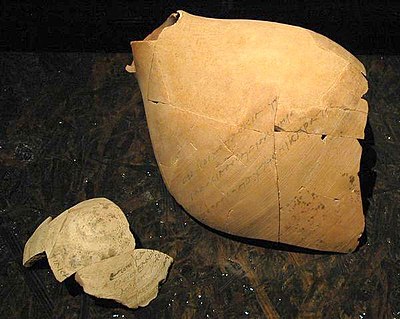
Numerous inscriptions, coins, and artifacts further enriched the understanding of its history, governance, and cultural affiliations. However, this vital scholarly endeavor was tragically interrupted by the onset of the Soviet-Afghan War in the late 1970s. The ensuing decades of conflict have severely impacted the archaeological site, leading to extensive looting and destruction.
The ongoing instability has hampered further systematic research, making the preservation and study of Ai-Khanoum's remaining heritage an urgent and challenging task for the international archaeological community.
See also
Frequently Asked Questions
What was Ai-Khanoum and where was it located?+
Why was Ai-Khanoum important?+
How did Ai-Khanoum look like?+
When was Ai-Khanoum built and by whom?+
What happened to Ai-Khanoum eventually?+
Based on content from Wikipedia · Licensed under CC BY-SA 4.0