

Afro-Asiatic Languages: A World of Words!
Images

LanguageFamiliesofAfrica





The Afro-Asiatic Superfamily
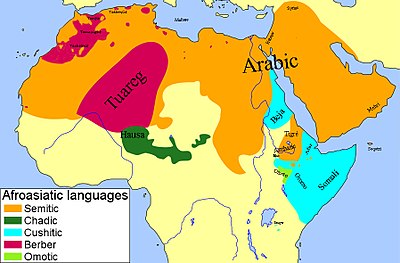
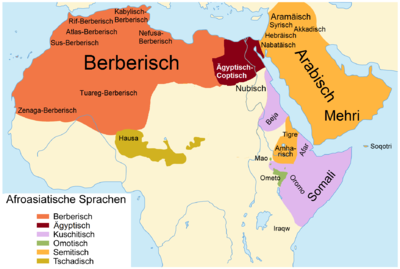
The Afro-Asiatic language family represents a vast and ancient linguistic grouping, encompassing approximately 500 million speakers across North Africa, the Horn of Africa, and Southwest Asia. This macrofamily is conventionally divided into six major branches: Semitic, Berber, Chadic, Cushitic, Egyptian, and Omotic. While the Semitic branch, including prominent languages like Arabic, Hebrew, and Amharic, is perhaps the most widely studied, the other branches represent significant linguistic diversity.
The sheer scale of this family, both in terms of speakers and geographic spread, underscores its historical importance in the development of human civilization and cultural exchange in these regions. Its study provides critical insights into prehistoric migrations, the spread of agriculture, and the formation of early complex societies. The classification of Omotic languages, primarily spoken in southwestern Ethiopia, remains a subject of ongoing linguistic research and debate, highlighting the dynamic nature of linguistic scholarship.
Reconstructing the Ancestor
The hypothesis of a Proto-Afro-Asiatic (PAA) ancestor language, spoken perhaps around 10,000 years ago, is a cornerstone of historical linguistics. Reconstructing PAA involves comparative methods, identifying systematic sound correspondences and shared lexical and grammatical features across its descendant branches. Key proposed features of PAA include a system of triconsonantal roots, a common mechanism for word formation, and specific phonological characteristics, such as emphatic consonants and a distinction between voiced and voiceless stops.
The proposed homeland for PAA is debated, with leading theories placing it in Northeast Africa or the Levant. Evidence for PAA is drawn from reconstructed vocabulary related to agriculture, domestic animals, and basic kinship terms, suggesting a culture that was likely Neolithic. The ongoing effort to refine the reconstruction of PAA and its precise timeline continues to be a major focus for linguists specializing in Afro-Asiatic studies.
Linguistic Threads
Despite millennia of divergence, Afro-Asiatic languages exhibit remarkable shared features that solidify their genetic relationship. The most salient is the widespread use of root-and-pattern morphology, particularly the triconsonantal root system found most prominently in Semitic languages but also evident in other branches. This system allows for the derivation of related words from a common consonantal core.
Phonologically, many Afro-Asiatic languages share a set of pharyngeal and uvular consonants, as well as emphatic consonants (e.g., ejective or pharyngealized), which are relatively uncommon in Indo-European languages. Grammatically, many exhibit verb-initial word order (though this has shifted in some modern languages like Arabic and Hebrew), and a tendency towards suffixing for person marking on verbs and prefixing for tense/aspect. The presence of gender distinctions, particularly masculine and feminine, in nouns and associated agreement is also a common trait.
These shared typological tendencies, alongside lexical cognates, provide compelling evidence for their common ancestry.
Cultural and Historical Significance
The Afro-Asiatic language family is intrinsically linked to some of the world's most influential civilizations and religious traditions. The Semitic branch, in particular, is the cradle of Judaism, Christianity, and Islam, with Hebrew and Arabic serving as sacred languages for billions. The ancient Egyptian language, the sole surviving member of its branch, is vital for understanding one of history's most enduring civilizations.
The spread of these languages mirrors major historical developments, including the expansion of early empires, the diffusion of religious ideas, and extensive trade networks across the Mediterranean and beyond. Studying Afro-Asiatic languages offers a unique lens through which to examine the history of writing systems (e.g., hieroglyphs, Phoenician alphabet, Arabic script), the development of law, philosophy, and science, and the complex interactions between diverse cultures over millennia. Their continued vitality today highlights their adaptability and enduring cultural relevance.
See also
Based on content from Wikipedia · Licensed under CC BY-SA 4.0