

Adaptive Optics: Making Blurry Pictures Crystal Clear!
Images

The Tarantula Nebula region imaged with HAWK-I with the Adaptive Optics Facility




The Challenge of Atmospheric Turbulence
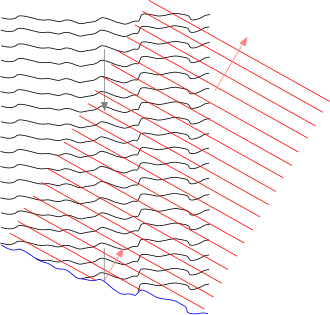
The fundamental challenge that adaptive optics (AO) addresses is the inherent distortion of light as it propagates through a turbulent medium, most notably Earth's atmosphere. For ground-based astronomical observations, atmospheric turbulence acts as a dynamic, phase-distorting screen. Variations in temperature and pressure within the atmosphere cause localized changes in the refractive index, leading to random fluctuations in the optical path length.
This results in wavefront errors that spread the light from a point source (like a star) over a much larger area than diffraction alone would dictate, severely limiting the resolution of even the largest telescopes. This phenomenon is responsible for the twinkling of stars and the blurring of planetary images. While space-based telescopes like Hubble bypass this issue by operating above the atmosphere, AO provides a powerful, cost-effective alternative for ground-based observatories, enabling them to achieve resolutions comparable to, and in some cases exceeding, their space-borne counterparts by actively compensating for these atmospheric aberrations in near real-time.
The Adaptive Optics System
An adaptive optics system is a closed-loop feedback mechanism comprising several critical components. The process begins with a wavefront sensor, typically a Shack-Hartmann sensor, which analyzes a portion of the incoming light. This sensor divides the incoming wavefront into small segments and measures the local slope of each segment.
By comparing these measured slopes to the expected slopes of an undistorted wavefront, the sensor can reconstruct a map of the wavefront errors. This information is then processed by a real-time computer, which calculates the necessary corrections. The core of the correction lies in the deformable mirror (DM).
Unlike a conventional mirror, a DM has a precisely controlled surface that can be rapidly altered. It consists of a reflective surface mounted on a grid of actuators, usually piezoelectric or electromagnetic. Based on the wavefront sensor's data, the computer sends commands to these actuators, causing them to push or pull on the mirror's surface, thereby creating a shape that precisely counteracts the measured distortions.
This entire cycle of sensing, computing, and correcting occurs at high frequencies, often hundreds or thousands of times per second, to keep pace with the rapidly changing atmospheric conditions.
Transforming Scientific Frontiers
The significance of adaptive optics extends across multiple scientific disciplines, fundamentally enhancing our observational capabilities. In astronomy, AO has revolutionized the study of exoplanets, enabling direct imaging and characterization of planets orbiting other stars by suppressing the overwhelming glare of their host stars. It allows for unprecedented detail in observing the surfaces of planets within our solar system, studying the dynamics of star formation in nebulae, and probing the structure of distant galaxies.
Furthermore, AO is crucial for understanding phenomena like gravitational waves by improving the sensitivity of interferometers. In the biomedical field, particularly in ophthalmology, AO systems are used to image the human retina with cellular resolution. By correcting for the optical aberrations within the eye itself (which are distinct from atmospheric distortions), AO ophthalmoscopes can visualize individual photoreceptor cells, blood vessels, and nerve fibers.
This capability is invaluable for early diagnosis and monitoring of retinal diseases such as age-related macular degeneration, diabetic retinopathy, and glaucoma, paving the way for more targeted and effective treatments and potentially preserving vision.
Beyond Astronomy
While astronomy and ophthalmology are prominent beneficiaries, adaptive optics technology finds application in a surprising array of fields. In microscopy, AO is employed to overcome aberrations introduced by scattering and refractive index variations within biological tissues, allowing for deeper and clearer imaging of cellular structures in living organisms. This is critical for advancing research in cell biology, neuroscience, and developmental biology.
AO is also vital for maintaining the quality of laser beams used in various applications, such as free-space optical communications, where it can mitigate atmospheric effects to ensure reliable data transmission over long distances. In optical fabrication and metrology, AO principles are used to ensure the precision of optical components. Looking ahead, advancements in AO are focused on increasing correction speed and accuracy, developing more compact and efficient wavefront sensors and deformable mirrors, and integrating AO with other advanced imaging techniques.
The ongoing development promises even greater clarity and insight into both the cosmos and the microscopic world.
Go deeper
Frequently Asked Questions
What is adaptive optics and how does it help telescopes?+
Why do stars twinkle and how does adaptive optics stop the twinkle?+
How does the deformable mirror in adaptive optics work?+
Where can adaptive optics be used besides telescopes?+
How fast does adaptive optics work to keep up with the atmosphere?+
Based on content from Wikipedia · Licensed under CC BY-SA 4.0