

The 6th Century: A Time of Big Changes!
Images
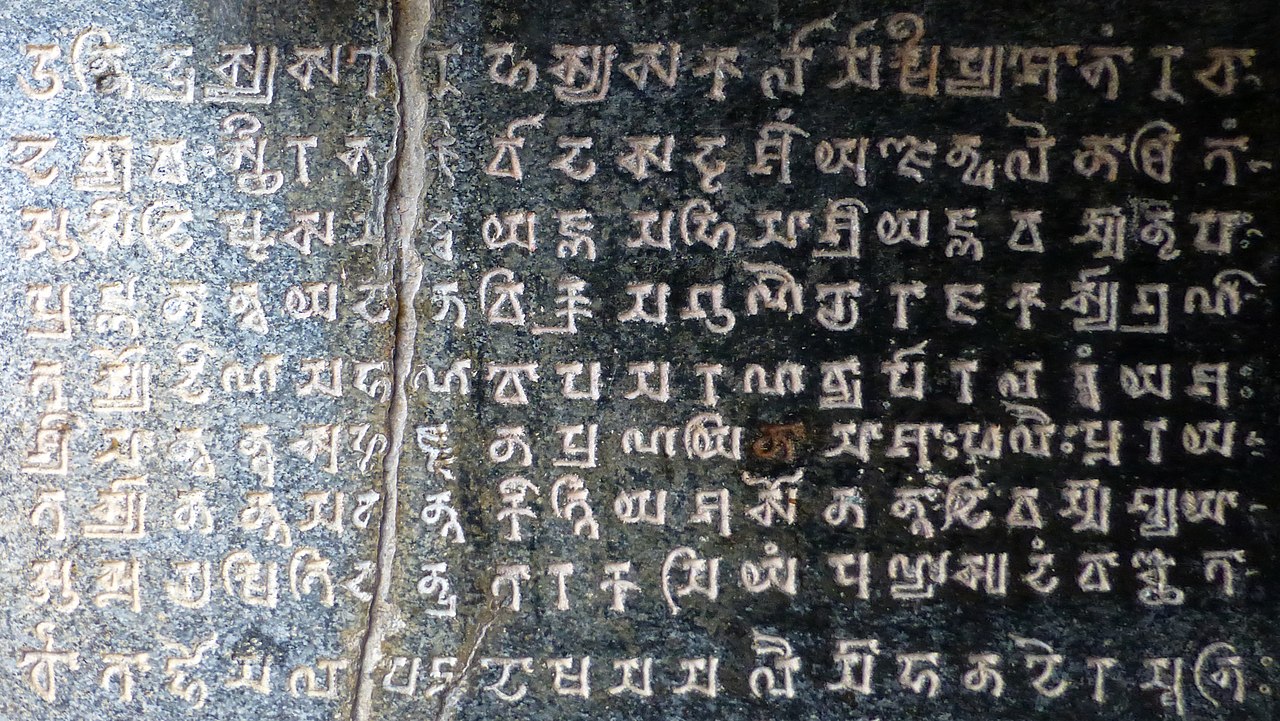
Barabar Caves Gopika Cave Inscription of Anantavarman 5th- or 6th-century CE Sanskrit in Gupta script


The Post-Roman European Landscape
The 6th century in Western Europe is defined by the enduring legacy of the Western Roman Empire's collapse in the late 5th century. This period witnessed the intense competition among various Germanic successor kingdoms, each vying for territorial control and political dominance. The Franks, under rulers like Clovis I (though his reign extended into the early 6th century), consolidated their power, laying the foundations for the Carolingian Empire.
Their expansion created a significant political entity in Gaul, foreshadowing the future development of France and Germany. This era represents the definitive transition from Classical Antiquity to the Early Middle Ages, characterized by decentralized power structures and the gradual emergence of distinct regional identities. Meanwhile, the Eastern Roman (Byzantine) Empire, under Emperor Justinian I, embarked on an ambitious, albeit ultimately unsustainable, project of imperial restoration.
Justinian's reconquest of North Africa from the Vandals and his campaigns in Italy aimed to reassert Roman authority over the West. While these military endeavors achieved temporary successes, they drained the empire's resources and contributed to the eventual decline of Byzantine influence in Italy, leaving a complex geopolitical mosaic.
Eurasian Power Dynamics
Across Eurasia, the 6th century was a period of significant imperial evolution and transition. The Sassanid Empire in Persia experienced a golden age, reaching its zenith of power and cultural influence under Khosrau I (Anushirvan). This era was marked by administrative reforms, military strength, and a flourishing of arts and sciences, positioning Sassanid Persia as a preeminent power in the Near East.
In contrast, the classical Gupta Empire of Northern India, which had been a beacon of culture and learning, largely disintegrated by the mid-6th century, succumbing to invasions by the Huna (Hephthalites). This fragmentation created a power vacuum in the Indian subcontinent. China, after more than 150 years of division between the Northern and Southern dynasties, was dramatically reunified towards the end of the century by the Sui Dynasty.
This reunification was a monumental achievement, establishing a centralized imperial structure that would profoundly shape Chinese history for centuries to come. The Korean peninsula remained divided among the Three Kingdoms (Goguryeo, Baekje, and Silla) throughout the century, engaged in complex diplomatic and military interactions. In Central Asia, the Göktürks rose to prominence, defeating the Rouran Khaganate and establishing a vast empire that controlled crucial Silk Road routes, influencing trade and cultural exchange across the continent.
The Enigma of the 'Dark Ages' and Pre-Columbian Developments
The 6th century is often characterized as part of the European 'Dark Ages,' a term reflecting the relative scarcity of surviving written records and archaeological evidence compared to preceding and succeeding periods. This lack of comprehensive documentation makes it challenging to reconstruct the intricate social, political, and economic landscapes of the time. However, this designation should not imply a lack of significant developments.
In Japan, the Kofun period, characterized by large burial mounds and clan-based societies, gradually gave way to the Asuka period, which saw the increasing influence of Buddhism and continental East Asian culture, particularly from China and Korea. Meanwhile, in the Americas, major civilizations were undergoing significant transformations. The monumental city of Teotihuacan in Mesoamerica, a dominant force for centuries, began a period of decline in the 6th century after reaching its peak population and influence.
Concurrently, the Classic Maya civilization was in its prime, characterized by sophisticated urban centers, complex calendrical systems, hieroglyphic writing, and impressive architectural achievements in regions like the Petén Basin. These developments highlight the independent trajectories of civilization in the Americas, largely insulated from Eurasian events.
Enduring Legacies
The transformations of the 6th century cast long shadows, influencing the trajectory of global history in profound ways. The political fragmentation of post-Roman Europe directly contributed to the diverse national identities and evolving feudal systems that would characterize the medieval period. The legal and administrative reforms initiated by Justinian, particularly his codification of Roman law (Corpus Juris Civilis), became a cornerstone of Western legal tradition, influencing civil law systems to this day.
The reunification of China under the Sui Dynasty not only solidified imperial rule but also laid the groundwork for subsequent dynasties like the Tang, fostering a period of unprecedented cultural and economic expansion that shaped East Asian civilization for centuries. The rise of the Göktürks fundamentally altered the political map of Central Asia, impacting migration patterns, linguistic development, and the dynamics of the Silk Road. The cultural and religious shifts occurring in places like Japan, with the adoption of Buddhism, demonstrate the interconnectedness of Eurasian societies.
Even the decline of Teotihuacan and the flourishing of the Maya had lasting impacts on the cultural and political landscapes of Mesoamerica, influencing subsequent civilizations. Understanding the 6th century is crucial for grasping the complex origins of many modern states, legal systems, and cultural heritages.
See also
Frequently Asked Questions
What happened to the Western Roman Empire in the 6th century?+
Who was Justinian I and what did he try to do?+
Which empire in Persia was strong in the 6th century?+
How did China change at the end of the 6th century?+
What was happening in Japan during the 6th century?+
Based on content from Wikipedia · Licensed under CC BY-SA 4.0