

2018 United States Elections
Images

2018 United States Senate Elections Results Map


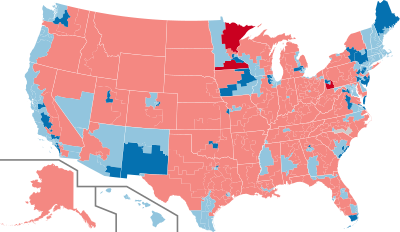


The Midterm Mandate
Held on November 6, 2018, during President Donald Trump's first term, the U.S. midterm elections served as a crucial referendum on his administration and the Republican Party's control of Congress. These elections are pivotal as they occur precisely in the middle of a presidential term, offering voters a chance to either endorse or repudiate the incumbent party's performance. The outcome dramatically reshaped the legislative landscape, ending the Republican trifecta of unified control over the White House, the House of Representatives, and the Senate that had been established in 2016.
This shift signaled a clear desire among a significant portion of the electorate for a change in legislative direction and priorities, particularly concerning issues like healthcare and economic policy.
The 'Blue Wave' Effect
The 2018 midterms are widely characterized by a 'blue wave,' a surge in support for the Democratic Party. This wave resulted in a substantial net gain of 40 seats in the U.S. House of Representatives, granting Democrats the majority. This victory was monumental, as it ended the Republican Party's eight-year control of the chamber.
The Democrats' messaging, heavily focused on protecting healthcare access and criticizing Republican efforts to repeal the Affordable Care Act, resonated strongly with voters. Furthermore, tying many Republican incumbents to President Trump proved to be an effective strategy, mobilizing voters who were dissatisfied with the administration's policies and rhetoric.
A Divided Congress
Despite the significant Democratic gains in the House, the Republican Party managed to retain control of the U.S. Senate, even making a net gain of two seats. This outcome was particularly notable as Democrats defended seats in states that had voted for President Trump in 2016.
The Senate's continued Republican majority meant that while Democrats could now block legislation in the House, they could not unilaterally pass laws without Republican cooperation. This created a divided government, a scenario not seen since 1984 where one party controlled the House and the other controlled the Senate, setting the stage for legislative gridlock and intense political negotiation.
Record Turnout and Historic Representation
The 2018 elections were marked by an extraordinary surge in voter participation. With 49.4% of eligible voters casting ballots, it represented the highest turnout for a midterm election since 1914, a truly historic figure. This heightened engagement underscored the electorate's deep investment in the political process and the issues at stake.
Beyond sheer numbers, the elections were groundbreaking for political representation. They saw the election of a record number of women to Congress, including the first openly gay governor and the first openly bisexual U.S. Senator.
These victories were significant steps towards a government that more accurately reflects the diverse demographics of the United States.
Referendums, Policy Debates, and Lingering Concerns
Beyond the partisan races, the 2018 midterms featured numerous ballot initiatives and referendums across various states. These included votes on expanding Medicaid coverage, implementing voter identification requirements, establishing independent redistricting commissions, legalizing marijuana, and repealing felony disenfranchisement laws. These state-level votes highlighted ongoing debates on critical social and economic issues.
The election cycle was also shadowed by concerns over potential Russian interference and allegations of voter suppression tactics, issues that continue to be subjects of discussion and reform efforts aimed at safeguarding electoral integrity.
See also
Based on content from Wikipedia · Licensed under CC BY-SA 4.0