

2016 Australian federal election
Images

Malcolm Turnbull PEO (Cropped)


The Context
Australia, a vast continent with a diverse geography and a population concentrated along its coastlines, faced a significant political juncture in 2016. The nation was heading into a federal election that would determine the composition of the 45th Parliament. This election was particularly noteworthy as it was a 'double dissolution' election, a mechanism designed to break parliamentary deadlock by forcing an election for all seats in both the House of Representatives and the Senate.
This rarely used constitutional power, last invoked in 1987, signaled a period of intense political contention and a desire for a decisive mandate. The election campaign itself was notably extended, spanning eight weeks, allowing for extensive public debate and policy articulation across the nation's varied political and geographical landscapes.
The Mechanics of Democracy
The 2016 election was unique not only for its double dissolution nature but also for the implementation of a new voting system for the Senate. This reform replaced the previous 'group voting tickets' with 'optional preferential voting.' Under the old system, voters could cast a single vote for a party, and the party would then distribute preferences according to pre-arranged tickets. The new system allowed voters to either number all boxes or just vote for their preferred candidate.
This change was intended to give voters more direct control over their ballot and reduce the influence of micro-parties in determining Senate outcomes. The election was held on Saturday, July 2, 2016, to elect all 226 members of the Parliament.
The House of Representatives
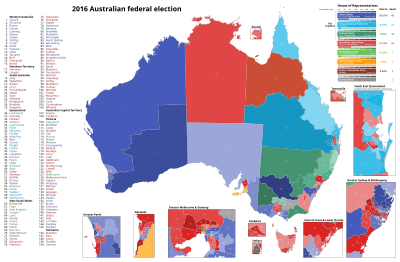
In the 150-seat House of Representatives, the incumbent Coalition government, led by Prime Minister Malcolm Turnbull, secured re-election. However, their victory was by a slim margin, resulting in a reduced majority. The Coalition won 76 seats, the minimum required for an absolute majority.
This outcome was significant as it marked the first time since 2004 that a government had been re-elected with an absolute majority. The Labor Party, under Bill Shorten, experienced a substantial recovery from its 2013 defeat, picking up a considerable number of seats to reach a total of 69. This demonstrated a significant shift in voter sentiment and a tightening of the political contest.
The Senate
The outcome in the 76-seat Senate proved to be far more complex and took over four weeks to finalize. The results revealed a significantly reduced plurality for the Coalition, who secured 30 seats. Labor followed with 26 seats.
Crucially, the crossbench saw a record number of representatives elected, totaling 20 seats. This included nine Greens, four from One Nation, and three from the Nick Xenophon Team, alongside other independents. This fragmentation of power meant that the Coalition government would need to negotiate extensively with a diverse group of senators to pass legislation, fundamentally altering the dynamics of parliamentary governance.
The election of these crossbenchers underscored a growing voter dissatisfaction with the major parties and a desire for alternative voices.
Long-Term Implications and Electoral Dynamics
The 2016 election had several lasting implications. For the first time in Australia's federation, a government was formed without winning a plurality of seats in the two most populous states, New South Wales and Victoria, highlighting a more complex national political distribution. The close result in the Division of Herbert, decided by a mere 37 votes after a recount, underscored the razor-thin margins in many contests.
Furthermore, the Senate's composition, with a strong crossbench, set a precedent for increased negotiation and potential legislative challenges for future governments. The election also occurred during a period of leadership changes within both major parties, with Turnbull having replaced Abbott and Shorten leading Labor, reflecting internal party dynamics and public perception. The subsequent eligibility crisis that affected some elected senators also added another layer of complexity to the parliamentary makeup.
See also
Frequently Asked Questions
What was a double dissolution in the 2016 Australian election?+
How did the new Senate voting system work in 2016?+
Who won the 2016 election in the House of Representatives?+
Why were there so many crossbench senators after the 2016 election?+
When was the 2016 Australian federal election held?+
Based on content from Wikipedia · Licensed under CC BY-SA 4.0