

2014 Maharashtra Legislative Assembly election
Images
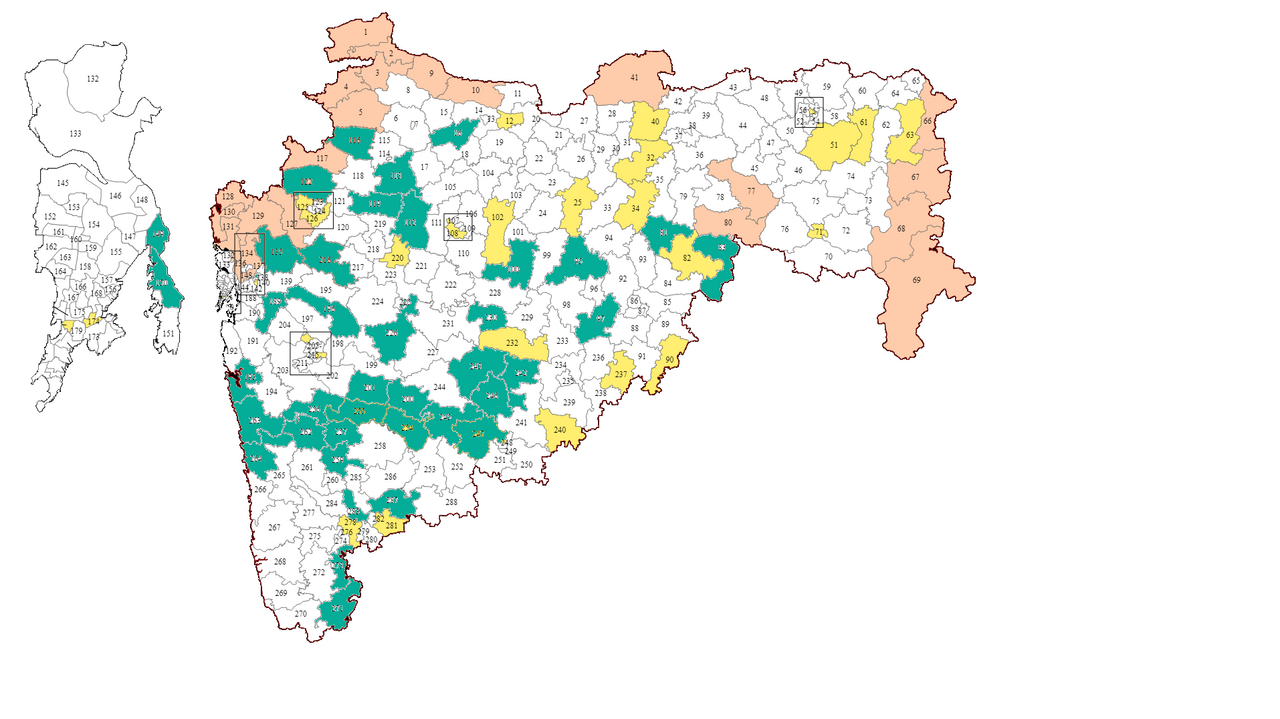
Seats Won by the NCP in 2014 Maharashtra Legislative Assembly Elections




The Electoral Mandate of 2014
The 2014 Maharashtra Legislative Assembly election, held on October 15th, was a watershed moment that significantly altered the state's political trajectory. With all 288 seats up for grabs, the election saw a substantial voter turnout of 63.38%, indicating a high level of public engagement. The results, however, delivered a hung verdict, a scenario where no single political party achieved a clear majority to form the government independently.
The Bharatiya Janata Party (BJP) emerged as the single largest party, securing the most seats, closely followed by the Shivsena (SHS) as the second largest. This outcome signaled a fragmentation of traditional voting patterns and a demand for new political configurations. The election was notable for the breakdown of long-standing alliances and the emergence of new political dynamics, setting the stage for complex coalition negotiations and a redefinition of political partnerships within the state.
The electorate's decision underscored a desire for change and a more nuanced political landscape.
Navigating the Hung Verdict
The hung verdict of the 2014 Maharashtra election presented a significant governance challenge, necessitating intricate coalition-building efforts. Following the election, the BJP, despite being the largest party, did not command a majority on its own. This required intensive negotiations with other parties, including its former ally, the Shivsena, which had contested the election separately.
The process of forming a government involved complex deliberations over cabinet positions, policy agendas, and power-sharing arrangements. Ultimately, the BJP formed a government with support from smaller parties and independents, while the Shivsena eventually joined the government later. This period highlighted the complexities of multi-party parliamentary systems, where consensus-building and compromise are paramount.
The formation of the government was a testament to the adaptability of political actors in navigating electoral uncertainty and ensuring the continuity of governance, albeit through a more fragmented and negotiated power structure.
The Enduring Significance of the 2014 Election Outcome
The 2014 Maharashtra Legislative Assembly election holds profound significance beyond its immediate electoral results. It marked a pivotal moment in the state's political evolution, demonstrating the electorate's capacity to reshape established political alliances and power structures. The hung verdict challenged the dominance of traditional coalitions and paved the way for a more fluid and dynamic political environment.
This election underscored the importance of adaptability and strategic maneuvering for political parties seeking to govern. Furthermore, it influenced subsequent electoral strategies and the nature of political discourse in Maharashtra, emphasizing the need for parties to connect with diverse voter aspirations. The lessons learned from the coalition dynamics and governance challenges following this election continue to inform political analysis and practice in the state, serving as a case study in democratic negotiation and power-sharing.
Electoral Mechanics and Voter Behavior in 2014
The 2014 Maharashtra election was conducted using a First Past the Post (FPTP) system for all 288 constituencies within the Legislative Assembly. This system means that the candidate who receives the most votes in a constituency wins the seat, regardless of whether they achieve an absolute majority. The high voter turnout of 63.38% reflected a dynamic electorate actively participating in the democratic process.
Voter behavior in 2014 was characterized by a significant shift, with the electorate demonstrating a willingness to move away from traditional alliances and embrace new political narratives. The fragmentation of votes, leading to the hung verdict, indicated a complex interplay of regional aspirations, national political trends, and local candidate appeal. Analyzing this election provides insights into the factors influencing voter choices, the effectiveness of different campaign strategies, and the inherent unpredictability of electoral outcomes in a diverse democracy like India.
Comparative Analysis
Prior to the 2014 election, Maharashtra's political landscape was largely dominated by two major pre-poll alliances: the Congress-NCP alliance and the Shiv Sena-BJP alliance. These alliances had a significant impact on electoral outcomes for many years. However, the 2014 election saw a dramatic shift.
The BJP contested independently and emerged as the single largest party, while the Shiv Sena also contested separately, leading to a fractured mandate. This electoral realignment had profound consequences. It necessitated the formation of a new governing coalition, primarily led by the BJP with support from other parties, and later saw the Shiv Sena joining the government.
This period marked a departure from the era of stable, albeit sometimes contentious, alliance-based governments. The post-2014 era in Maharashtra politics has been characterized by greater fluidity, shifting allegiances, and a more complex negotiation of power, demonstrating the evolving nature of political competition and governance in the state.
See also
Frequently Asked Questions
What was the 2014 Maharashtra Legislative Assembly election?+
How many people voted in the 2014 Maharashtra election?+
Why was the 2014 Maharashtra election called a "hung verdict"?+
Which party won the most seats in the 2014 Maharashtra election?+
How did the government get formed after the 2014 Maharashtra election?+
Based on content from Wikipedia · Licensed under CC BY-SA 4.0