

2006 Canadian federal election
Images

Green Party Campaign Sign, Old South London, Ontario





The Gomery Commission and the Erosion of Liberal Trust
The 2006 federal election was significantly shaped by the ongoing revelations from the Gomery Commission, which investigated the sponsorship scandal. This scandal involved the federal government's sponsorship of advertising campaigns, with allegations of kickbacks and improper dealings. The public release of new details through the commission created a climate of distrust and fueled the opposition's narrative of Liberal corruption.
This eroded public confidence in Prime Minister Paul Martin's minority Liberal government. The opposition parties, particularly the newly unified Conservative Party, capitalized on this discontent, framing the election as a referendum on integrity and good governance. The Liberal government's defeat on a motion of non-confidence on November 28, 2005, was a direct consequence of this diminished trust and the opposition's concerted effort to hold them accountable.
An Unprecedented Winter Campaign
The timing of the 2006 election was highly unusual, occurring in the depths of a Canadian winter on January 23. This decision to call an election following a non-confidence vote, rather than waiting for a more opportune time, presented unique challenges for campaigning and voter turnout. Political parties had to adapt their strategies to navigate snowy roads and frigid temperatures, impacting traditional door-to-door canvassing and large public rallies.
The winter setting also added a layer of logistical complexity for election officials and voters alike. This unexpected winter campaign underscored the political instability that had led to the election and the urgency with which the Liberal government's mandate was being challenged.
The Conservative Breakthrough and the End of an Era
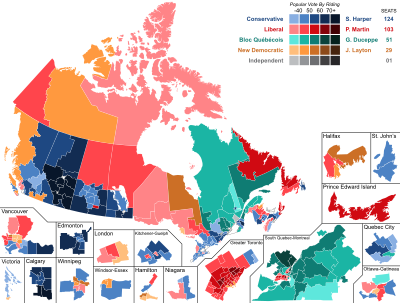
The 2006 election marked a historic turning point with the Conservative Party securing its first-ever victory since its formation in 2003 through the merger of the Progressive Conservative Party and the Canadian Alliance. Under the leadership of Stephen Harper, the party won 124 seats in the House of Commons, a substantial increase from their previous performance. This victory effectively ended over 12 years of continuous Liberal rule, demonstrating a significant shift in the Canadian political landscape.
The success of the Conservatives was attributed to several factors, including the effective unification of the right-of-centre vote, a clear message of change, and the strategic exploitation of the sponsorship scandal to discredit the incumbent Liberals.
The Dynamics of a Minority Government
Stephen Harper's victory resulted in the formation of the smallest minority government in Canadian history in terms of the proportion of seats held. The Conservatives won 124 out of 308 seats, meaning they did not command a majority of the votes in Parliament. This necessitated a reliance on the cooperation of other parties, primarily the New Democratic Party (NDP) and the Bloc Québécois, to pass legislation and maintain confidence.
The NDP saw a modest increase in support, while the Bloc Québécois maintained its seat count, highlighting regional political strengths. A notable aspect of this election was that it was the most recent instance where the winning federal party did not secure seats in both New Brunswick and Ontario, indicating a more fragmented electoral map than in previous Liberal victories.
See also
Frequently Asked Questions
What was the 2006 Canadian federal election?+
Why did the election happen in January?+
Who won the 2006 election?+
What was the sponsorship scandal?+
Why did the Conservatives need help from other parties?+
Based on content from Wikipedia · Licensed under CC BY-SA 4.0