

1996 United States presidential election
Images
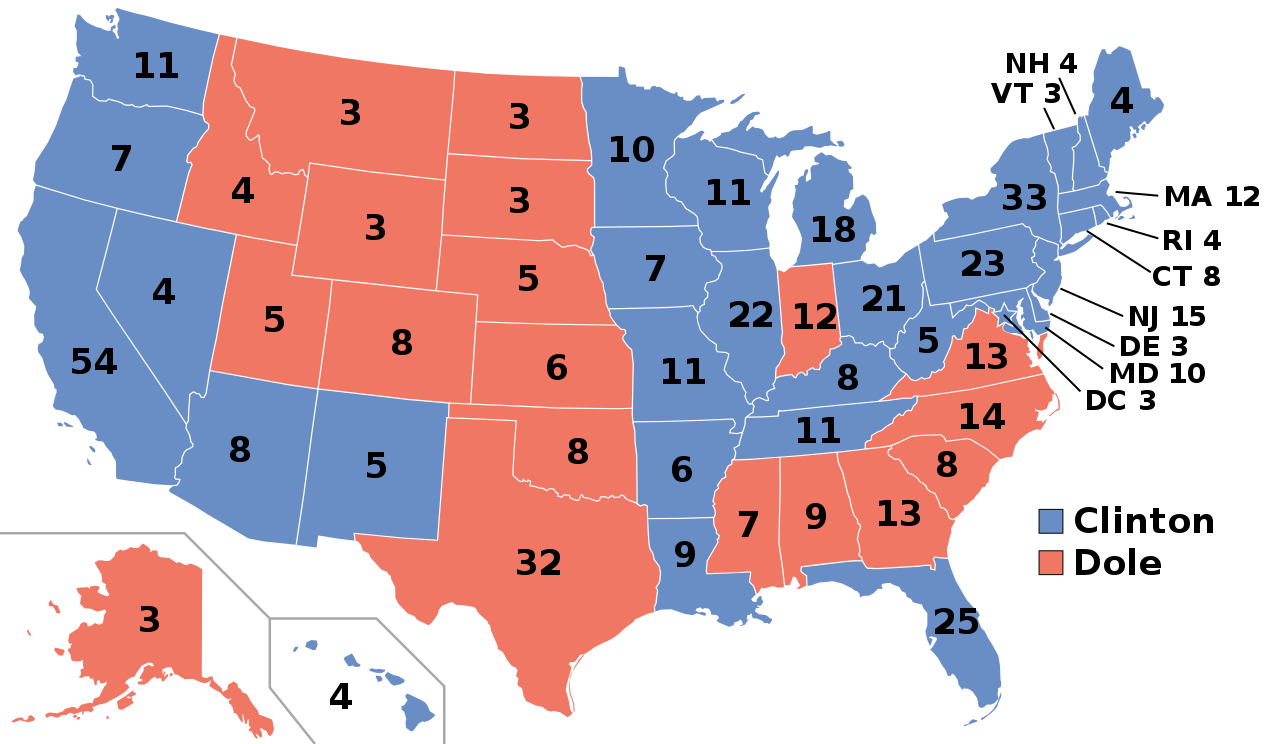
ElectoralCollege1996





The Incumbent's Advantage and Challenges
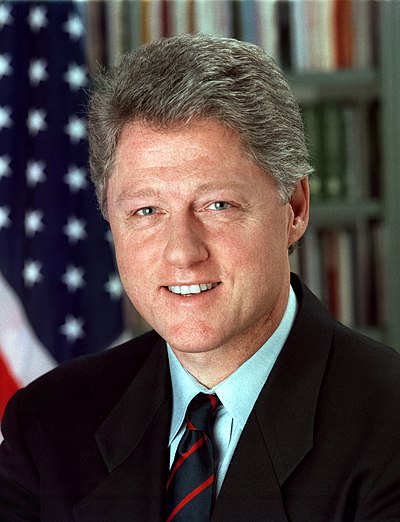
Bill Clinton's bid for a second term in 1996 was initially shadowed by the Democratic Party's loss of both the House and Senate in the 1994 midterm elections, a significant setback often seen as a referendum on the president's first term. However, a recovering economy and a relatively stable global stage provided a more favorable environment. Clinton's campaign masterfully framed the election not just as a choice between himself and Republican challenger Bob Dole, but as a referendum on the direction of the country.
By associating Dole with the conservative Speaker of the House, Newt Gingrich, Clinton aimed to evoke fears of radical policy shifts, particularly concerning popular social programs like Social Security and Medicare, which were seen as vulnerable to Republican budget proposals.
Republican Strategy and Dole's Campaign Dynamics
Bob Dole's campaign faced the formidable task of unseating an incumbent president during a period of economic growth. His platform centered on a significant across-the-board 15% reduction in federal income taxes, a policy aimed at stimulating the economy but also criticized for potentially increasing the national deficit. Dole's campaign also struggled with messaging, attempting to portray Clinton as an unseasoned 'Baby Boomer' who lacked gravitas.
However, Dole's own age became a persistent issue, amplified by perceived gaffes that raised questions about his vigor and readiness for the presidency. The Republican primaries were also competitive, with Dole eventually securing the nomination over rivals like Steve Forbes and Pat Buchanan, before selecting Jack Kemp as his running mate, a choice intended to appeal to a broader conservative base.
The Perot Factor and Third-Party Influence
Ross Perot's participation in the 1996 election as the Reform Party candidate echoed his independent run in 1992, where he garnered an impressive 18.9% of the popular vote. While Perot's 1996 campaign garnered less media attention and he was excluded from the crucial presidential debates, his presence continued to play a spoiler role. His ability to draw votes, particularly from those dissatisfied with the two major parties, ensured that neither Clinton nor Dole would likely achieve a majority of the popular vote.
This dynamic highlights the persistent challenge third-party candidates face in breaking through the established two-party system, yet their ability to influence outcomes remains a significant factor.
Electoral Geography and Lasting Legacies
The 1996 election produced a decisive victory for Bill Clinton, securing 379 electoral votes to Dole's 159. Clinton's win was notable for its geographic breadth, making him the last Democratic presidential candidate to carry several Southern states, including Kentucky, Louisiana, West Virginia, Arkansas, Missouri, and Tennessee. This shift underscores a long-term realignment in American political geography.
Furthermore, Clinton's victory, coupled with Perot's continued presence, meant that this election was the last time either major party nominee received fewer than 50 million votes. This statistic points to a growing electorate and the increasing vote share required to secure a mandate in subsequent elections.
The Economic Context and Campaign Narratives
The economic climate of the mid-1990s was a central theme of the 1996 election. Following a recession in the early 1990s, the US economy experienced a period of recovery and growth, which significantly benefited the incumbent president. Clinton's campaign effectively leveraged this economic prosperity, portraying his administration as responsible stewards of the nation's financial health.
Conversely, Bob Dole's proposed 15% tax cut, while appealing to some, was framed by the Clinton campaign as fiscally irresponsible and potentially damaging to the social safety net. The election thus became a debate over competing visions for economic policy and the role of government in managing prosperity, with voters ultimately siding with the perceived stability offered by the incumbent.
See also
Frequently Asked Questions
Who won the 1996 U.S. presidential election?+
Who were the main candidates in the 1996 election?+
Why did Bill Clinton win the 1996 election?+
What was special about Ross Perot's role in the 1996 election?+
Which states did Clinton win that were unusual for a Democrat?+
Based on content from Wikipedia · Licensed under CC BY-SA 4.0