

1968 United States presidential election
Images

ElectoralCollege1968
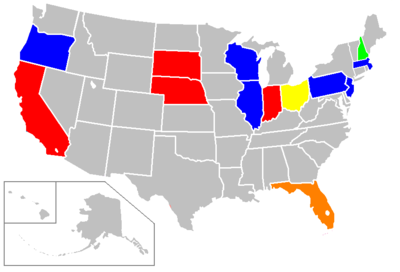


The American Landscape
The 1968 United States presidential election unfolded against a backdrop of unprecedented national turmoil, reflecting deep societal fissures. Geographically, the election spanned a vast continent, from the industrial heartlands of the Midwest to the agricultural South and the burgeoning West Coast, each region presenting distinct electoral challenges and demographics. The nation was grappling with the escalating Vietnam War, which fueled widespread anti-war protests, particularly on university campuses.
Simultaneously, the Civil Rights Movement continued its struggle for equality, marked by both progress and persistent resistance. The assassination of Dr. Martin Luther King Jr. in April and Senator Robert F.
Kennedy in June sent profound shockwaves, intensifying feelings of instability and a yearning for decisive leadership, while also sparking riots and further polarizing the electorate.
The Democratic Divide
The Democratic Party faced a deeply fractured nomination process. Incumbent President Lyndon B. Johnson, initially the frontrunner, withdrew from the race after a surprisingly narrow victory in the New Hampshire primary, signaling the deep unpopularity of his Vietnam War policies.
This opened the door for a fierce contest between Vice President Hubert Humphrey, who supported the war, and anti-war candidates like Senator Eugene McCarthy and the tragically assassinated Robert F. Kennedy. Humphrey's eventual nomination at the tumultuous Democratic National Convention in Chicago, marred by violent clashes between police and protesters, underscored the party's internal divisions.
Humphrey's platform, which aimed to continue Johnson's 'war on poverty' and support civil rights, struggled to bridge the gap between liberal activists and traditional Democratic voters, particularly in the South.
The Republican Resurgence and the 'Silent Majority'
On the Republican side, Richard Nixon, having narrowly lost the 1960 election, strategically re-entered the political arena. He successfully navigated a competitive primary field, defeating rivals like Nelson Rockefeller and Ronald Reagan to secure the nomination. Nixon's campaign masterfully capitalized on the national mood, promising to restore 'law and order' amidst urban unrest and offering a vision of 'peace with honor' in Vietnam.
He deliberately courted the 'silent majority'-a segment of the electorate he believed was alienated by the liberal agenda and the perceived breakdown of traditional values. Nixon also employed a sophisticated 'Southern Strategy,' using coded language to appeal to conservative voters in the South who were increasingly disaffected with the Democratic Party's stance on civil rights.
A Third Force and a Close Electoral Outcome
Adding another layer of complexity was the candidacy of George Wallace, running on the American Independent Party ticket. Wallace's platform, emphasizing states' rights and racial segregation, resonated with socially conservative voters in the South and white working-class voters in the North and Midwest, who were drawn to his populist and anti-establishment rhetoric. While Wallace's support eventually waned, his presence significantly impacted the election's dynamics.
Despite trailing Nixon for much of the campaign, Humphrey managed to narrow the gap in the final weeks, particularly after Wallace's campaign faltered and President Johnson announced a bombing halt in Vietnam. Ultimately, Nixon secured a narrow victory, winning the popular vote by a slim margin of just over 500,000 votes. The Electoral College margin was more decisive, with Nixon carrying key states like Ohio.
This election is considered a major realigning election, permanently altering the political landscape and marking the last presidential election until 2024 where an incumbent president eligible to run was not the nominee.
See also
Frequently Asked Questions
What happened in the 1968 United States presidential election?+
Why did President Lyndon B. Johnson stop running for president in 1968?+
Who were the main candidates in the 1968 election?+
What was the "Southern Strategy" that Richard Nixon used?+
How did the assassinations of Martin Luther King Jr. and Robert F. Kennedy affect the election?+
Based on content from Wikipedia · Licensed under CC BY-SA 4.0