

1940 United States Census
Images

Seal Of The United States Census Bureau
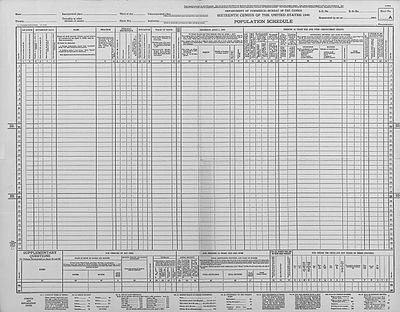


Geographic Scope and Enumeration Challenges
The 1940 United States Census encompassed the continental United States, Alaska, Hawaii, and Puerto Rico, presenting a vast and geographically diverse enumeration area. The sheer scale of the nation, coupled with varied terrains from dense urban centers to remote rural communities and challenging climates, necessitated sophisticated logistical planning. Enumerators, often local residents, faced significant hurdles in reaching all households, particularly in sparsely populated regions like the Mountain West or the vast territories.
The census methodology involved a combination of self-enumeration forms and direct interviews, adapted to different regions and literacy levels. The data collected provided an unparalleled granular view of the nation's population distribution, influencing infrastructure development, resource allocation, and political representation across these diverse landscapes for decades.
Historical Nexus
Conducted in the immediate lead-up to and during the early stages of American involvement in World War II, the 1940 census was imbued with immense historical significance. It served as a critical baseline for national mobilization efforts, providing essential data on manpower availability, industrial capacity, and population demographics vital for wartime planning and resource management. This census was the first to be conducted during a major global conflict, underscoring the government's reliance on accurate demographic information for national security and strategic decision-making.
Furthermore, the data laid the groundwork for post-war planning, including the G.I. Bill and the expansion of social welfare programs, by illuminating the nation's demographic composition and needs.
Societal Fabric
The 1940 census offers a detailed portrait of American society on the cusp of profound change. It documented a nation where English predominated, yet significant linguistic diversity persisted, reflecting ongoing immigration patterns and the cultural heritage of various communities. The census meticulously recorded birthplace and parentage, providing insights into the evolving ethnic and racial makeup of the United States.
Questions about employment, housing, and education illuminated the socio-economic conditions of the time, revealing disparities and trends that would shape social policy. This rich dataset allows for an in-depth analysis of American identity, cultural assimilation, and the lived experiences of diverse populations during this transformative period.
Economic Underpinnings and Political Reapportionment
The economic data gathered by the 1940 census was particularly insightful, capturing the nation's transition from the Great Depression towards a war-driven economy. Detailed occupational and industrial classifications provided a comprehensive understanding of the workforce, highlighting shifts in employment sectors and regional economic strengths. Crucially, the population figures derived from the census were used for the reapportionment of congressional seats among the states, a process directly impacting political power and federal funding allocations.
This demographic data became the foundation for legislative representation and the distribution of federal resources, making the census a cornerstone of American governance and economic planning, influencing policy decisions for the subsequent decade.
Educational Landscape and Future Planning
The 1940 census provided invaluable data for understanding the educational landscape of the United States and for planning future educational initiatives. By collecting information on age, school attendance, and literacy, the census revealed the educational attainment levels across different regions and demographic groups. This data helped identify areas with educational needs and informed the allocation of resources for schools and educational programs.
The census findings were instrumental in shaping policies related to public education, vocational training, and adult literacy efforts. The insights gained from this census contributed to the ongoing efforts to improve educational access and outcomes for all Americans, particularly in the context of preparing the nation for future challenges and opportunities.
See also
Frequently Asked Questions
What was the 1940 United States Census?+
Why was the 1940 census important during World War II?+
How did the census count people in faraway places?+
Where did the census include people from?+
What kind of information did the census collect about jobs and schools?+
Based on content from Wikipedia · Licensed under CC BY-SA 4.0