

1917
Images

Boonah State School, c 1917




The Temporal Divide
The year 1917 presents a fascinating case study in calendrical plurality, a relic of historical development and ongoing standardization. While the Gregorian calendar, with its refined leap year system, had been adopted by many nations, the Julian calendar persisted in localized use, notably within the Russian Empire and parts of the Orthodox Christian world. In 1917, this divergence amounted to a 13-day discrepancy.
This was not merely an academic curiosity; it had practical implications for international communication, trade, and diplomacy. The gradual global adoption of the Gregorian calendar, a process that continued until the mid-20th century in some cases, underscores the complex interplay between scientific advancement, religious tradition, and political will. The existence of these parallel dating systems in 1917 serves as a tangible reminder of a world in transition, where established norms were being challenged and reformed, mirroring the profound societal and political changes occurring simultaneously.
The Crucible of Conflict
1917 was a watershed year for World War I, marking a critical escalation and a significant shift in the global balance of power. The conflict, already in its third year, had devolved into a brutal war of attrition, characterized by trench warfare and staggering casualties. The Zimmerman Telegram, a secret German proposal for a military alliance with Mexico against the United States, coupled with Germany's unrestricted submarine warfare, provided the impetus for American entry into the war in April 1917.
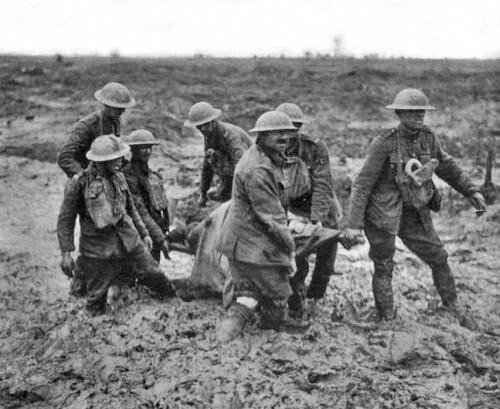
This intervention was a monumental decision, transforming the conflict into a truly global war and providing desperately needed resources and manpower to the Allied cause. The arrival of American troops, though initially limited, signaled a new phase. The year also saw major offensives, such as the Third Battle of Ypres (Passchendaele), which resulted in horrific losses with little strategic gain, highlighting the grim realities of industrialized warfare.
The cumulative impact of these events in 1917 profoundly shaped the war's eventual outcome and the subsequent peace negotiations.
Revolutionary Tides
The year 1917 is synonymous with the Russian Revolution, a complex series of events that dismantled centuries of Tsarist autocracy and ushered in a new political order. The February Revolution (March by the Gregorian calendar) saw widespread popular unrest, driven by war weariness, food shortages, and discontent with the autocratic regime, leading to the abdication of Tsar Nicholas II. This established a Provisional Government, which, however, failed to address the fundamental issues plaguing the nation, particularly its continued involvement in World War I.
This power vacuum and public dissatisfaction created fertile ground for the October Revolution (November by the Gregorian calendar). Led by Vladimir Lenin and the Bolshevik Party, this second, more radical revolution saw the seizure of state power. The Bolsheviks' promises of 'Peace, Land, and Bread' resonated deeply, and their victory led to Russia's withdrawal from the war, the establishment of Soviet rule, and the eventual formation of the Union of Soviet Socialist Republics (USSR).
The ideological and geopolitical ramifications of the Russian Revolution were immense, setting the stage for the Cold War and influencing communist movements worldwide.
The Enduring Legacy
The year 1917 stands as a critical inflection point in modern history, its consequences rippling through the subsequent century. The Russian Revolution fundamentally altered the global political landscape, introducing communism as a major ideological force and creating a bipolar world order that would dominate international relations for decades. The entry of the United States into World War I marked a definitive shift in American foreign policy and its emergence as a global superpower.
The war itself, with its unprecedented scale and brutality amplified in 1917, led to the collapse of empires, the redrawing of national borders, and the seeds of future conflicts. The year’s events underscore the interconnectedness of global affairs; a calendar difference in one region, a war in another, and a revolution in a vast empire all converged to reshape the trajectory of human history. Studying 1917 provides essential context for understanding the geopolitical structures, ideological conflicts, and international dynamics that continue to define our contemporary world.
See also
Frequently Asked Questions
What was special about calendars in 1917?+
Why did the United States join World War I in 1917?+
What happened during the Russian Revolution in 1917?+
What was the Third Battle of Ypres?+
How did 1917 change the world?+
Based on content from Wikipedia · Licensed under CC BY-SA 4.0