

The Awesome 1850s!
Images

Double Cluster NGC 1850



Geopolitical Realignments and Imperial Ambitions
The 1850s was a crucible for international relations, most notably through the Crimean War (1853-1856). This conflict, ostensibly over religious sites in the Holy Land, quickly escalated into a proxy war between Russia and an alliance of the Ottoman Empire, France, Britain, and Sardinia. The war's outcome significantly weakened Russia's influence in Europe and the Black Sea region, while also exposing the Ottoman Empire's vulnerabilities.
It demonstrated the growing importance of naval power and introduced new technologies in warfare. Concurrently, the decade saw intensified imperialistic endeavors, particularly in the Far East. The Second Opium War (1856-1860), which began in the late 1850s, was a direct result of European powers, primarily Britain and France, seeking to expand trade access and diplomatic privileges in China.
These conflicts were not isolated incidents but part of a broader global trend of colonial expansion, driven by economic motives and a belief in European superiority, which would continue to shape global power dynamics for decades to come.
The American Westward Surge
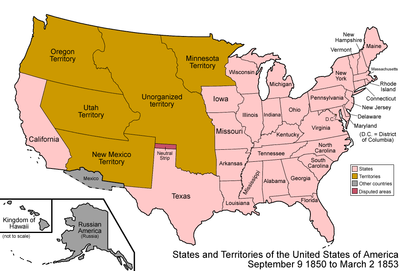
In the United States, the 1850s represented the zenith of westward expansion, a phenomenon deeply intertwined with the concept of Manifest Destiny. This decade witnessed an unprecedented wave of migration across the North American continent. Driven by the allure of gold, fertile land, and the promise of a new life, hundreds of thousands of people embarked on arduous journeys via wagon trains, overland trails, and burgeoning railway lines.
This mass migration was not merely a demographic shift; it was a powerful engine for economic growth. The influx of people spurred demand for goods, services, and infrastructure, leading to a significant economic boom. It also accelerated the settlement of vast territories, fundamentally altering the nation's geography and its relationship with Native American populations.
The rapid population increase and economic expansion during this period set the stage for America's emergence as a global power in the following century.
Societal Transformations and Technological Seeds
Beyond the grand narratives of war and migration, the 1850s was a period of subtle yet significant societal shifts and the quiet germination of technologies that would revolutionize the future. While the source material focuses on conflict and migration, it's important to recognize that these events occurred within societies undergoing their own transformations. In industrialized nations, the seeds of the Second Industrial Revolution were being sown, with advancements in manufacturing, communication (like the telegraph), and transportation laying the groundwork for the modern era.
The very concept of time itself was becoming more standardized, with the establishment of time zones beginning to emerge, a necessity driven by the expansion of railways. The fact that the last individual to have experienced this decade, Ada Roe, lived until 1970, means that a direct, albeit distant, human connection to this era persisted for a significant portion of the 20th century, bridging the gap between historical events and living memory.
Enduring Legacies and Historical Context
The 1850s serves as a critical juncture in global history, a decade where the forces of empire, migration, and nascent industrialization converged with profound consequences. The geopolitical realignments initiated by conflicts like the Crimean War and the Opium Wars directly influenced the balance of power in the late 19th and early 20th centuries. The American westward expansion not only defined the continental United States but also established patterns of resource exploitation and national identity that continue to be debated.
Understanding the 1850s requires appreciating the interconnectedness of these global events. It was a period that solidified colonial dominance in some regions while fostering immense growth and change in others, setting the stage for the complex global landscape of the modern era. The decade's turbulence and transformative power make it a vital subject for historical study.
See also
Frequently Asked Questions
What were the main wars that happened in the 1850s?+
Why did so many people move across America in the 1850s?+
How did the Crimean War affect Russia?+
What new inventions came out in the 1850s?+
When did the last person who lived in the 1850s die?+
Based on content from Wikipedia · Licensed under CC BY-SA 4.0