

1790 United States Census
Images
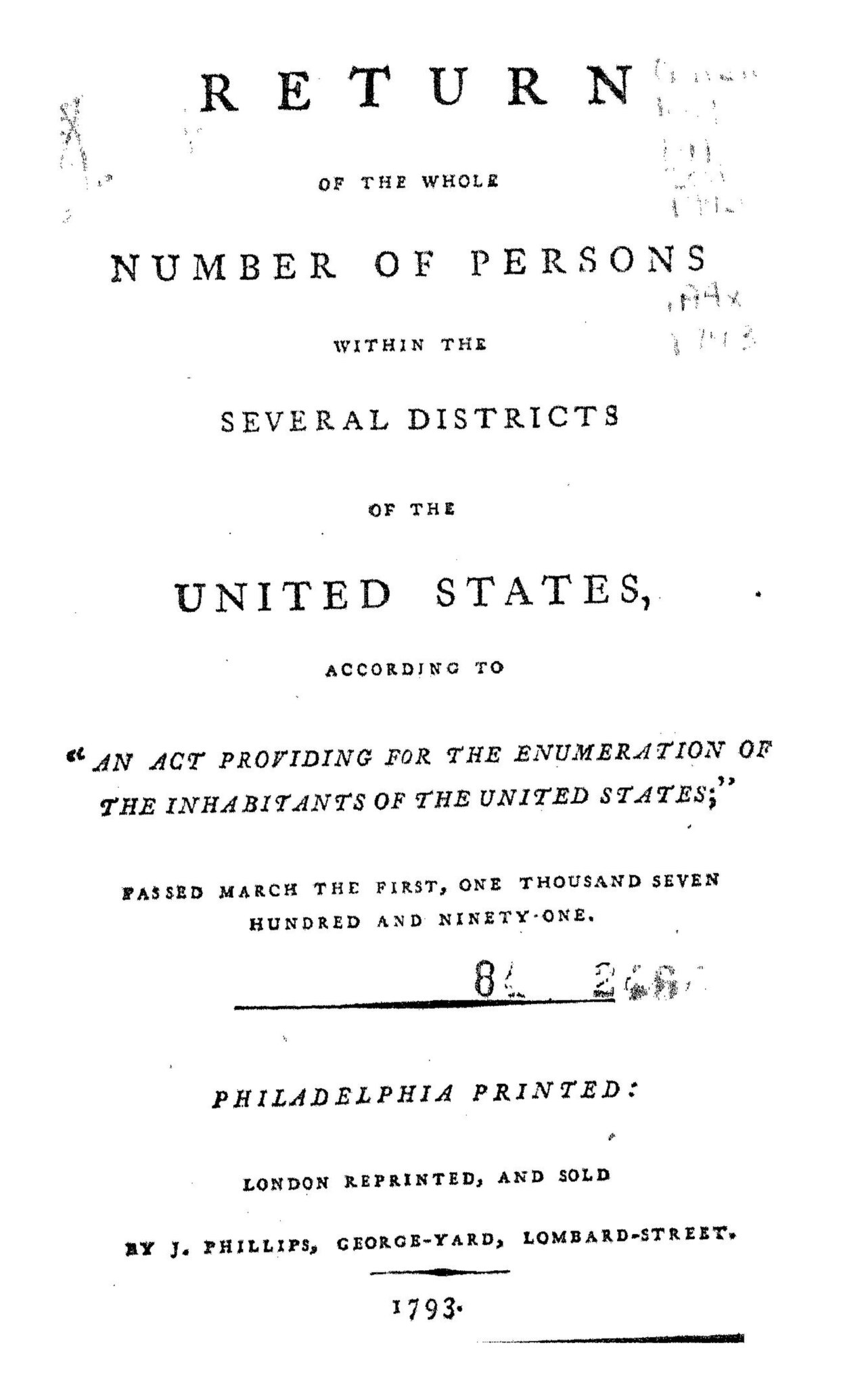
1790a 01 Page 001


Constitutional Mandate and Methodological Challenges
The U.S. Constitution, ratified in 1788, mandated a census to be conducted within three years of the first meeting of Congress and then every ten years thereafter. Article I, Section 2, stipulated that direct taxes be apportioned among the states according to their respective numbers, and that the number of Representatives in the House be based on this enumeration. This dual purpose-apportionment of representation and taxation-underscored the census's critical role in the nascent federal system.
However, conducting this first census in 1790 presented immense logistical hurdles. The nation was vast and sparsely populated, with limited infrastructure and communication. Enumerators, often local sheriffs or appointed officials, had to travel extensively, sometimes through challenging terrain, to gather data.
The methods were rudimentary, relying on household visits and local knowledge, leading to potential inconsistencies and undercounts, particularly in remote areas or among transient populations. The definition of 'household' itself could vary, adding another layer of complexity to the data collection process.
Enumeration Categories and Societal Realities
The 1790 census meticulously categorized the population into distinct groups, reflecting the social and political landscape of the era. Individuals were counted as 'free white males,' 'free white females,' 'all other free persons,' and 'slaves.' This classification system was not merely descriptive; it was deeply intertwined with the legal and social hierarchies of the time. 'Free white males' were generally considered full citizens with political rights, while 'free white females' were citizens but without suffrage.
The category 'all other free persons' encompassed free Black individuals and other non-white individuals, who possessed a limited set of rights. Most controversially, 'slaves' were counted, but not as individuals with rights; they were counted as three-fifths of a person for the purposes of congressional representation and direct taxation, a compromise embedded in the Constitution. This enumeration method highlights the inherent contradictions of a nation founded on liberty yet deeply entrenched in slavery and racial inequality.
Geographic Distribution and Economic Implications
The results of the 1790 census painted a picture of a predominantly rural nation. Out of a total population of approximately 3.9 million people, the vast majority lived in agricultural settings, with only a handful of cities boasting populations over 10,000. The distribution of population across the 16 states and three territories provided the foundational data for the initial apportionment of congressional seats.
States with larger populations, such as Virginia, received more representatives, influencing legislative power. Economically, the census data offered insights into the labor force, particularly the distinction between free and enslaved labor, which was central to the economies of the Southern states. This demographic information was crucial for understanding the nation's productive capacity and for planning infrastructure projects, resource allocation, and even military conscription, all vital for the survival and growth of the young republic.
Legacy and Evolution of the Census
The 1790 census established a precedent for decennial population counts that continues to this day. While the initial census was primarily focused on representation and taxation, its scope and methodology have evolved dramatically. Subsequent censuses have expanded to include detailed questions about occupation, industry, education, and ethnicity, providing increasingly sophisticated demographic data essential for policy-making, research, and understanding societal changes.
The challenges faced in 1790-logistics, accuracy, and the inclusion of all populations-remain relevant, though addressed with modern technology and more inclusive enumeration strategies. The legacy of the first census lies not only in its foundational role for American governance but also as a historical document that offers a stark, albeit incomplete, portrait of the nation's earliest demographic realities and the complex social structures that defined it.
See also
Frequently Asked Questions
What was the 1790 United States Census?+
Why did the U.S. Constitution require a census every ten years?+
How did people get counted in the 1790 census?+
Who was counted as a slave in the 1790 census and how were they counted for representation?+
What did the 1790 census tell us about where people lived in the United States?+
Based on content from Wikipedia · Licensed under CC BY-SA 4.0