

1759: A Year of Big Wins!
Images

The North Prospect Of Mountague House JamesSimonc1715






The 'Annus Mirabilis'
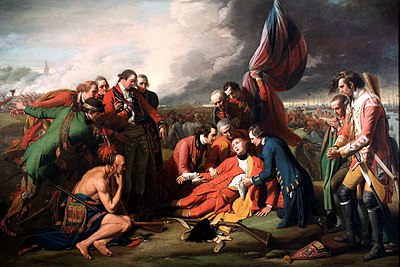
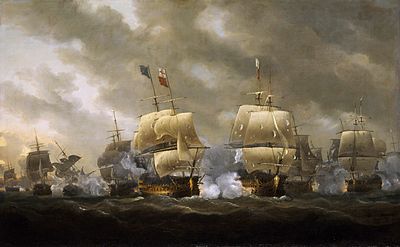
The year 1759 is indelibly marked in British history as the 'Annus Mirabilis,' a testament to a series of critical military and colonial successes during the Seven Years' War. This global conflict, a true world war of its era, saw Britain emerge as a dominant power. The victories of 1759 were not isolated incidents but rather a strategic culmination that reshaped the geopolitical landscape.
Key among these was the Battle of Quebec in North America, a decisive engagement that led to British control over Canada. In India, battles like Plassey (though technically 1757, its impact resonated and was followed by further consolidation) and the Siege of Pondicherry solidified British influence. These triumphs were instrumental in dismantling French colonial ambitions and establishing British naval and commercial supremacy.
The year represented a turning point, solidifying Britain's position as a leading global empire and influencing subsequent centuries of international relations and trade.
Navigating Temporal Discrepancies
The year 1759 also highlights the fascinating complexities of timekeeping in the 18th century. While Great Britain had adopted the Gregorian calendar in 1752, the Julian calendar remained in localized use in various parts of the world until well into the 20th century. In 1759, the Gregorian calendar was 11 days ahead of the Julian calendar.
This temporal discrepancy meant that official records, correspondence, and even the perception of events could differ significantly depending on the region. For instance, events occurring on a specific date in London would be recorded as occurring 11 days later in a region still using the Julian system. This difference underscores the gradual nature of global standardization and the historical persistence of older systems even as newer, more accurate ones gained traction.
The eventual widespread adoption of the Gregorian calendar reflects a broader trend towards global integration and shared understanding.
The Seven Years' War
The Seven Years' War (1756-1763) was a monumental struggle for global dominance, primarily between Great Britain and France, with Prussia and Austria as key players in Europe. The year 1759 proved to be the most consequential for Britain within this conflict. The strategic capture of Quebec in September 1759, following the death of both commanding generals on the Plains of Abraham, was a watershed moment in the North American theater.
This victory effectively ended French rule in Canada and paved the way for British expansion. Simultaneously, British forces were making significant gains in India, weakening French influence and setting the stage for the eventual British Raj. These successes were not merely territorial gains; they represented a fundamental shift in the global balance of power, securing Britain's future as the preeminent colonial and maritime force.
Enduring Legacies
The historical trajectory set in motion by the events of 1759 continues to resonate in the modern world. The victories of the Seven Years' War, particularly those of 1759, were foundational to the expansion and consolidation of the British Empire. This empire's influence profoundly shaped the political, economic, and cultural development of numerous nations across continents, including the United States, Canada, India, and Australia.
The establishment of British dominance had long-lasting implications for global trade routes, legal systems, and the spread of the English language. Understanding 1759 provides critical context for comprehending the origins of many contemporary international relationships, colonial legacies, and the historical roots of global power dynamics. It serves as a potent reminder of how pivotal years can irrevocably alter the course of human history.
The Broader Context
Beyond the British triumphs, 1759 was a year of significant developments globally. In Europe, the Seven Years' War raged on, with Prussia facing immense pressure but demonstrating remarkable resilience. Philosophically and culturally, the Enlightenment continued to flourish, with thinkers challenging established norms and advocating for reason and individual rights.
The year also saw advancements in scientific understanding and artistic expression, reflecting a broader intellectual ferment. While Britain celebrated its 'Miracle Year,' the world was a complex tapestry of conflict, innovation, and evolving ideas. Examining 1759 within this wider context reveals not just a national triumph but a snapshot of a world undergoing profound transformation, setting the stage for the revolutionary upheavals of the late 18th century.
See also
Frequently Asked Questions
Why was 1759 called the "Miracle Year"?+
What happened at the Battle of Quebec in 1759?+
How did Britain win in India during 1759?+
Why were there two different calendars in 1759?+
What was the Seven Years' War and why was 1759 important?+
Based on content from Wikipedia · Licensed under CC BY-SA 4.0