

1755: A Year to Remember!
Images
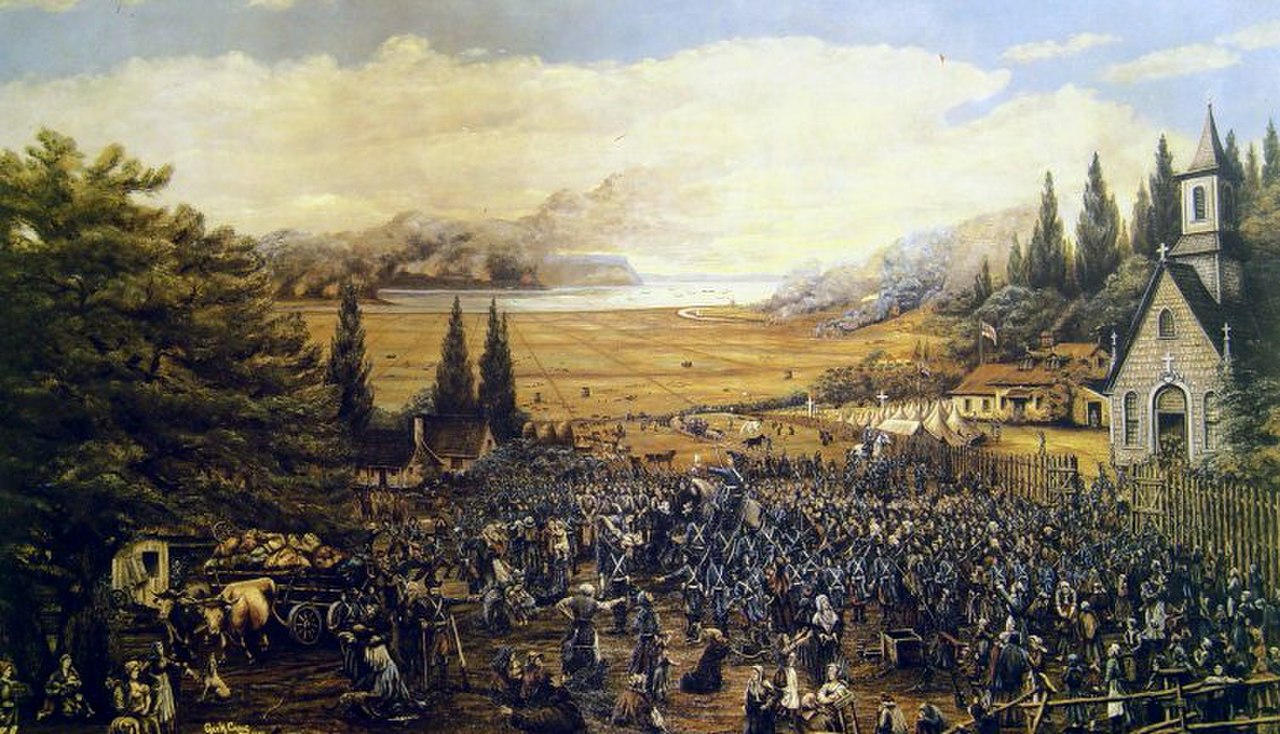
Deportation Grand Pré


The Dual Calendrical Landscape of 1755
The year 1755 presented a curious temporal dichotomy across the globe. While the Gregorian calendar, introduced in 1582 for its improved accuracy in aligning with the solar year, was increasingly adopted, the Julian calendar, established by Julius Caesar, persisted in various regions. This divergence meant that the start of 1755 was a Wednesday for those using the Gregorian system, but a Sunday for adherents of the Julian calendar.
The Gregorian calendar was, at this point, 11 days ahead of its predecessor. This discrepancy wasn't merely a minor inconvenience; it had implications for record-keeping, religious observances, and international correspondence. The continued localized use of the Julian calendar until as late as 1923 underscores the inertia of tradition and the complex process of global standardization, even for something as fundamental as timekeeping.
A Year Within the Enlightenment's Zenith
Positioned as the 55th year of the 18th century, 1755 occurred during the vibrant heart of the Age of Enlightenment. This period was characterized by a profound emphasis on reason, individualism, and scientific inquiry, challenging established norms in philosophy, politics, and society. The intellectual currents of the time were reshaping European thought and influencing colonial territories.
While 1755 itself might not be marked by a single, universally recognized cataclysmic event, it was a year where the ongoing intellectual and cultural shifts were palpable. It was a time of burgeoning scientific societies, the circulation of new philosophical treatises, and the early rumblings of political transformations that would define the latter half of the century and beyond.
Temporal Frameworks and Historical Understanding
The significance of 1755, particularly concerning its calendrical variations, lies in its illustration of historical context. When studying events or documents from this period, understanding which calendar was in use is paramount to accurate dating and interpretation. This calendrical difference is a microcosm of broader historical challenges in reconciling disparate systems and traditions.
Furthermore, 1755's place in the 18th century highlights its role as a year of both continuity and nascent change. It was a period where old structures were still in place, but new ideas were actively fermenting, setting the stage for the revolutions and societal upheavals that would follow. Examining such years allows for a deeper appreciation of the gradual, often uneven, march of progress.
Broader Implications
The persistence of the Julian calendar in 1755, alongside the Gregorian, serves as a historical case study in the challenges of global standardization. The eventual widespread adoption of the Gregorian calendar reflects a broader trend towards interconnectedness and shared frameworks, a process that continues in our modern, globalized world. This year, therefore, offers insights not only into the past but also into the ongoing evolution of international norms and practices.
It reminds us that even seemingly simple concepts like a shared calendar are the result of complex historical developments, negotiations, and the gradual convergence of diverse societies towards common understandings. The 755th year of the 2nd millennium was thus a quiet but crucial moment in the long journey towards global temporal alignment.
See also
Based on content from Wikipedia · Licensed under CC BY-SA 4.0