

1709: A Year Like No Other!
Images
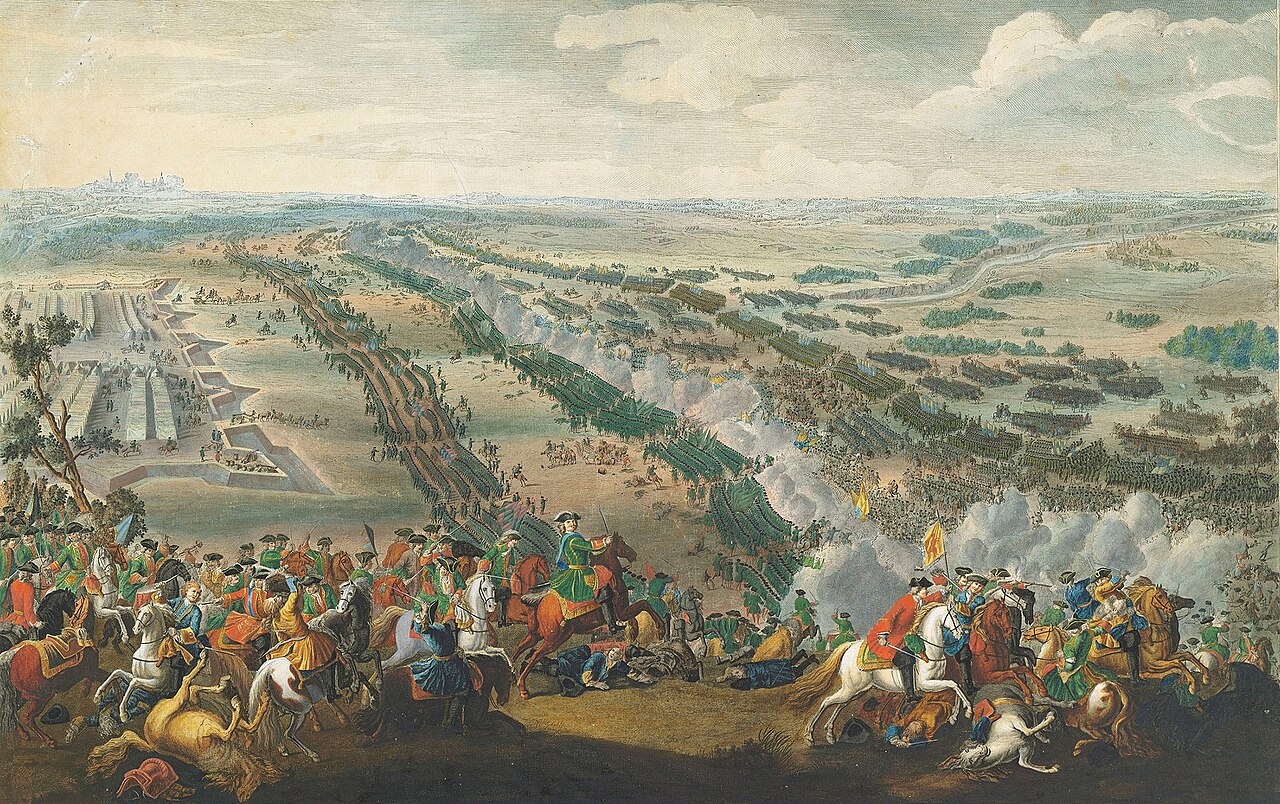
Marten'S Poltava


![Constantin Brâncoveanu and family [mural from 1709 at Hurezi monastery]](https://live.staticflickr.com/5473/11192422235_c8975ae4d6_n.jpg)

The Fragmented Chronology
The year 1709, designated MDCCIX in Roman numerals, presents a fascinating case study in the asynchronous development of global timekeeping. While a common year in the Gregorian calendar, starting on a Tuesday, it was also a common year in the Julian calendar, commencing on a Saturday. This divergence, with the Gregorian calendar being 11 days ahead, was not merely a minor inconvenience but a significant reflection of the ongoing transition in calendrical systems.
The Gregorian reform, introduced in 1582 to correct the drift of the Julian calendar, had been adopted at varying paces across Europe and the world. By 1709, many Protestant nations, including Great Britain, had yet to implement the change, leading to a persistent 11-day gap. This created practical challenges in international correspondence, trade, and scientific observation.
The Julian calendar, though increasingly recognized as less accurate, remained in localized use for centuries, with some regions not fully adopting the Gregorian system until the 20th century. Understanding this calendrical fragmentation is key to appreciating the complexities of global interaction in the early modern period.
Sweden's Peculiar Temporal Position
Sweden's calendrical situation in 1709 offers a particularly intriguing anomaly. The Swedish calendar began that year on a Friday. This unique starting day was a consequence of Sweden's complex and ultimately unsuccessful attempt to gradually transition from the Julian to the Gregorian calendar.
Their initial plan involved skipping leap days to slowly bring the calendar into alignment. However, this process was poorly managed, leading to further discrepancies. By 1709, the Swedish calendar was one day ahead of the Julian calendar but a full ten days behind the Gregorian calendar.
This created a temporal 'no man's land' for Sweden, making it out of sync with both major European systems. The Swedish calendar eventually reverted to the Julian system in 1712 and adopted the Gregorian calendar in 1753. This historical episode underscores the significant logistical and societal challenges involved in implementing widespread calendrical reforms.
1709
Beyond its calendrical peculiarities, 1709 holds significance as the final year of the 1700s decade, placing it squarely within the transformative 18th century. This era, often termed the Age of Enlightenment, was characterized by a profound shift in intellectual, scientific, and political thought. It was a period that witnessed the rise of rationalism, empiricism, and a burgeoning interest in human rights and governance, laying the groundwork for revolutions in America and France.
While the provided source does not detail specific events of 1709, its position as the closing year of a decade within this pivotal century suggests it was a time of ongoing development and anticipation. The scientific advancements, philosophical debates, and political realignments that defined the 18th century were all in motion, and 1709 was a moment within that grand historical narrative. It was a year where the seeds of future change were being sown, even if the full harvest was yet to come.
The Enduring Relevance of Calendrical History
The study of years like 1709, with their distinct calendrical systems and the slow march towards standardization, offers valuable insights into the evolution of global interconnectedness and scientific accuracy. The discrepancies between the Julian and Gregorian calendars highlight the historical challenges in achieving universal agreement on fundamental measures of time. This process was not merely academic; it had tangible impacts on trade, diplomacy, and daily life.
Furthermore, Sweden's unique calendrical journey in the early 18th century serves as a compelling case study in the complexities of societal adaptation to scientific and administrative reforms. By examining these historical temporal frameworks, we gain a deeper appreciation for the scientific rigor that underpins our modern calendar and the long, often convoluted, path humanity has taken to establish shared systems of measurement and understanding. It reminds us that even seemingly simple concepts like 'today's date' have a rich and complex history.
See also
Frequently Asked Questions
What made the year 1709 special with calendars?+
Why were calendars different in 1709?+
How did Sweden handle its calendar in 1709?+
What was the day of the week on January 1, 1709 in the Gregorian calendar?+
Why is 1709 considered a year of change?+
Based on content from Wikipedia · Licensed under CC BY-SA 4.0