

1683: A Year Like No Other!
Images
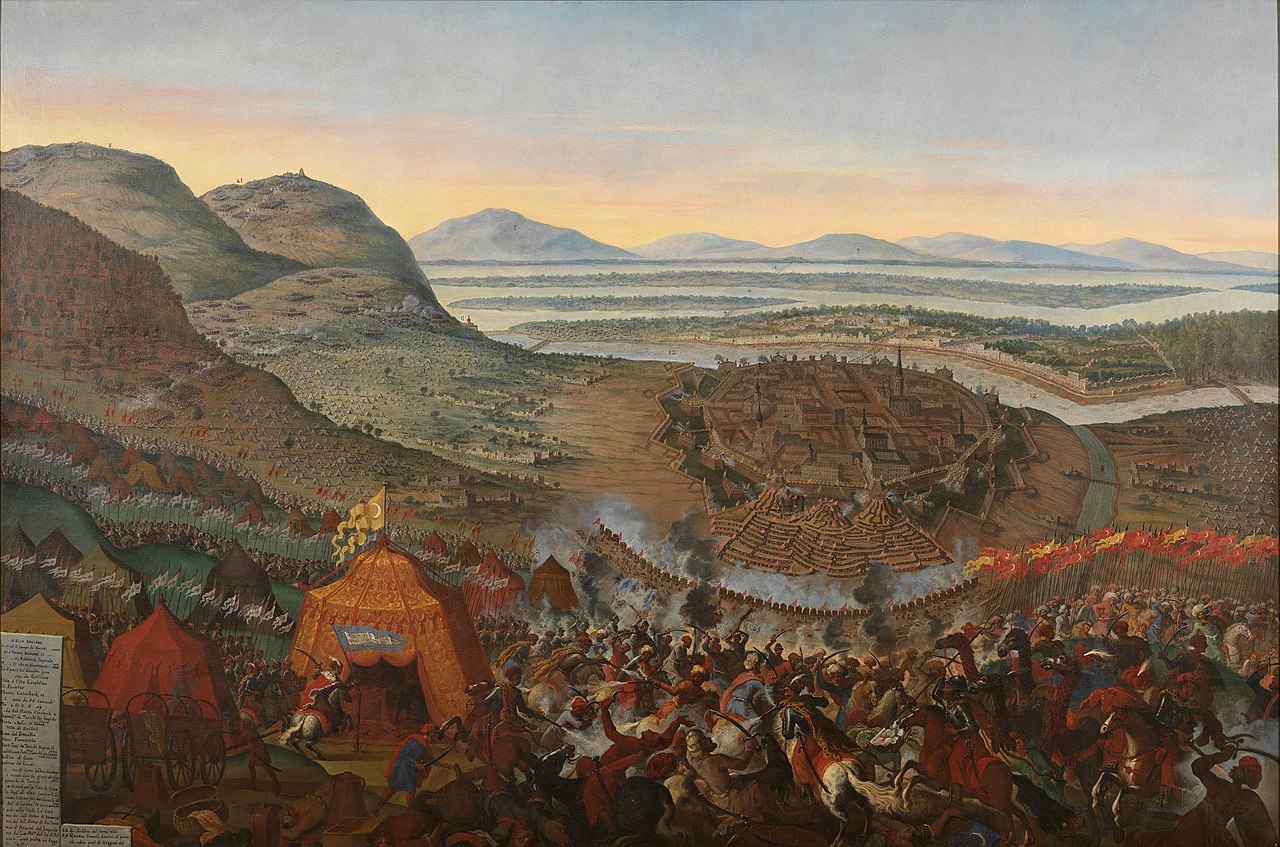
Vienna Battle 1683


The Chronological Divide of 1683
The year 1683 presents a fascinating case study in the complexities of timekeeping during the late 17th century. At this point, the Gregorian calendar, promulgated by Pope Gregory XIII in 1582, was gradually being adopted across Europe and its colonies, yet it coexisted with the older Julian calendar. The Gregorian reform was instituted to correct the accumulated error in the Julian calendar, which had caused it to drift by approximately one day every 128 years relative to the solar year.
By 1683, this discrepancy had widened to a full ten days. Consequently, dates recorded in regions adhering to the Gregorian calendar were ten days ahead of those using the Julian system. This divergence had profound implications for international correspondence, trade agreements, legal documents, and the precise dating of historical events.
For scholars and administrators, navigating this dual dating system required meticulous attention to detail, often necessitating the annotation of dates with the specific calendar used, underscoring a period of significant chronological transition.
1683 in the Tapestry of Time
Positioning 1683 within broader historical frameworks reveals its place in the ongoing evolution of Western civilization and global interaction. As the 1683rd year of the Common Era (CE), it falls squarely within the 17th century, a period characterized by scientific revolution, colonial expansion, and shifting political landscapes. More specifically, it was the fourth year of the 1680s decade, a period that witnessed significant developments in philosophy, art, and warfare.
Furthermore, 1683 marked the 683rd year of the 2nd millennium CE, a vast span of time that encompassed the High Middle Ages, the Renaissance, and the early modern period. The designation of 1683 as a 'common year' signifies its standard length of 365 days, devoid of the extra day characteristic of a leap year. This contextualization is vital for understanding the specific historical circumstances and the broader sweep of human history in which 1683 was embedded.
The Enduring Significance of Calendar Discrepancies
The coexistence of the Gregorian and Julian calendars in 1683 highlights the challenges of establishing universal standards in a world undergoing rapid globalization. The adoption of the Gregorian calendar was not immediate or uniform; it was often met with resistance due to religious and political factors. For instance, Protestant countries were slower to adopt the papal bull that introduced the reform.
This created a situation where historical records from different nations could appear contradictory, complicating the work of historians seeking to establish definitive timelines. The persistence of the Julian calendar in some regions until the early 20th century (1923 in Greece, for example) demonstrates the inertia of established practices and the slow pace of widespread societal change. The eventual global acceptance of the Gregorian calendar underscores the power of scientific accuracy and the practical benefits of a unified system for international communication, commerce, and scientific collaboration.
The Evolution of Chronological Measurement
The year 1683 serves as a tangible point of reference in the long history of humanity's quest to accurately measure and record time. The Julian calendar, a remarkable achievement of Roman engineering, was nonetheless flawed, leading to a gradual but significant drift from the tropical year. The Gregorian calendar, a more sophisticated astronomical calculation, aimed to rectify this drift and maintain the calendar in closer alignment with the seasons.
The fact that the Julian calendar remained in localized use for centuries after the Gregorian reform illustrates the complex interplay between scientific progress, cultural tradition, and institutional inertia. Studying the chronological landscape of 1683 allows us to appreciate the ongoing refinement of our temporal frameworks, a process that continues to inform everything from scientific research to daily life, ensuring that our understanding of time remains as precise as possible.
Broader Historical Context and Impact
While the Wikipedia source focuses on the calendrical aspects of 1683, it's important to acknowledge that this year was also a backdrop for significant global events. The Ottoman Empire's second siege of Vienna, though it concluded in 1683, was a pivotal moment in European history, marking a turning point in the Ottoman-Habsburg conflicts and influencing the geopolitical balance of power. Understanding the precise dating of such events, complicated by the calendar discrepancies, is crucial for accurate historical analysis.
The year also falls within a period of intense scientific inquiry, with figures like Isaac Newton publishing groundbreaking works. The differing calendars meant that scientific correspondence and the dissemination of discoveries could be subject to temporal ambiguity, further emphasizing the need for standardization. Therefore, 1683 is not merely a date but a complex intersection of calendrical systems, scientific advancement, and major historical occurrences.
See also
Frequently Asked Questions
What was special about the year 1683?+
Why were the Gregorian and Julian calendars different in 1683?+
How did the calendar differences affect people in 1683?+
When did some places stop using the Julian calendar?+
What does "common year" mean for 1683?+
Based on content from Wikipedia · Licensed under CC BY-SA 4.0