

1653: A Year in Time!
Images
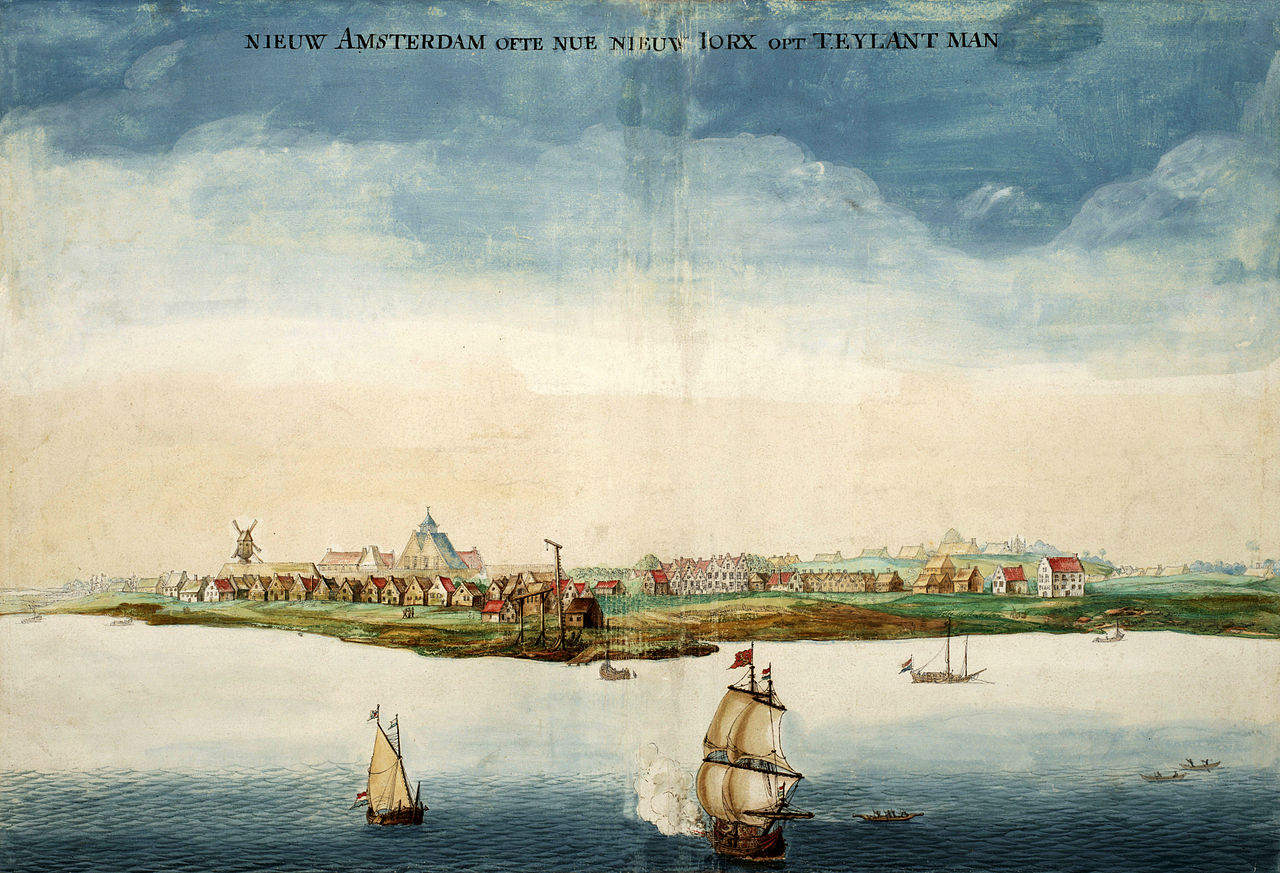
GezichtOpNieuwAmsterdam


The Dual Chronology of 1653
The year 1653, designated MDCLIII in Roman numerals, presents an immediate point of historical interest through its calendrical duality. It was a common year, meaning it contained 365 days, but its commencement differed based on the prevailing calendar system. In the Gregorian calendar, adopted by many Catholic countries and gradually spreading, 1653 began on a Wednesday.
Conversely, in regions still adhering to the Julian calendar, established by Julius Caesar and in use for over a millennium, the year commenced on a Saturday. This 10-day discrepancy was not a trivial matter; it represented a significant divergence in how time was perceived and recorded across different societies. The Gregorian reform, introduced in 1582, aimed to rectify the gradual drift of the Julian calendar relative to the solar year.
By 1653, this drift had accumulated to a noticeable 10 days. The continued localized use of the Julian calendar, persisting in some areas until well into the 20th century, underscores the complex process of adopting new scientific standards and the inertia of established traditions. For scholars and contemporaries alike, navigating these differing chronologies was essential for accurate historical understanding and practical coordination.
Situating 1653
To fully appreciate 1653, one must situate it within the broader sweep of the 17th century, a period characterized by profound political, scientific, and cultural transformations. As the 53rd year of this dynamic century (1601-1700), 1653 was a participant in the Age of Enlightenment's nascent stages, the continuation of European colonial expansion, and significant advancements in scientific thought. It was also the 4th year of the 1650s decade, a specific segment of this turbulent era.
Furthermore, its designation as the 1653rd year of the Common Era (CE) or Anno Domini (AD) places it within a continuous historical narrative that stretches back over two millennia. This numbering system, while rooted in religious tradition, has become a secular standard for global historical reference. Understanding 1653 means recognizing it not as an isolated point, but as a node within a complex web of ongoing historical processes, reflecting the challenges and innovations of its time.
The Significance of the Ordinary
While 1653 may not be immediately associated with a singular, epoch-defining event like a major revolution or discovery, its historical significance lies in its representation of transitional periods and the persistence of older systems. It serves as a valuable case study for understanding the gradual nature of change. The fact that the Julian calendar was still in localized use highlights how scientific and societal progress does not occur uniformly.
For historians, years like 1653 offer a granular perspective on the lived experiences of people, the administrative challenges of the time, and the slow diffusion of new knowledge. It underscores that history is not solely defined by dramatic turning points but also by the steady evolution of practices, beliefs, and technologies. The continued reliance on the Julian calendar, despite the existence of a more accurate Gregorian alternative, speaks to the complexities of cultural adoption and the practicalities of maintaining continuity in a world undergoing rapid change.
Calendrical Systems
The divergence between the Gregorian and Julian calendars in 1653 is more than a historical curiosity; it is fundamental to understanding the challenges of cross-cultural communication and historical accuracy. The Julian calendar, with its leap year rule of adding a day every four years, was a significant improvement over earlier Roman calendars. However, it overcorrected slightly, leading to an accumulation of error.
The Gregorian calendar refined this by introducing a more complex rule: leap years occur every four years, except for years divisible by 100 but not by 400. This adjustment brought the calendar year much closer to the tropical year. The 10-day difference in 1653 meant that events recorded in different regions might appear to have occurred at different times if the calendar system was not specified.
This issue was particularly relevant for international diplomacy, trade, and scientific observation. The eventual global adoption of the Gregorian calendar was a long and sometimes contentious process, demonstrating the profound impact of timekeeping systems on societal organization and our collective understanding of the past.
Beyond the Date
Examining 1653 allows us to reflect on the nature of historical data and the evolution of measurement systems. The year itself, as a unit of time, is a human construct, and the methods by which we divide and count it have changed dramatically. The existence of two major calendar systems in concurrent use in 1653 highlights the challenges of standardization in a pre-globalized world.
It prompts questions about how historical records from this period are interpreted and reconciled. Furthermore, understanding the context of 1653, even as an 'ordinary' year, provides a baseline against which to measure the extraordinary developments that would follow in the subsequent decades and centuries. It reminds us that progress is often incremental, built upon the foundations of existing practices, and that even seemingly simple concepts like 'a year' carry layers of historical and scientific complexity.
See also
Frequently Asked Questions
What calendar started on a Wednesday in 1653?+
Why was there a 10‑day difference between calendars in 1653?+
How many days were in the year 1653?+
When did the Gregorian calendar start being used?+
Why did some places still use the Julian calendar in 1653?+
Based on content from Wikipedia · Licensed under CC BY-SA 4.0