

1618: A Year to Remember!
Images

Prager.Fenstersturz.1618





The Chronological Dichotomy
The year 1618 stands out not for a singular monumental event, but for the subtle yet significant temporal dissonance it represented. It was a common year, meaning it contained 365 days, yet its commencement differed depending on the calendrical system employed. The Gregorian calendar, promulgated in 1582, began on a Monday.
In contrast, the Julian calendar, still in widespread use across many parts of Europe and its colonies, commenced on a Thursday. This 10-day discrepancy was a direct consequence of the Julian calendar's inherent inaccuracy in approximating the solar year. Over centuries, this slight error had accumulated, causing the Julian calendar to drift progressively out of sync with the astronomical seasons.
The Gregorian reform aimed to rectify this by introducing a more precise leap year rule, but its adoption was a protracted and often contentious process, influenced by religious and political factors. In 1618, this calendrical schism was a tangible reality, impacting everything from religious observances to legal contracts and international correspondence. The persistence of the Julian calendar, even in localized use until 1923, underscores the inertia of established practices and the complex path towards global standardization.
1618
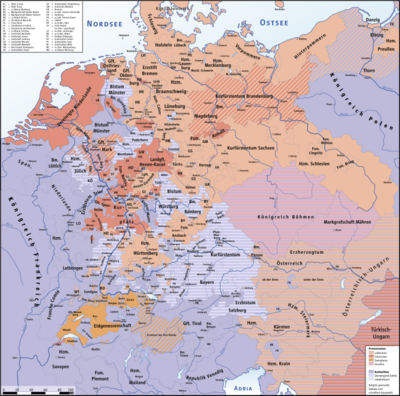
Positioned as the 18th year of the 17th century, 1618 was embedded within a period of intense global transformation. This era witnessed the height of European colonial expansion, the rise of powerful nation-states, and the simmering religious conflicts that would soon boil over into devastating wars, most notably the Thirty Years' War which began in 1618. The year itself was a common year, devoid of the extra day that leap years provide, yet its significance lies in its temporal placement.
It was the 618th year of the second millennium, a period characterized by rapid scientific advancement, burgeoning global trade networks, and profound philosophical shifts. Understanding 1618 requires appreciating its context within this dynamic century, where established orders were being challenged and new worldviews were emerging. The calendrical peculiarities of 1618 serve as a microcosm of the broader era's transitional nature, where old ways of measuring time coexisted with new scientific understandings and global interactions.
The Practical Ramifications of Calendrical Disparity
The 10-day gap between the Gregorian and Julian calendars in 1618 was more than an academic curiosity; it presented practical challenges for communication, commerce, and governance. Imagine the confusion in international trade when invoices or shipping manifests were dated differently, or the difficulty in coordinating diplomatic efforts when delegates operated under different temporal frameworks. The Julian calendar's error, though small per year, had accumulated to a significant divergence by the 17th century.
The Gregorian reform, by skipping 10 days in October 1582 and adjusting the leap year rule (omitting years divisible by 100 unless they are also divisible by 400), sought to realign the calendar with the seasons. However, the resistance to this reform, particularly in Protestant countries, meant that for decades, Europe was effectively divided by its understanding of time. This divergence highlights the complex interplay between scientific accuracy, religious authority, and cultural tradition in shaping societal norms.
The year 1618 thus serves as a compelling case study in the historical evolution of timekeeping and the challenges of achieving universal consensus.
1618
As a common year, 1618 played its role in the continuous flow of history, but its unique calendrical characteristic offers a profound insight into the period. The coexistence of two distinct calendars is a powerful metaphor for the early 17th century itself-a time of profound transition, where the remnants of older traditions met the dawn of new scientific paradigms and global interconnectedness. The year was not defined by a single, earth-shattering event but by the underlying currents of change.
The gradual adoption of the Gregorian calendar, a process that spanned centuries, reflects humanity's ongoing quest for precision and order in understanding the natural world. The year 1618, with its dual start days, thus becomes a symbol of this historical evolution, reminding us that even the fundamental ways we measure our lives are subject to change and refinement over time. Its legacy lies in its quiet illustration of how societies adapt, sometimes slowly, to new knowledge and the need for a shared temporal reality.
See also
Frequently Asked Questions
What was special about the start of the year 1618?+
Why were there two different days for the start of 1618?+
How did the calendar difference affect people in 1618?+
When was the Gregorian calendar introduced?+
What big event began in 1618?+
Based on content from Wikipedia · Licensed under CC BY-SA 4.0