

The Year 1520!
Images
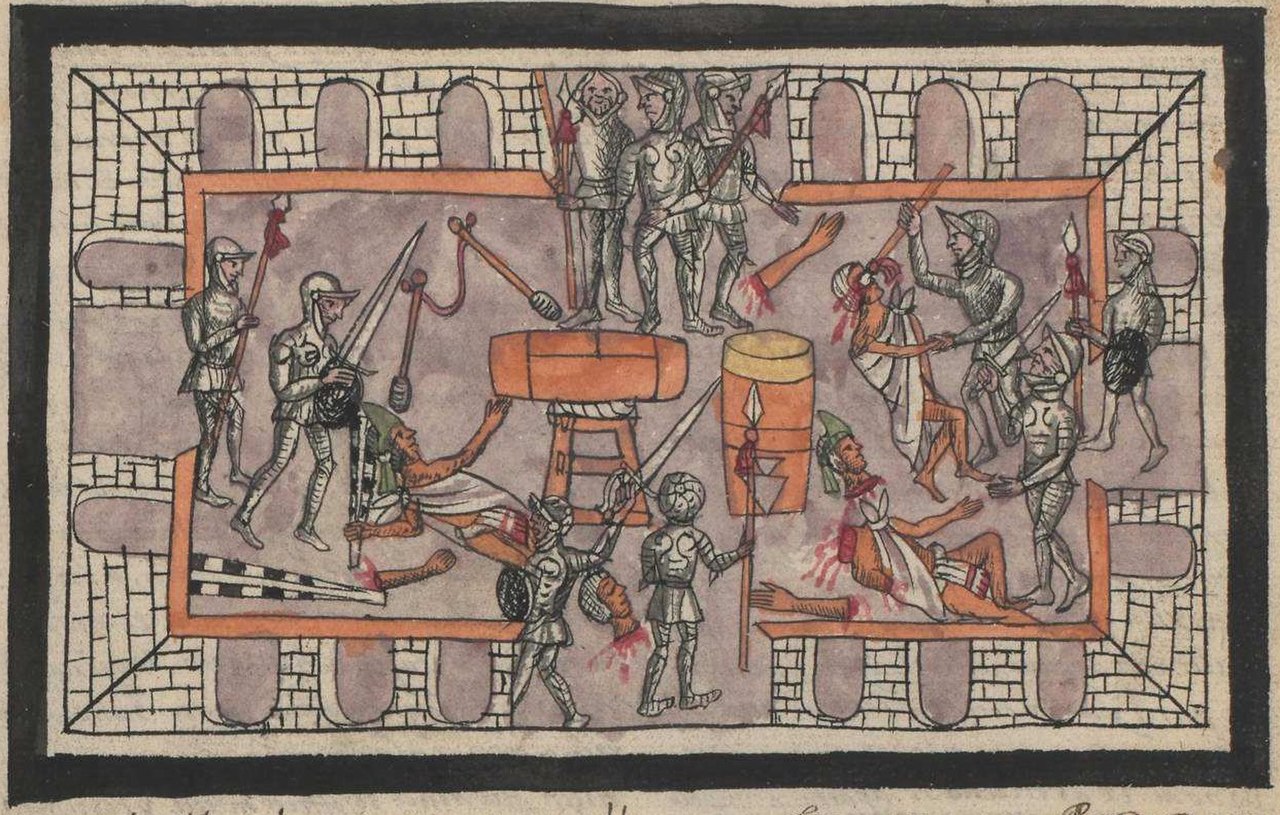
Matanza Templo2


The Mechanics and Imperfections of the Julian Leap Year
The year 1520 was a leap year, a critical component of the Julian calendar established by Julius Caesar in 45 BCE. This calendar aimed to regulate time by adding an extra day, February 29th, every four years. The rationale was to approximate the solar year, which is approximately 365.2422 days long.
The Julian system, however, simplified this to 365.25 days, introducing a discrepancy of about 11 minutes and 14 seconds per year. While seemingly minor, this accumulated error meant that by the 16th century, the Julian calendar had drifted by approximately ten days relative to the astronomical seasons. This drift had significant implications for the timing of Easter, which is tied to the vernal equinox, and for agricultural planning.
The year 1520, therefore, represents a point in history where this calendrical imperfection was a growing concern, though the full impact and the eventual solution were still centuries away. The fact that 1520 began on a Sunday under this system highlights the consistent, albeit slightly flawed, structure of the Julian reckoning.
1520
The year 1520 was a pivotal moment in a period of dramatic global change. Ferdinand Magellan's expedition, having departed in 1519, was in the midst of its groundbreaking circumnavigation of the Earth, a voyage that would definitively prove the planet's spherical nature and reveal the vastness of the Pacific Ocean. This era also witnessed the height of the Age of Discovery, with European powers expanding their reach across continents, leading to profound cultural exchanges and, often, devastating consequences for indigenous populations.
Concurrently, Europe was experiencing an intellectual renaissance, characterized by a renewed interest in classical learning, scientific inquiry, and artistic innovation. Martin Luther's Ninety-five Theses, published just three years prior, had ignited the Protestant Reformation, fundamentally challenging the religious and political landscape of Europe. The year 1520, therefore, was not merely a calendar year but a dynamic intersection of expanding geographical knowledge, evolving scientific understanding, and profound societal and religious transformations.
The Significance of Calendrical Alignment
The significance of 1520 as a leap year extends beyond its simple inclusion of an extra day. It underscores humanity's enduring quest to accurately measure and understand time, a fundamental aspect of organizing societies, conducting commerce, and observing religious practices. The Julian calendar, despite its eventual obsolescence, was a monumental achievement in its time, providing a more stable framework than previous systems.
The gradual drift of the Julian calendar, however, highlighted the limitations of empirical observation and mathematical approximation. It necessitated a more precise understanding of celestial mechanics, ultimately leading to the Gregorian calendar reform in 1582. This reform, which involved skipping ten days and adjusting the leap year rule, aimed to realign the calendar with the seasons and prevent future drift.
The year 1520, therefore, stands as a marker within the historical trajectory of timekeeping, illustrating both the successes and the evolving challenges in synchronizing human constructs with natural phenomena.
Connecting 1520 to Modern Timekeeping and Global Awareness
The year 1520, with its leap day and its place in the Julian calendar, offers a valuable historical perspective on our modern timekeeping systems. The Gregorian calendar, which we use today, retains the concept of the leap year, a testament to the enduring need to account for the Earth's orbital period. The adjustments made in 1582 were a direct response to the cumulative errors inherent in the Julian system, errors that were already subtly impacting observations in 1520.
Furthermore, the exploration occurring in 1520 laid the groundwork for our interconnected, globalized world. The voyages of discovery fundamentally altered perceptions of geography and fostered unprecedented (though often unequal) exchanges between cultures. Understanding 1520 allows us to appreciate the historical evolution of both our calendars and our global awareness, recognizing that the systems we rely on today are the result of centuries of scientific inquiry, observation, and adaptation.
See also
Frequently Asked Questions
What made the year 1520 special in the calendar?+
Why did the Julian calendar drift by about ten days by 1520?+
What big adventure was happening in 1520?+
How were people thinking about religion and learning in 1520?+
What change fixed the calendar problem later?+
Based on content from Wikipedia · Licensed under CC BY-SA 4.0